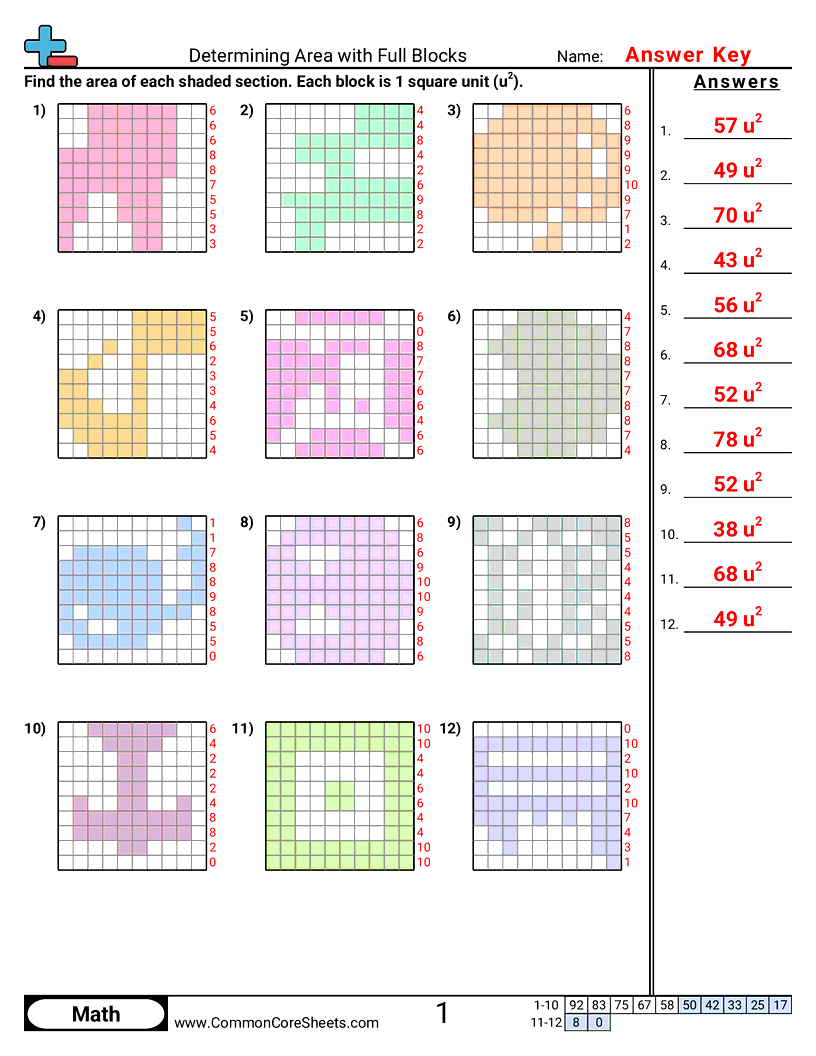
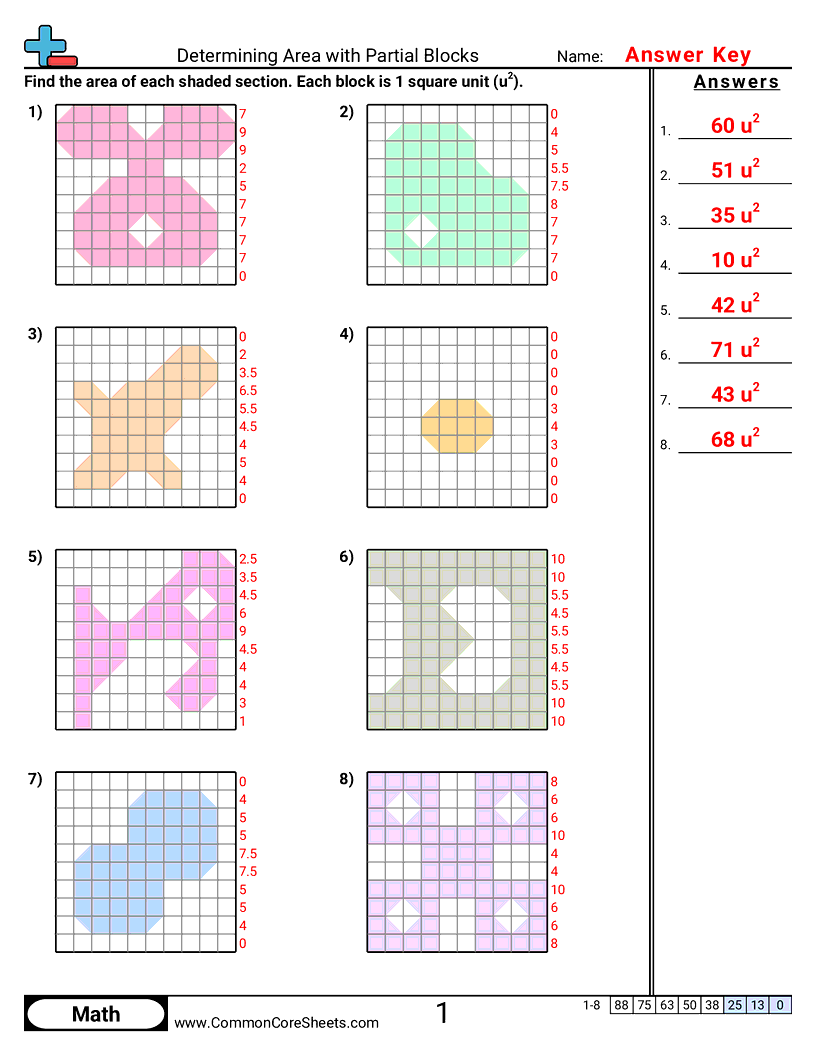
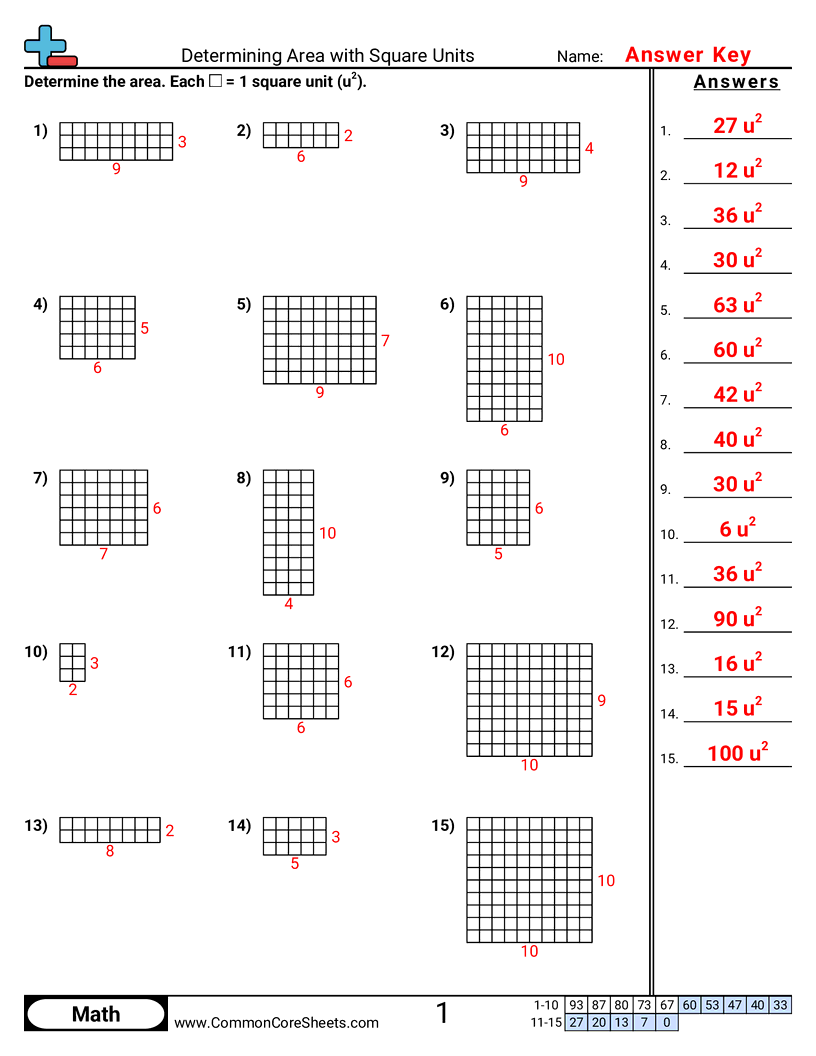
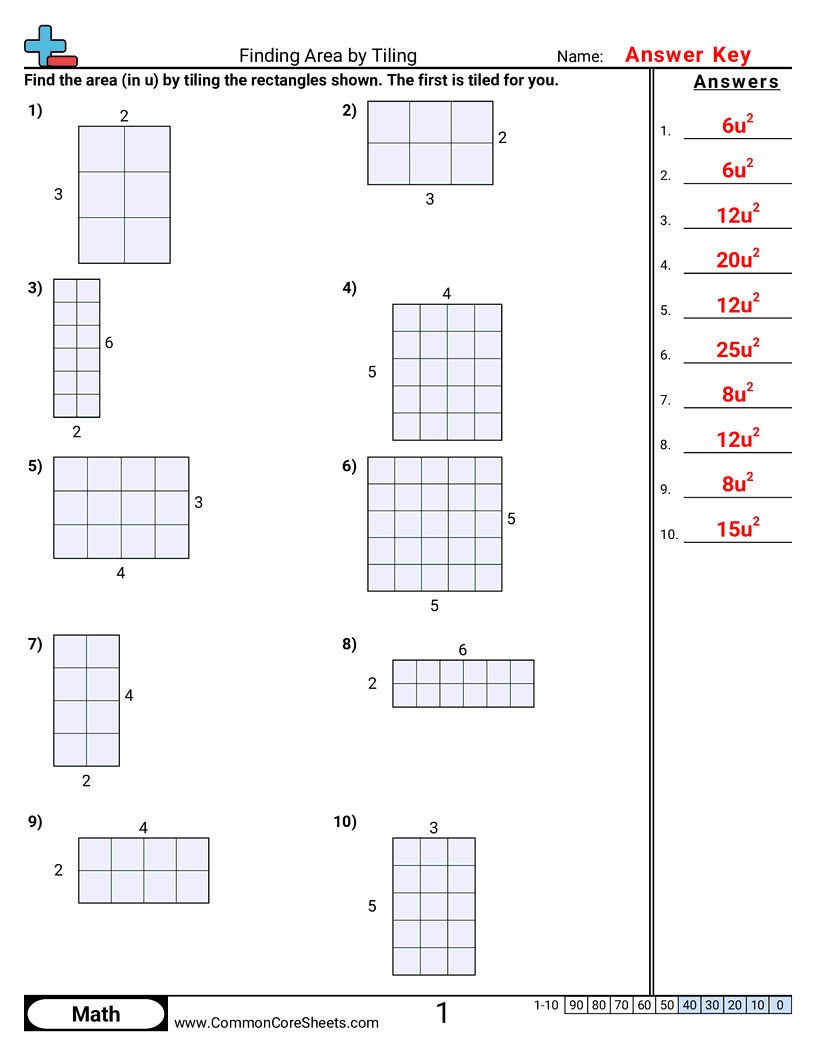
Our 3rd grade area and perimeter worksheets provide comprehensive practice with 12 different worksheet types covering essential geometry skills. Students will find area using blocks and tiling, calculate perimeter, work with rectangles and rectilinear shapes, and solve missing side problems.
Students learn to find the area of shapes using grid-based counting methods. Worksheets progress from counting full blocks to working with partial blocks, then move to using rows and columns for rectangular areas. Activities also include finding area by tiling, continuing area patterns, and calculating the area of right triangles on a grid. These resources align with third through sixth grade standards and help students transition from counting to using area formulas.
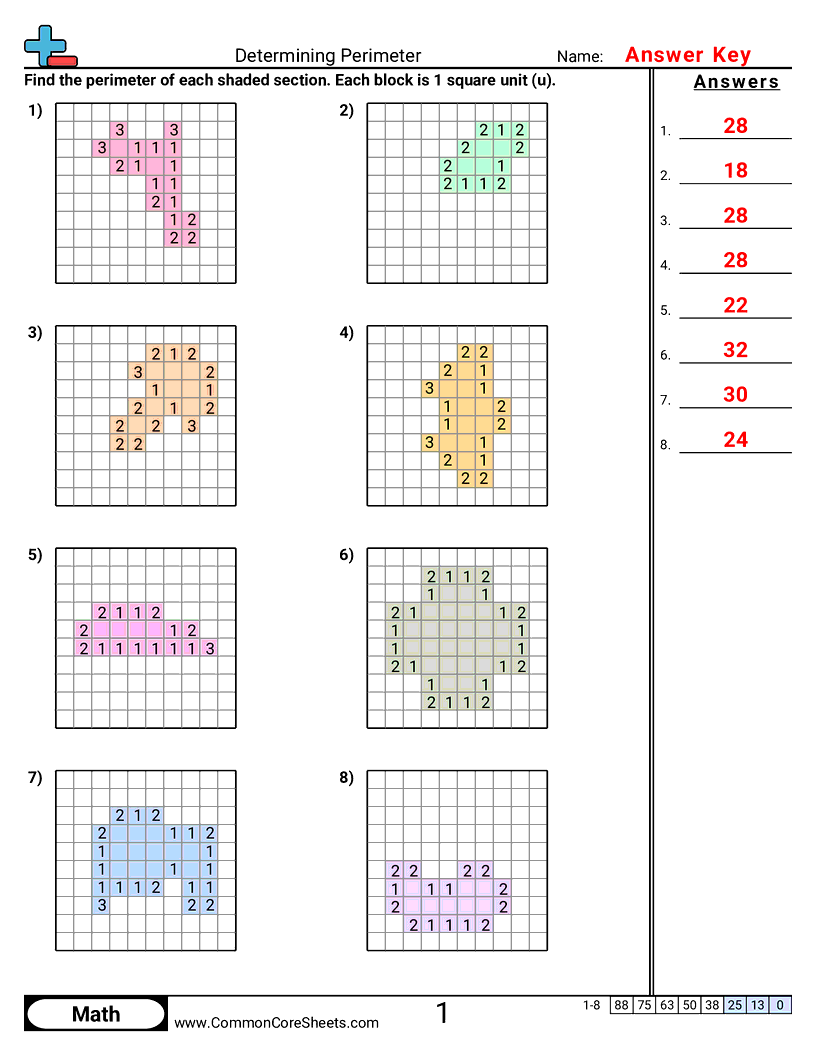
These worksheets help students find the perimeter of shapes by counting the unit segments along the outside edge of a figure. Using grid-based visuals, students practice identifying and adding the outer edges to calculate perimeter. This hands-on approach builds understanding before students move on to using perimeter formulas with given measurements.
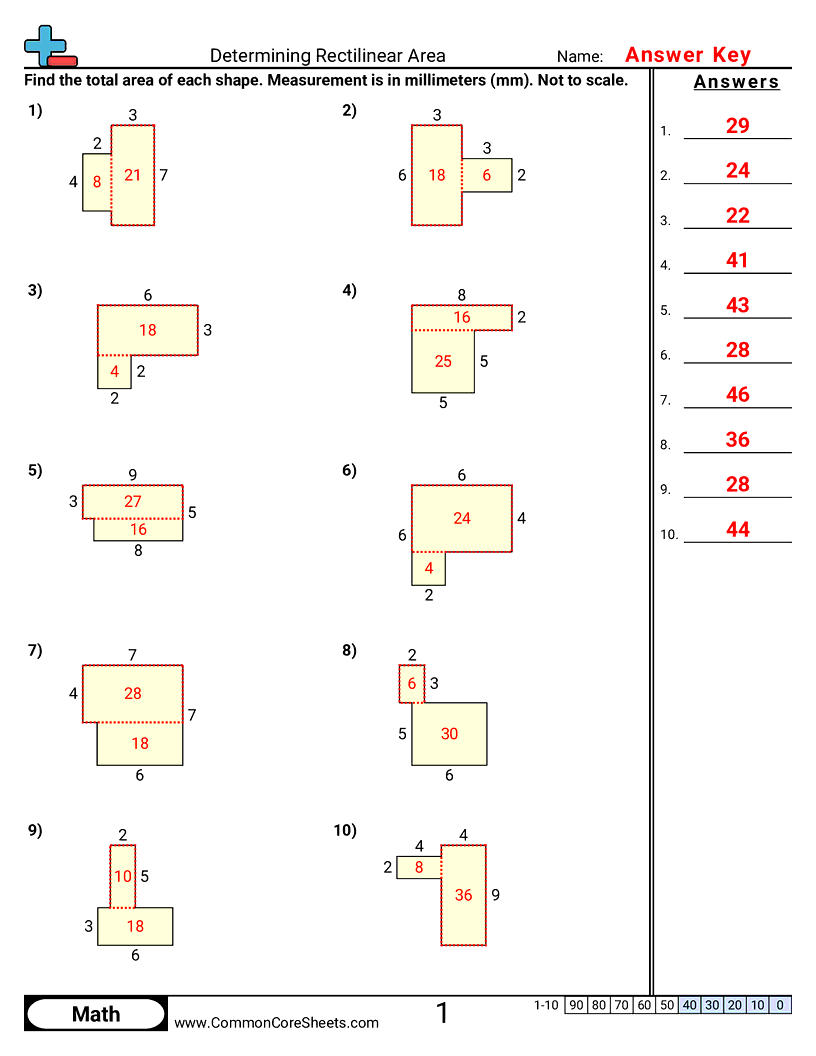
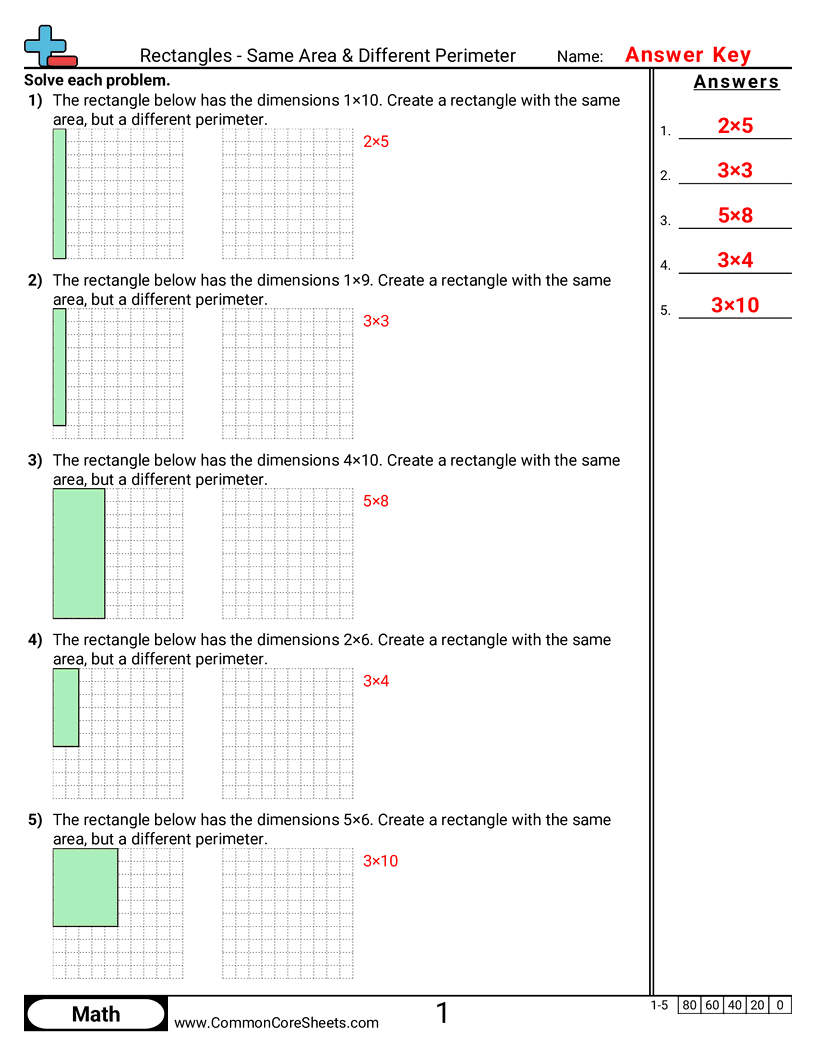
These worksheets cover a comprehensive range of quadrilateral measurement skills. Students find the area and perimeter of rectangles, explore rectilinear shapes by decomposing them into smaller rectangles, create rectangles with given area or perimeter constraints, and work with scale factors. Problem sets include whole numbers, decimals, and fractions, and span third through seventh grade standards.
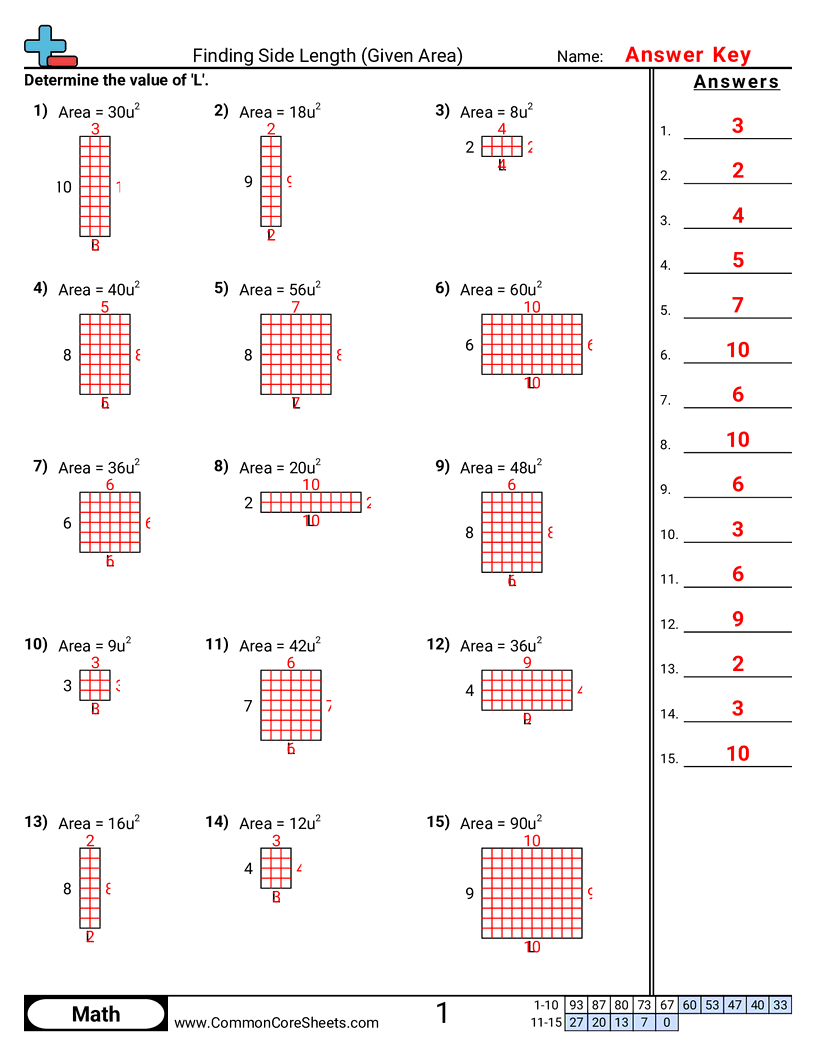
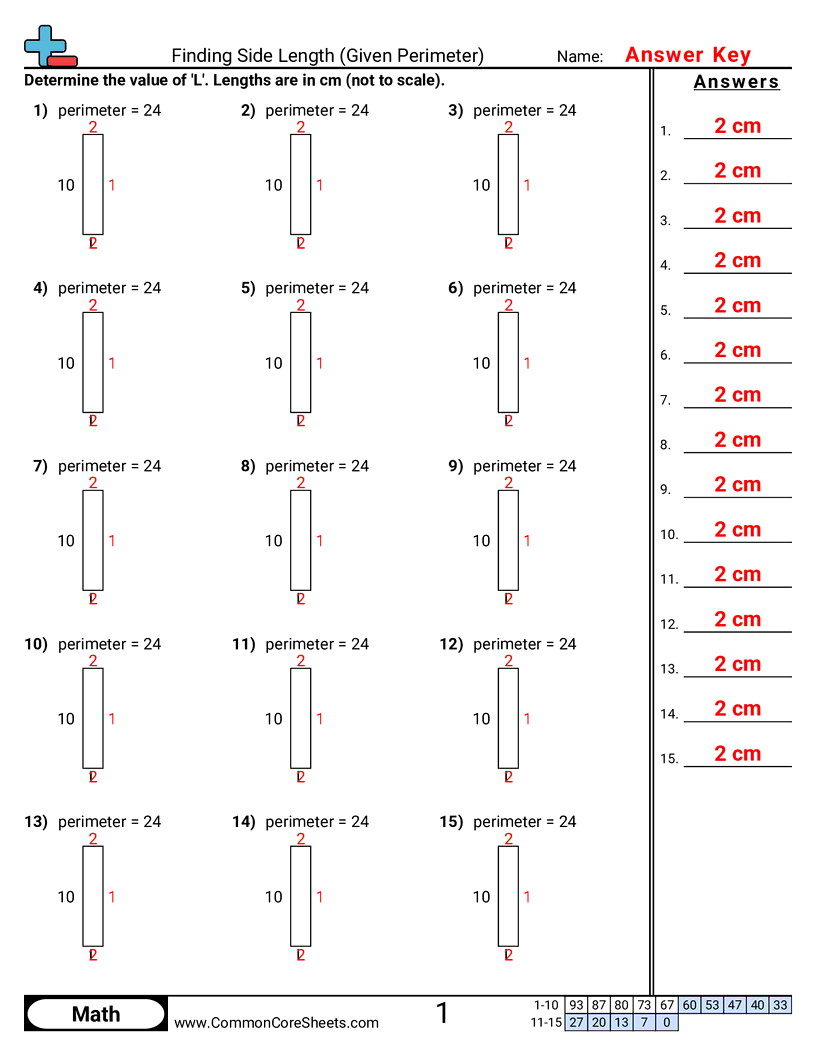
Students practice finding a missing side length of a rectangle or right triangle when given the area or perimeter. These worksheets reinforce the relationship between side lengths, area, and perimeter through reverse calculation — dividing area by a known side or subtracting known sides from a total perimeter. Problem sets span third grade through middle school, with some including decimal values.