3md8×Description:
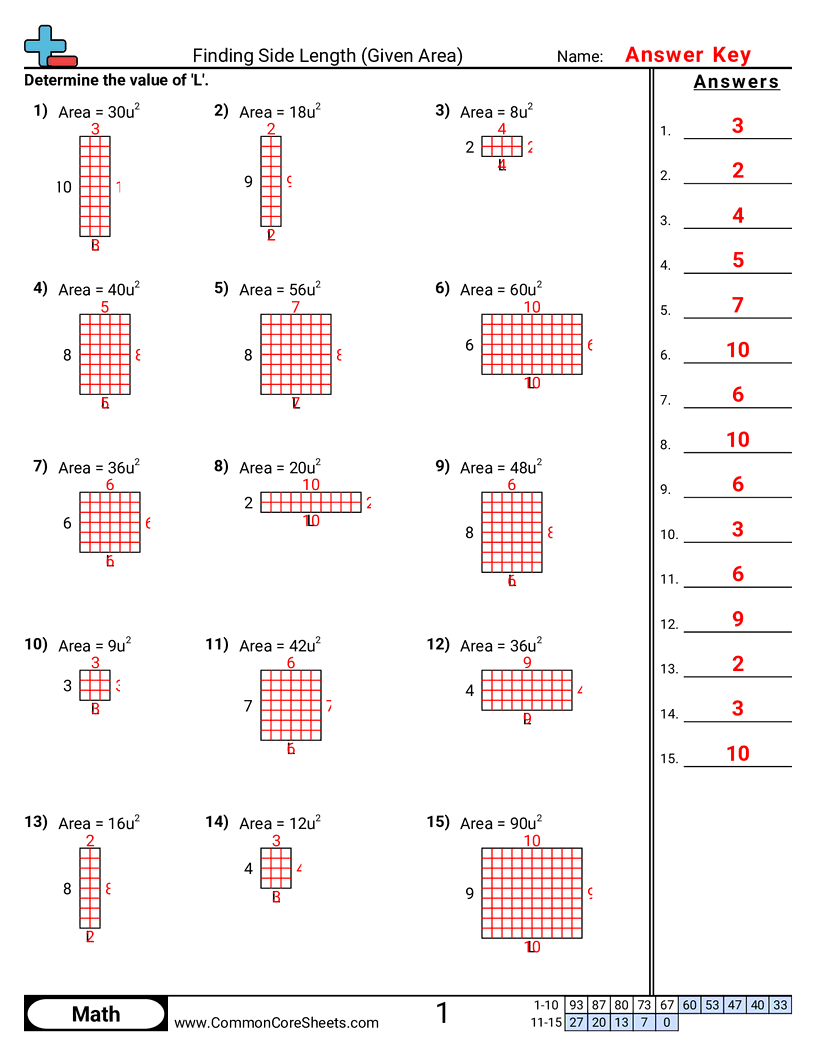
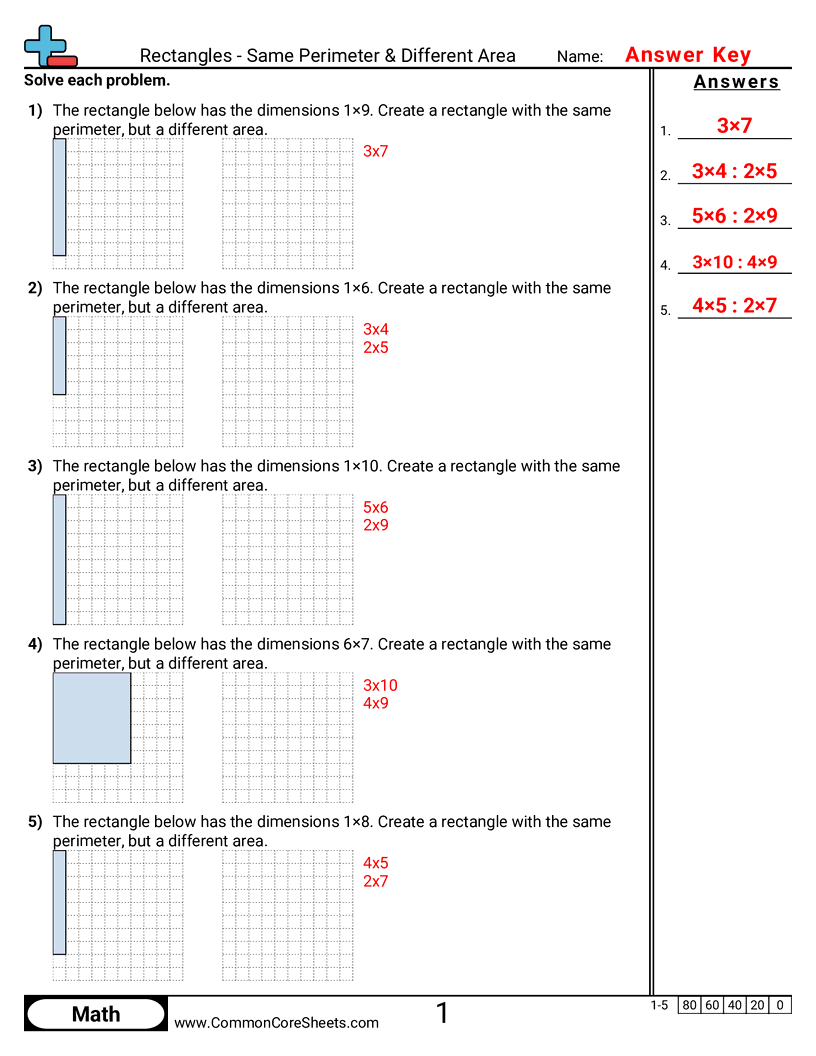
"This worksheet is designed to assist children in understanding the mathematical concept of finding the side length given the area of a rectangle. It comprises 15 problems with vivid, illustrative examples to aid comprehension. The engaging, customizable format makes it ideal for transforming into flash cards or utilizing in distance learning environments, enhancing its versatility for various teaching strategies and learning styles."
×Student Goals: Understanding the concept of areaAfter completing this worksheet, students should have a solid grasp of the concept of area as it pertains to geometric shapes. They should understand that the area of a shape is the amount of space it covers, and they should be able to calculate the area of various shapes by using the appropriate formulas.Calculating area given side lengthStudents should be able to calculate the area of a shape when given the length of its sides. They should be adept at using the formulas for area to calculate the area of a square, rectangle, and possibly even more complex shapes. This means being able to plug the given measurements into the formula and correctly solve for the area.Reasoning and problem-solving skillsThis worksheet should also improve students' reasoning and problem-solving skills. Because some of the problems require students to find the side length when given the area, this means they must reverse-engineer the problem, honing their critical thinking skills. These skills are not only important for mathematics but also for a wide range of contexts beyond the classroom.Mathematical confidenceMathematics can often feel abstract and difficult to grasp. However, after completing this worksheet, students should feel more confident in their mathematical abilities. They should be more comfortable with problems of area, whether that involves calculating the area from given side lengths or determining side lengths from a given area. This confidence can help in other areas of mathematics as well.Real-World ApplicationOnce students have completed this worksheet, they should be able to understand and appreciate the real-world applications of the math they're learning. Understanding area is not just about solving problems in a maths book—it's about being able to apply these skills in real-world situations, whether that's estimating the amount of paint needed to cover a wall or calculating the size of a piece of land. This awareness of the practical applications of math can make the learning experience more relevant and engaging for students.