Negative Number Worksheets
Demystify integers with free negative number worksheets. Students determine the value of negative numbers on number lines, add and subtract with negatives, multiply and divide signed numbers, and explore absolute value. Every worksheet prints as a PDF with an answer key in multiple versions and can be completed digitally - no login or account needed. Modified versions provide fewer problems for students still building confidence, and the grading column plus quick grade scale make grading painless. Aimed at 6th and 7th grade, these integer worksheets give students the foundation they need before algebra.
×
About these worksheets
These worksheets help students understand positive and negative numbers. Activities include comparing negative numbers, locating negative numbers on a number line, identifying which integer is greater or less, finding opposites, understanding absolute value with number lines, comparing using absolute value, ordering integers, and finding equivalent expressions with negatives. Aligned with sixth grade.
6ns7a
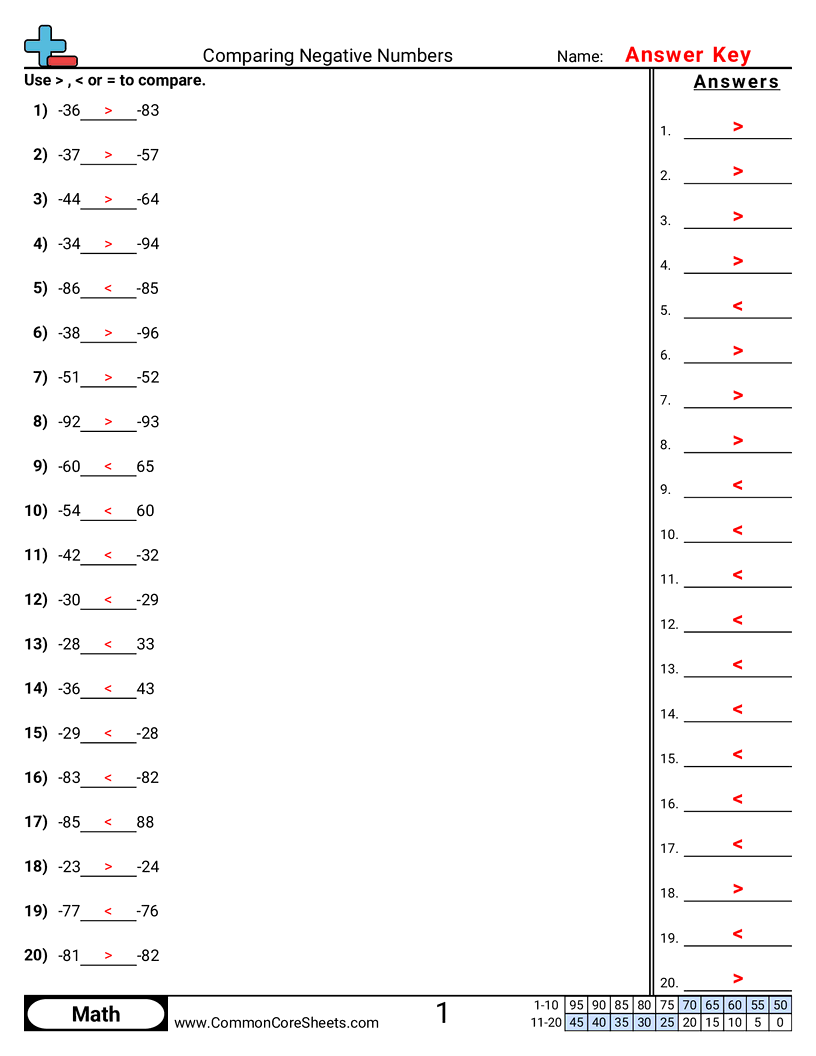
Decide which of two negative numbers is greater or less. Use the idea that numbers closer to zero are greater when both numbers are negative. Write the correct comparison symbol (>, <, or =) between two negative numbers.
6ns7a
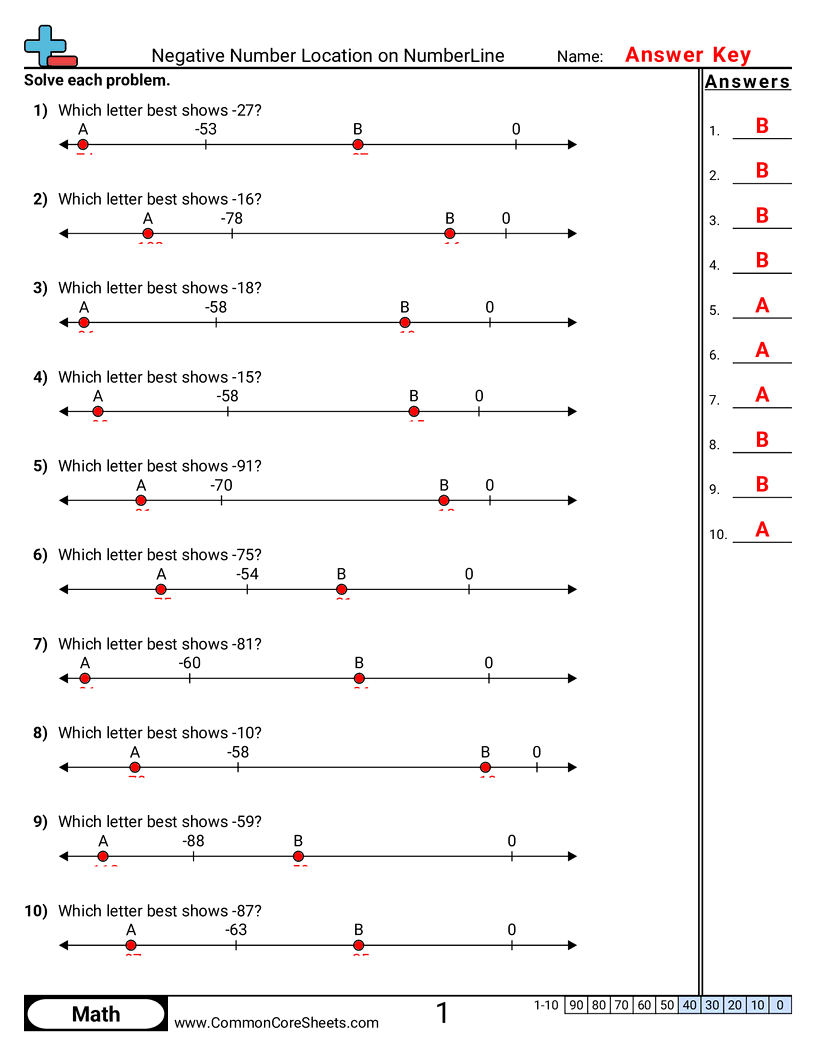
Find where a negative number belongs on a number line. Use 0 as a reference point to tell whether a number is to the left or right of zero.
6ns6a
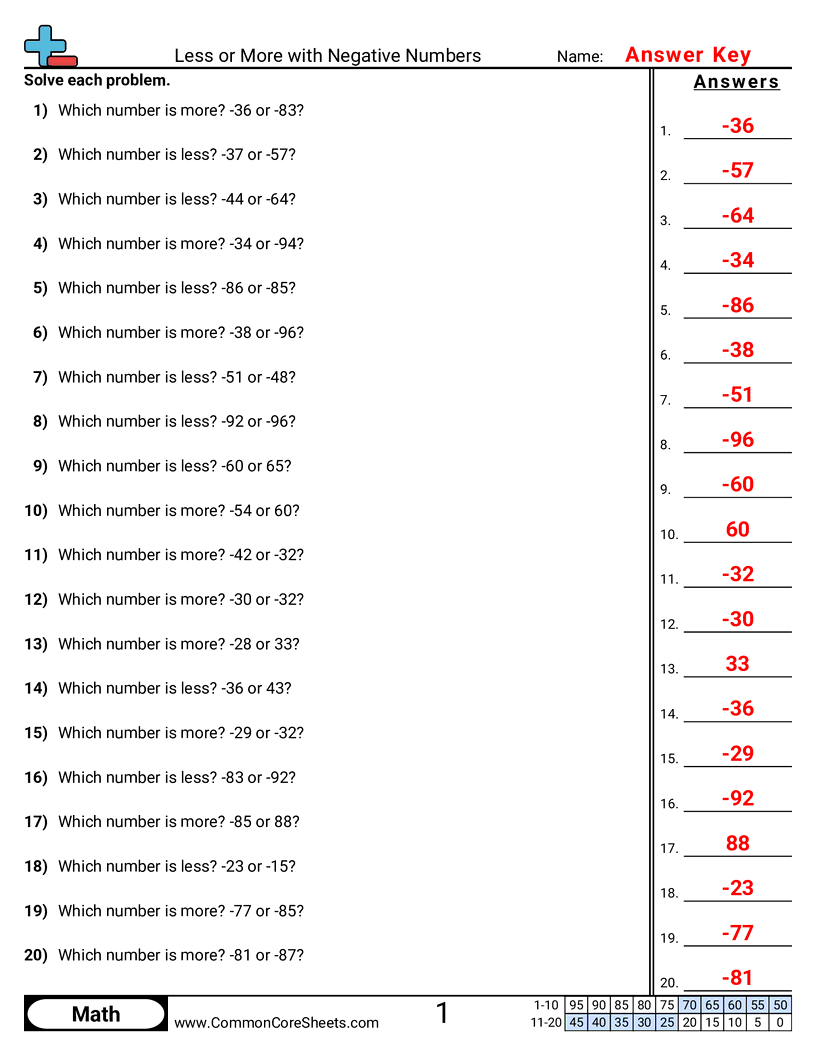
Decide which of two integers is greater or less, including negative numbers. Understand that a negative number closer to zero is actually greater than a more negative number. Compare integers by thinking about their distance from zero (absolute value) and their sign.
6ns6a
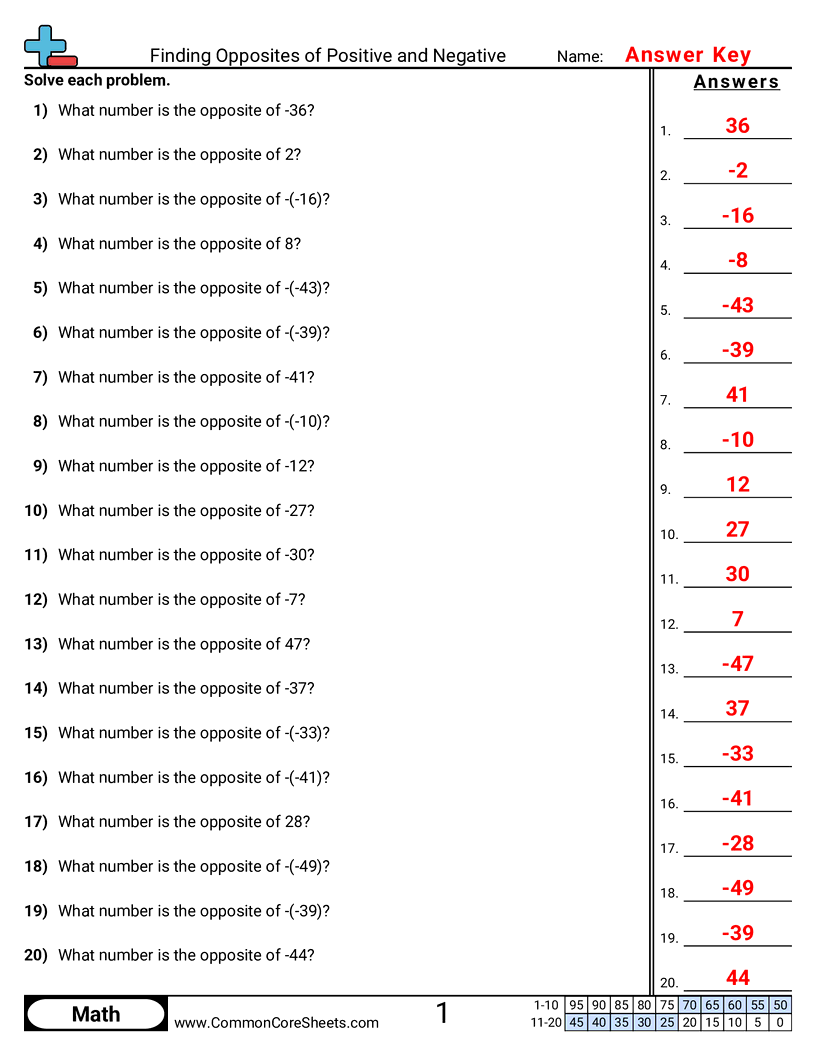
Find the opposite of a number by switching its sign. Understand that a number and its opposite add up to 0. Recognize that 0 is its own opposite.
6ns7c
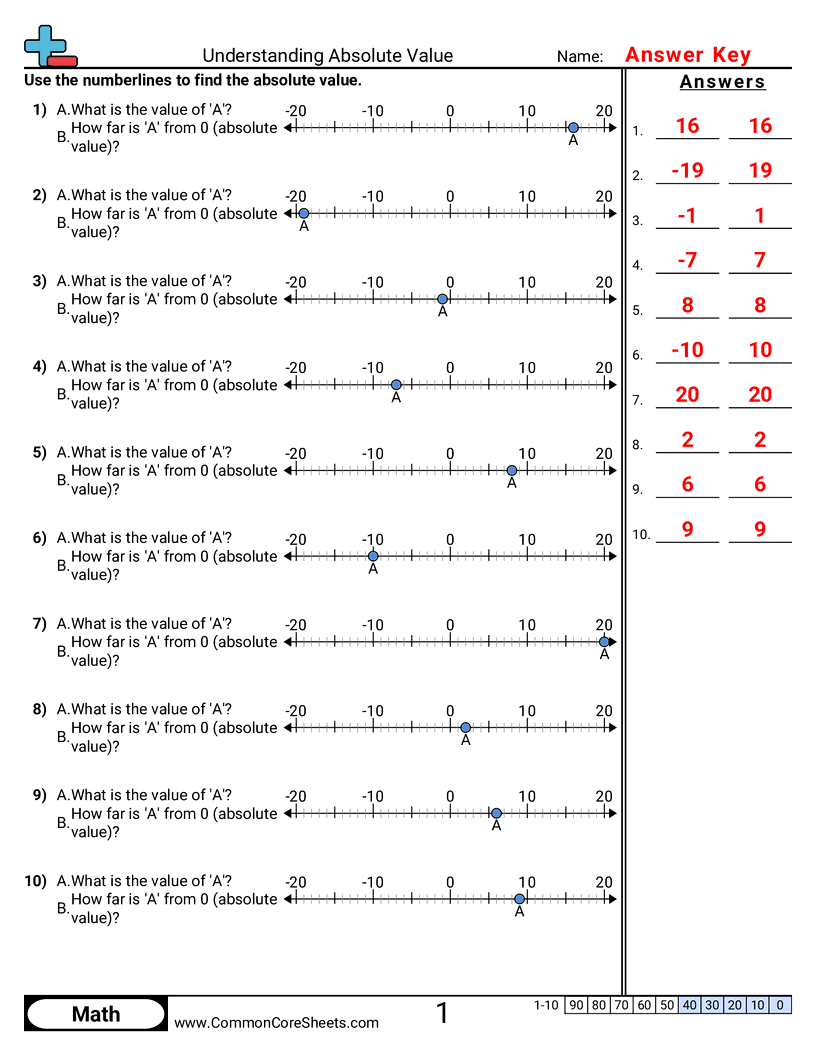
Find the absolute value of an integer by counting how far it is from 0 on a number line. Explain that absolute value is a distance, so the answer is never negative. Read and use number lines with negative and positive numbers to locate a given integer.
6ns7c
Compare positive and negative numbers to decide which one is greater or less. Use absolute value to tell which number is farther from zero. Compare expressions that mix integers and absolute values, like -4 and | -6 |.
6ns7c
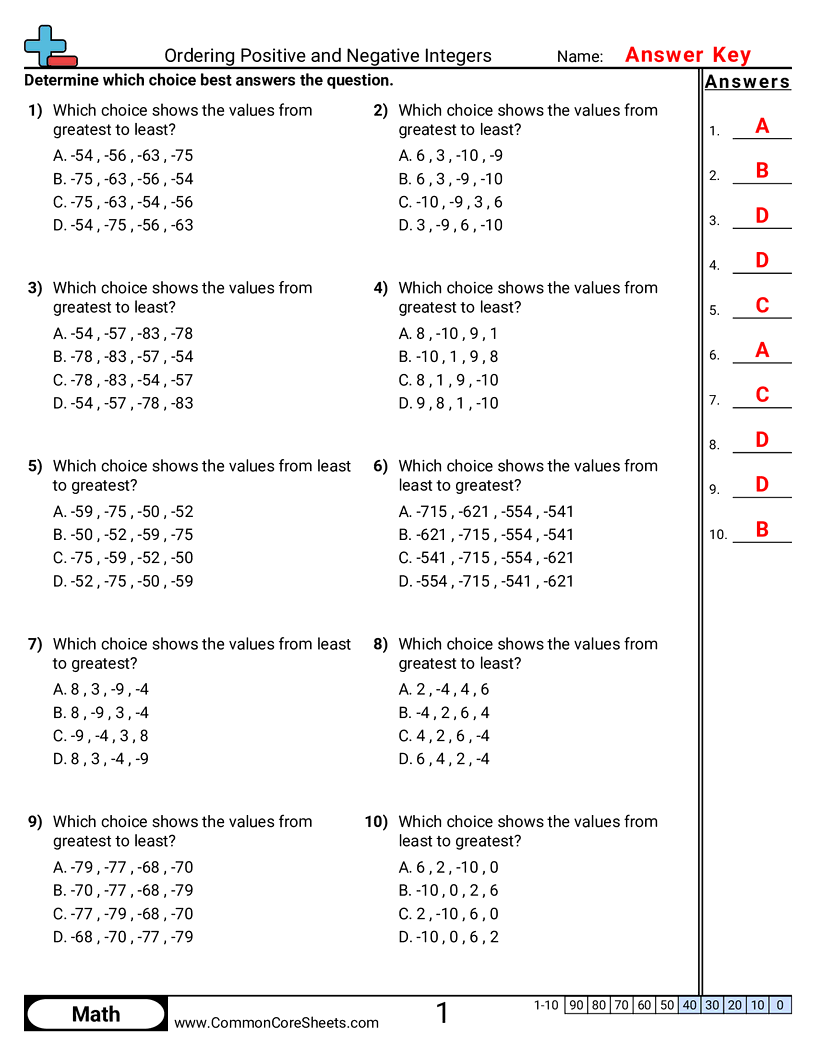
Put positive and negative integers in order from least to greatest or greatest to least.
7ns1c
Practice rewriting an expression with negative numbers so it means the same thing. Simplify expressions by combining positive and negative terms. Use the rules for adding, subtracting, multiplying, and dividing signed numbers to keep the value the same. Convert between forms like subtraction and adding a negative (for example, a − b and a + (−b)). Choose the correct equivalent expression from multiple choices.
Adding & Subtracting
Link
About these worksheets
Students practice adding and subtracting with negative numbers. Worksheets include using helper number lines, computing with positive and negative integers, adding and subtracting to zero, working with rational numbers as decimals, and showing distance on a number line. Aligned with seventh grade number system standards.
7ns1a
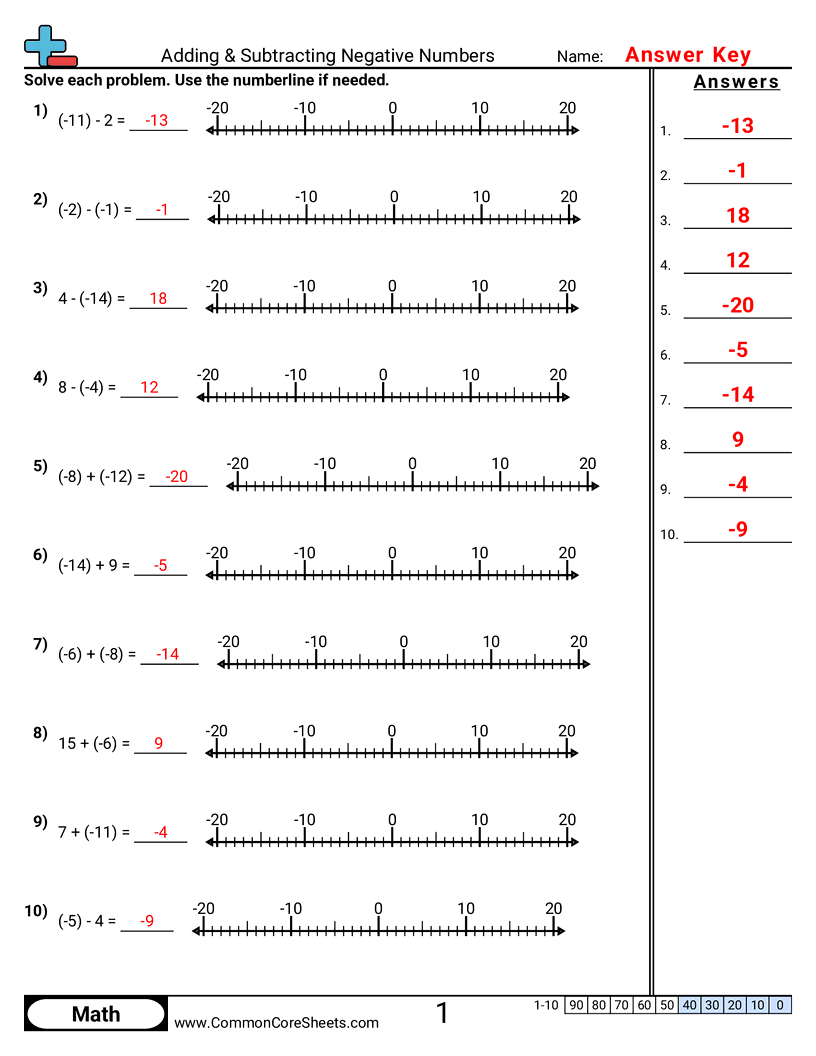
Add and subtract negative numbers to find the correct answer. Use a number line to show each move when you add or subtract integers. Decide which direction to move on the number line for adding vs. subtracting a negative.
7ns1a
Add and subtract positive and negative integers correctly. Use the plus and minus signs to tell whether a number is a gain or a loss. Find the sum or difference when both numbers are negative. Handle problems where subtracting a negative turns into adding.
7ns1a
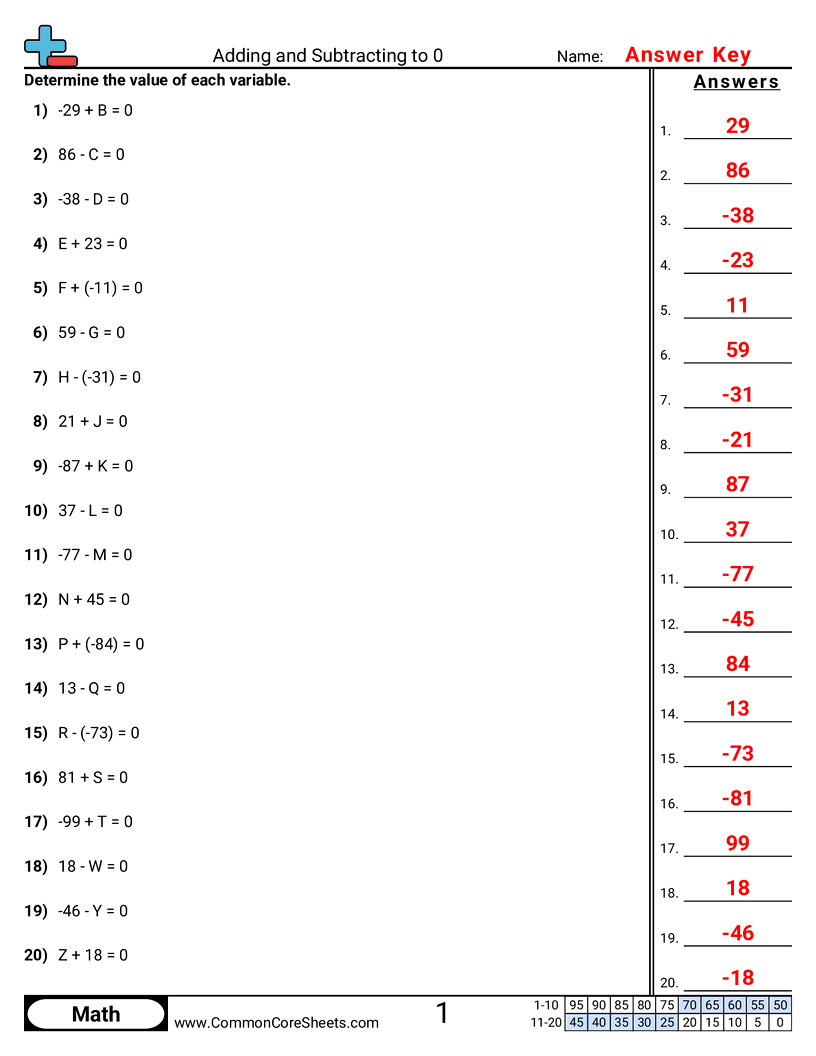
Add positive and negative integers and see when they cancel to make 0. Recognize opposite numbers (like 7 and -7) and use them to make a sum of 0.
7ns1d
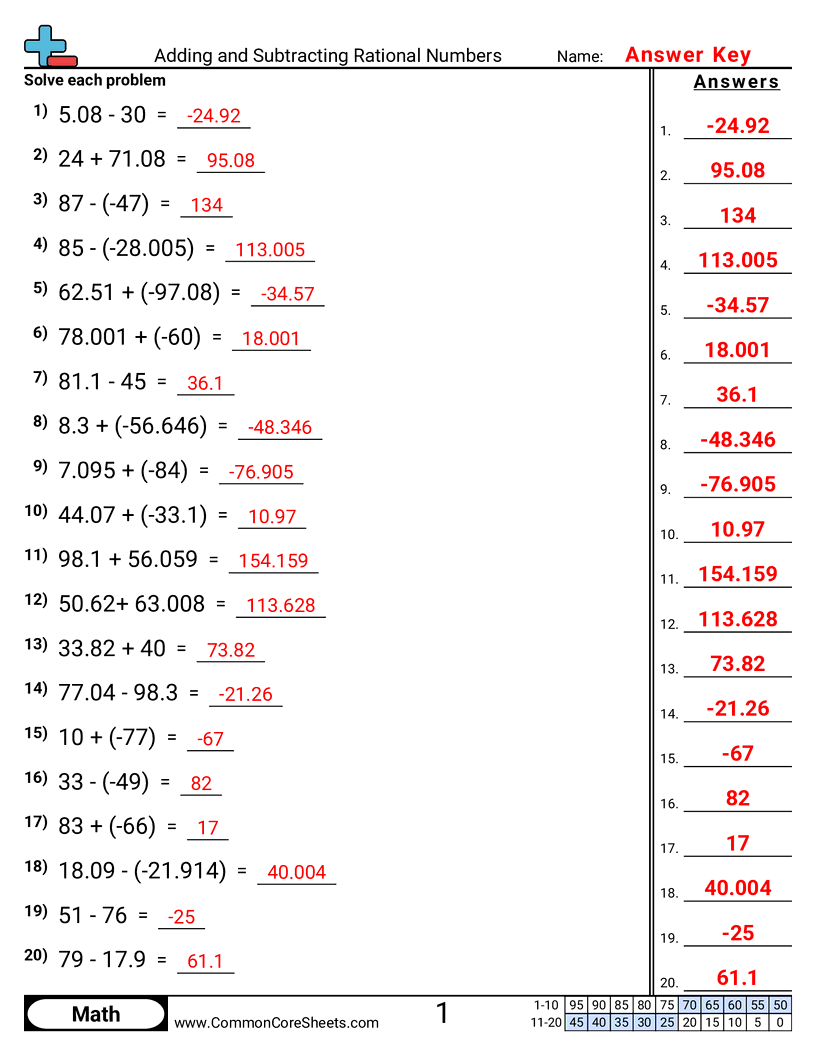
Add and subtract positive and negative numbers correctly. Work with rational numbers written as decimals. Keep track of signs and absolute value to decide whether the answer should be positive or negative.
7ns1b
Use a number line to add a negative number by moving left from the starting point. Use a number line to add a positive number by moving right from the starting point. Keep track of where you land when you make several jumps on a number line with negative numbers.
7ns1b
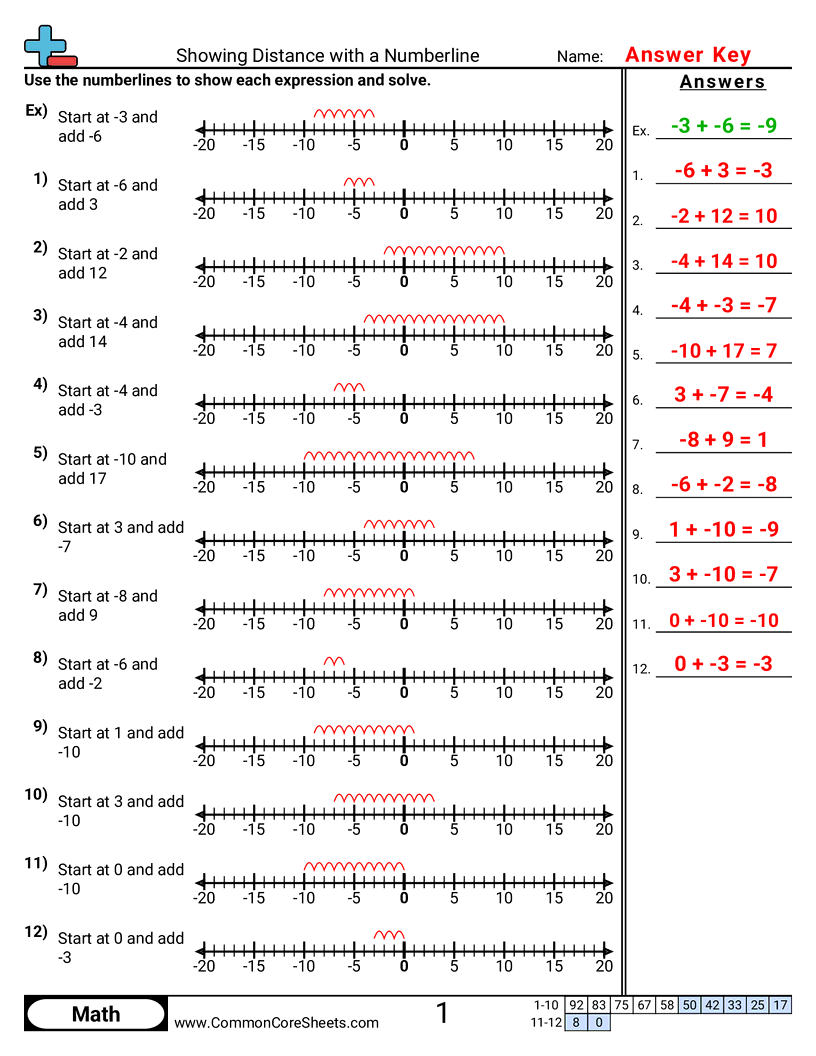
Use a number line to add and subtract positive and negative numbers by moving left and right. Start at the first number and make the correct size jumps for the second number, including when it is negative. Figure out whether the answer should be positive or negative based on where you land on the number line. Read the final position on the number line and write it as an integer.
7ns1b
Add a series of positive and negative changes Keep track of the sign of a running total Read signed values out of a table Apply a net change to a signed starting value
7ns1b 7ns1d
Match an integer expression to the number line that represents it Read the first term as a jump from zero and the second as a jump from where the first ended Recognize that adding a negative and subtracting a positive both move left Work out which expression a number line shows by reading its jumps and its marked result
Round a negative number to a named place. Estimate a sum or difference of two integers. Decide which side of zero the answer falls on.
Judge whether an estimate is the right size. Judge whether an estimate is on the right side of zero. Rule out an estimate whose signs were ignored.
Estimate an integer sum or difference. Compare a given answer against that estimate. Decide whether the answer could be correct.
Read a starting value and a change from a story. Decide whether the change is positive or negative. Estimate the result.
7ns1d
Read an integer sum from a counter model. Identify the zero pairs in a model. Explain that a positive and a negative counter make zero.
7ns1d
Match an integer expression to a counter model. Use the sign of a number to decide a counter colour. Reject a model that ignores the signs.
7ns1d
Draw a jump from zero to the first number. Draw a second jump in the direction of the sign. Mark where the sum lands.
7ns1d
Read a starting value off a number line. Read the size and direction of a jump. Read where a sum lands.
7ns1d
Start at the first number on a number line. Draw one hop per unit in the direction of the sign. Read the sum where the hops land.
7ns1d
Count the hops on a number line to find a change. Read a starting value and a landing value. Fill in the missing number in an equation.
7ns1d
Match an integer equation to a number line model. Check that the hops start at the first number. Check that the hops go in the direction of the sign.
7ns1d
Read the starting value from the dot. Count the hops to find the change. Write the complete equation the model shows.
Read a three-term integer expression. Evaluate it in order. Recognize what the brackets around a negative term mean.
Add and subtract three integers in order. Keep a running total across a change of sign. Read a negative term written in brackets or as a subtraction.
Decide which quantities in a story are negative. Add and subtract integers across two changes. Write an answer that may be below zero.
Multiplying & Dividing
Link
About these worksheets
These worksheets cover multiplying and dividing with negative numbers. Students determine the sign of products and quotients, divide negative fractions, and find missing values in multiplication and division equations involving negatives. Aligned with seventh grade standards.
7ns2a
Multiply negative and positive integers and decide whether the product should be positive or negative. Divide negative and positive integers and decide whether the quotient should be positive or negative. Use the sign rules to work quickly with problems that have one negative number or two negative numbers.
7ns2b
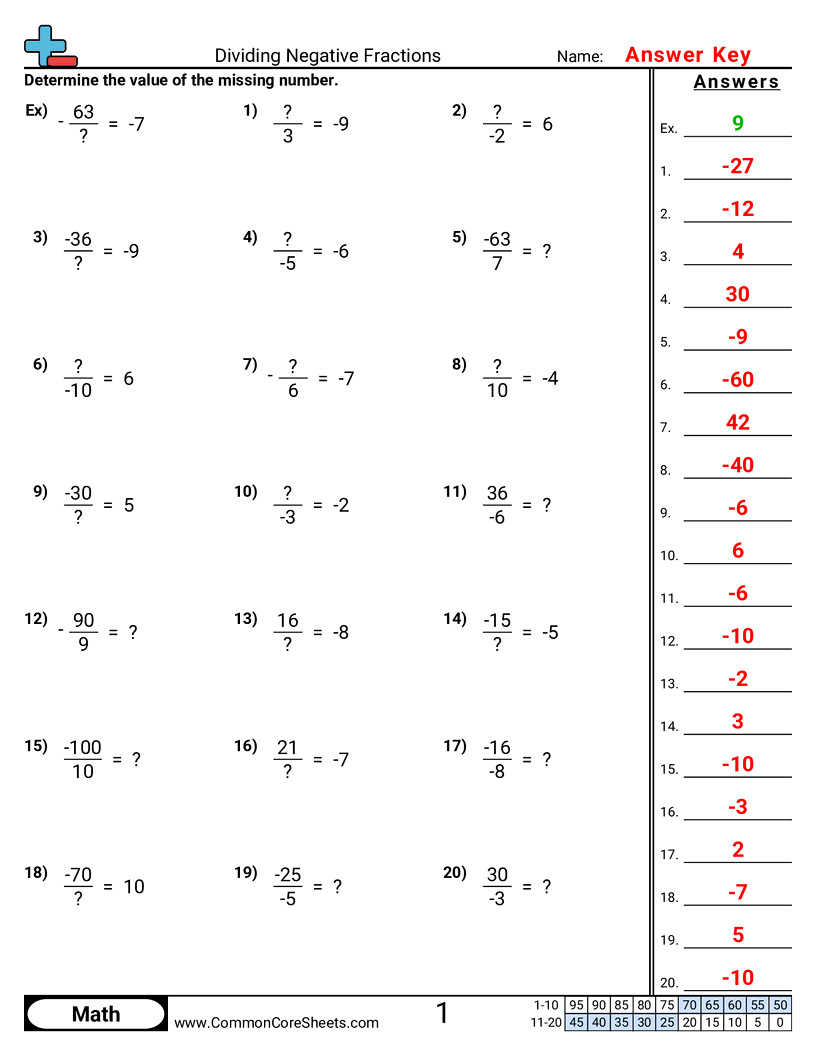
Practice dividing negative fractions and mixed signs and deciding whether the answer is positive or negative. Find a missing number in a division equation with fractions and negative values.
7ns2b
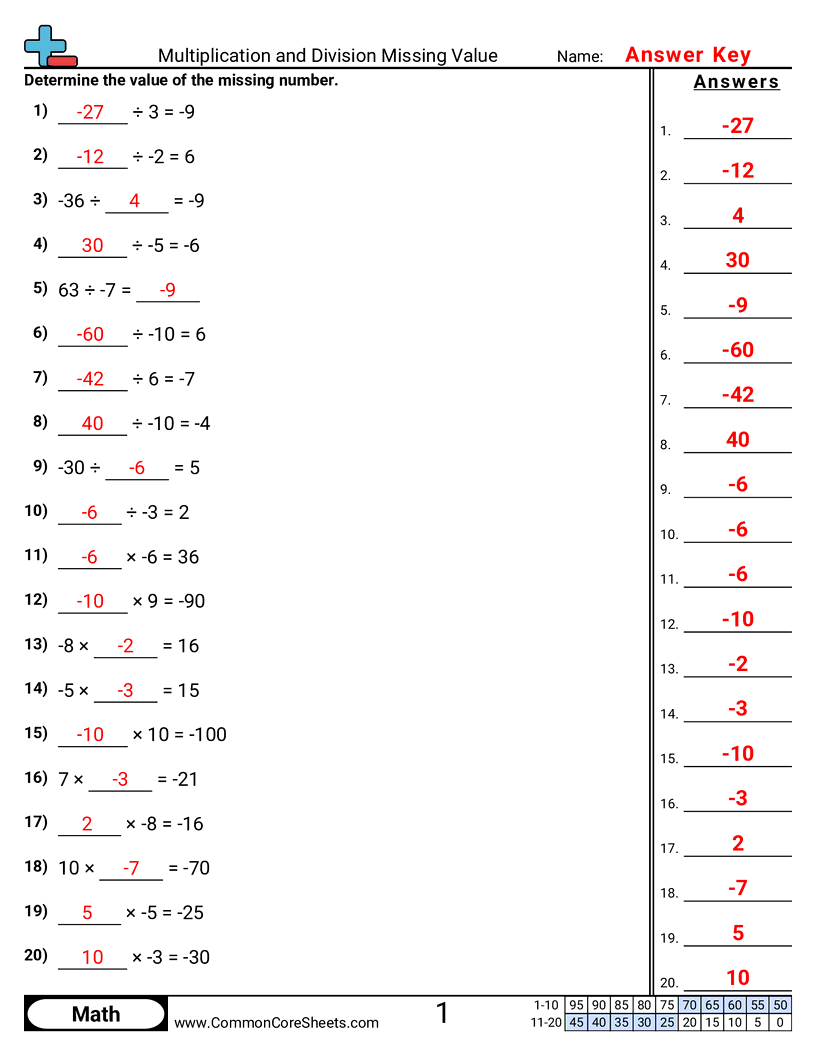
Find the missing number in multiplication equations, including when negatives are involved. Find the missing number in division equations, including when negatives are involved. Use the relationship between multiplication and division to solve for an unknown value.
About these worksheets
Students examine absolute value — the distance a number is from zero regardless of sign. These worksheets build understanding that absolute value is always positive or zero and provide practice evaluating absolute value expressions. Aligned with sixth grade standards.
6ns7c
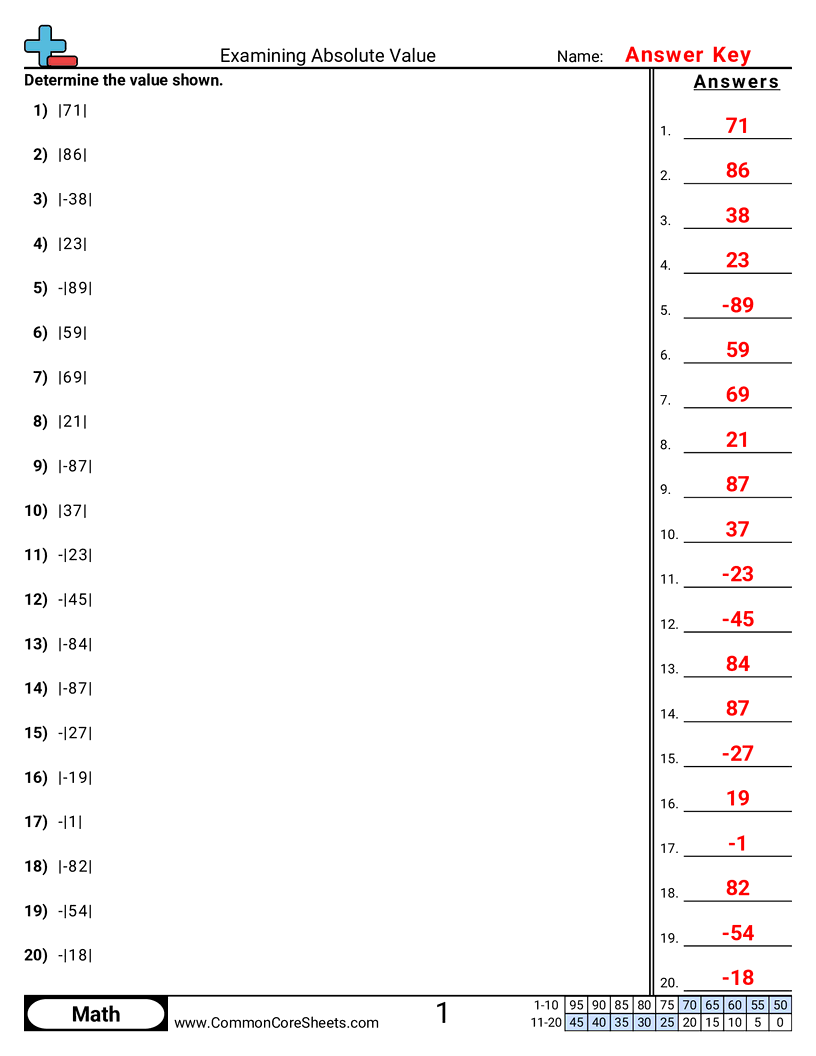
Find the absolute value of positive and negative integers. Understand absolute value as a number’s distance from zero.
Playwire Advertisement