Slopes Grid Worksheets
This slopes section provides 8th grade students with comprehensive practice identifying rates of change, y-intercepts, and slope relationships across equations, graphs, and tables. Students work with similar triangles, slope-intercept form, and compare linear functions represented in multiple formats through 12 different worksheet types.
×
About these worksheets
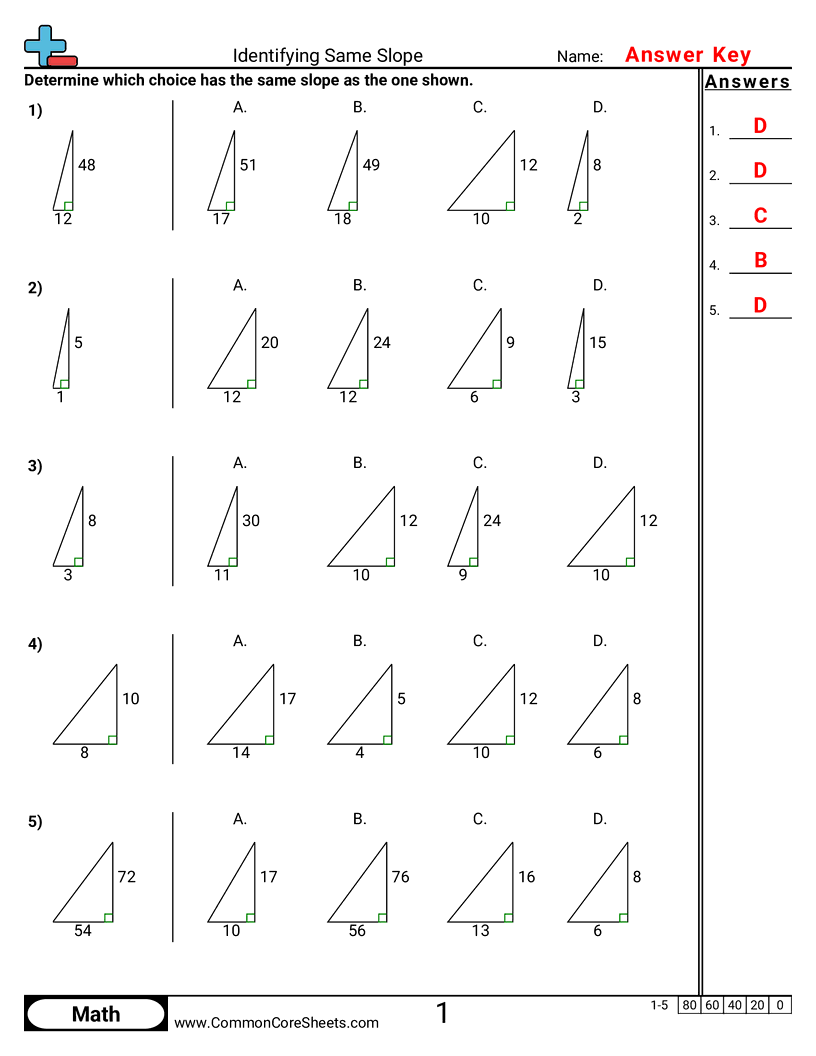
These worksheets focus on identifying lines with the same slope using similar triangles. Students compare the rise-over-run ratios of triangles to determine which lines are parallel. Aligned with eighth grade expressions and equations standards.
8ee6
Practice finding slope as the ratio of a triangle's height to its base (rise over run) Compare ratios to identify which triangle has the same slope as the given one Simplify or scale ratios to determine if two triangles represent the same steepness
8f2
Practice finding the rate of change (slope) from a description of how x and y increase or decrease together Write the slope as a fraction using the change in y over the change in x Determine the correct sign (positive or negative) based on whether x and y are increasing or decreasing
8f2
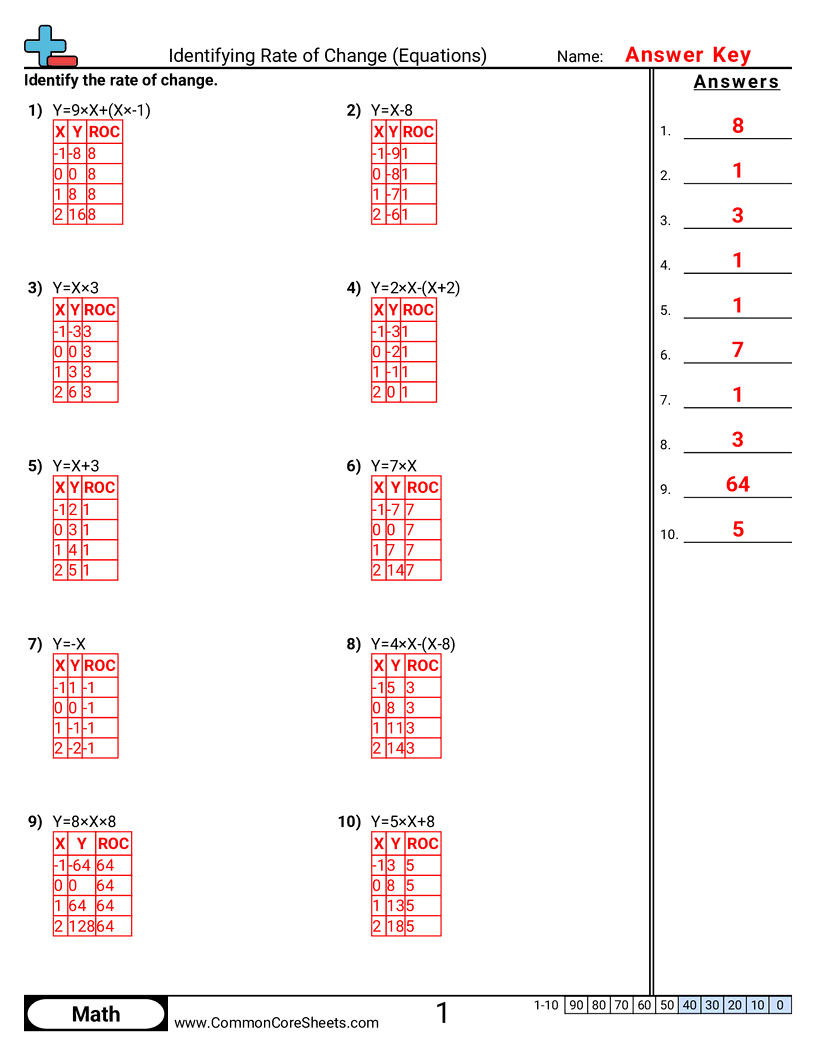
Practice finding the rate of change by plugging x values into an equation and seeing how y changes each time Fill in a table of x and y values, then calculate the difference between consecutive y values to find the rate of change Work with equations written in different forms and simplify them to spot a constant rate of change
8f2
Read points from a graph and use them to find how much y changes when x changes. Find the rate of change by counting the rise and run between two points on a line. Tell whether a line shows a positive, negative, or zero rate of change.
8f2
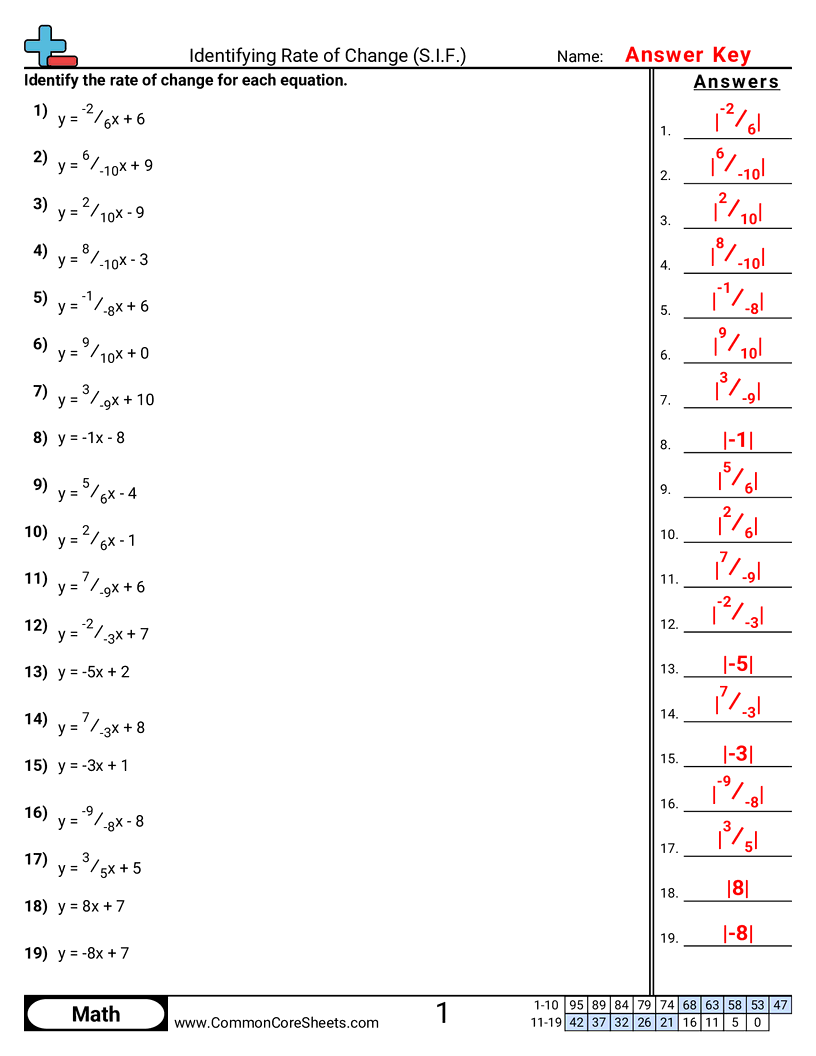
Find the rate of change (slope) from a linear equation written as y = mx + b. Tell whether the rate of change is positive, negative, zero, or not a whole number by looking at the slope. Identify the y-intercept in slope-intercept form and explain what it means as a starting value. Compare two equations by deciding which one changes faster based on their slopes.
8f2
Practice finding the rate of change from a table by calculating how much y changes for each unit change in x Use the formula (change in y) ÷ (change in x) between pairs of values in the table Work with tables that include negative numbers and values that aren't evenly spaced
8f1
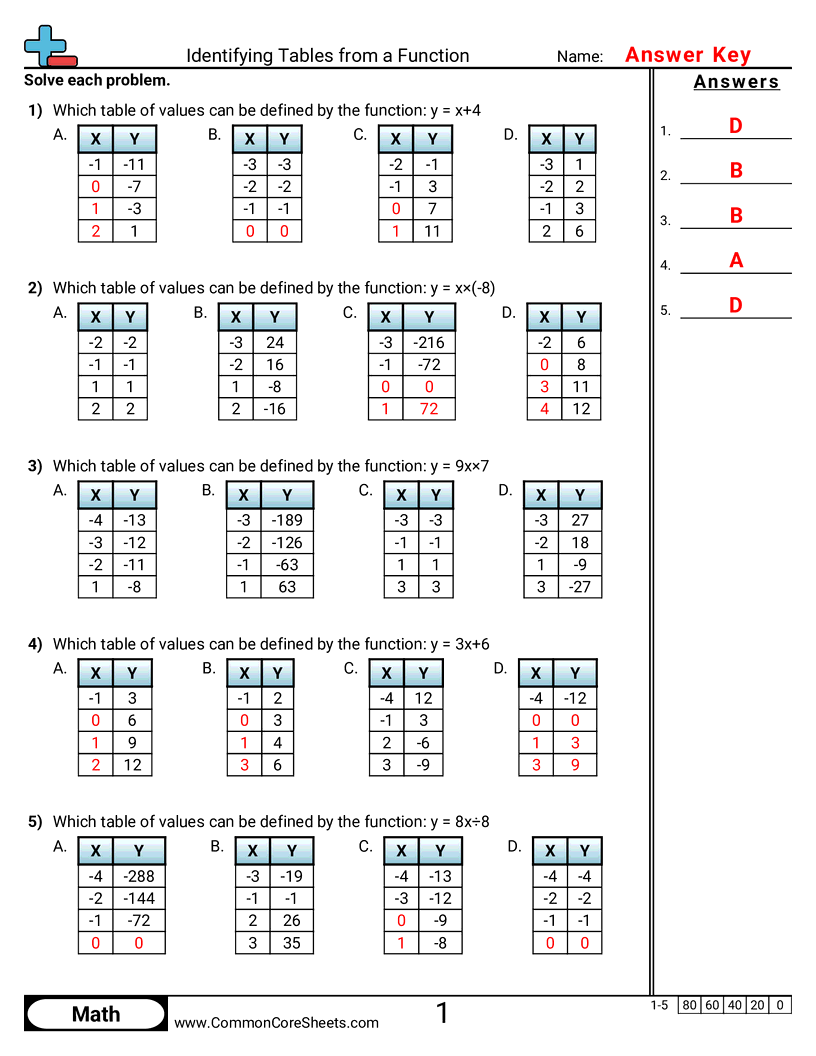
Practice matching a function equation to the correct table of x and y values Plug x values into a given equation to check if the y values in each table are correct Work with different types of functions including addition, multiplication, and combinations of both
8f2
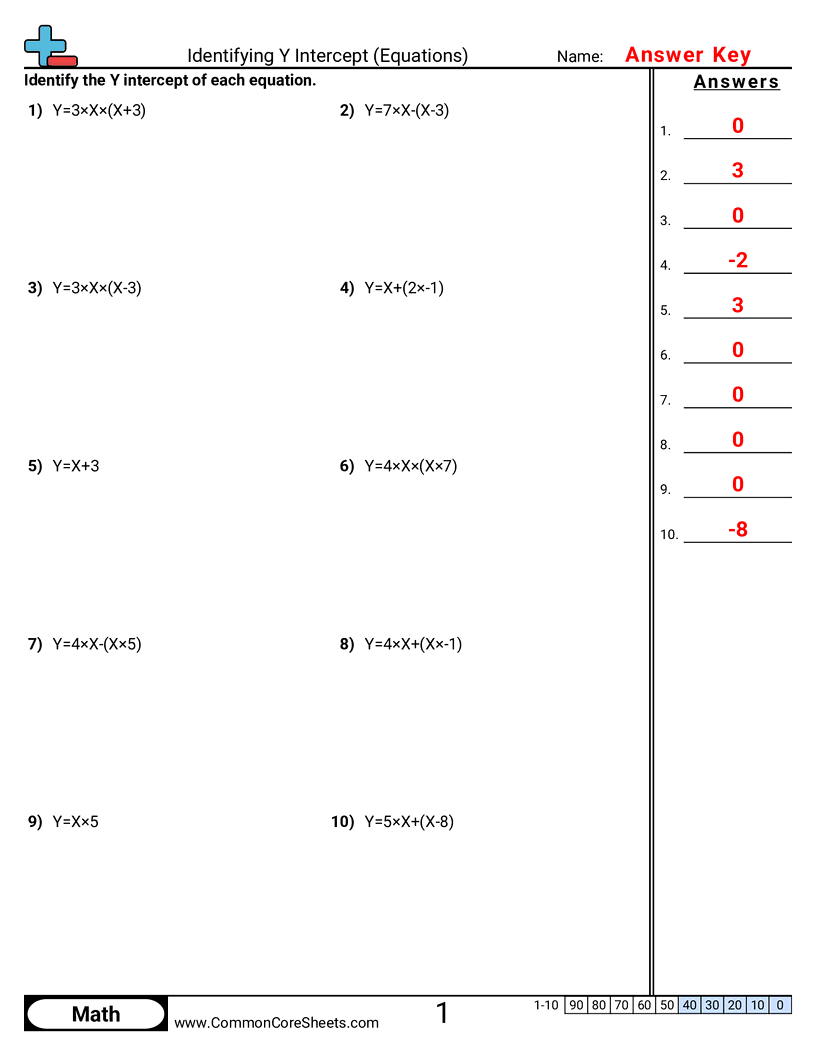
Find the y-intercept from an equation by spotting the constant term. Read the y-intercept directly from slope-intercept form (y = mx + b). Rewrite an equation into y = mx + b form so the y-intercept is easy to see.
8f2
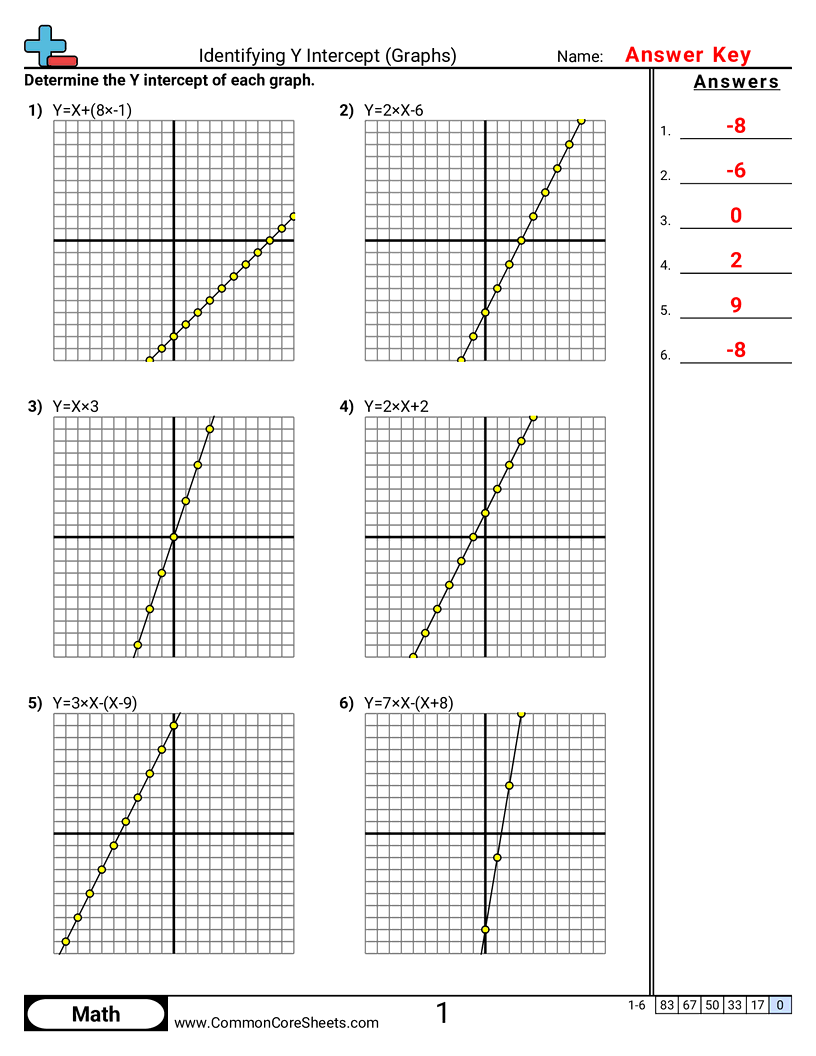
Find the y-intercept on a graph by locating where the line crosses the y-axis. Read the y-value at x = 0 and write it as an ordered pair (0, y). Use the graph’s scale and tick marks to get the correct y-intercept value, including negatives. Tell the difference between the y-intercept and other points where the line crosses the x-axis.
8f2
Practice finding the y-intercept from a table by determining the value of y when x equals 0 Use the given equation to calculate y at x = 0 when that row isn't directly in the table Work with different types of equations including simple, multi-step, and those involving multiplication and subtraction
8f2
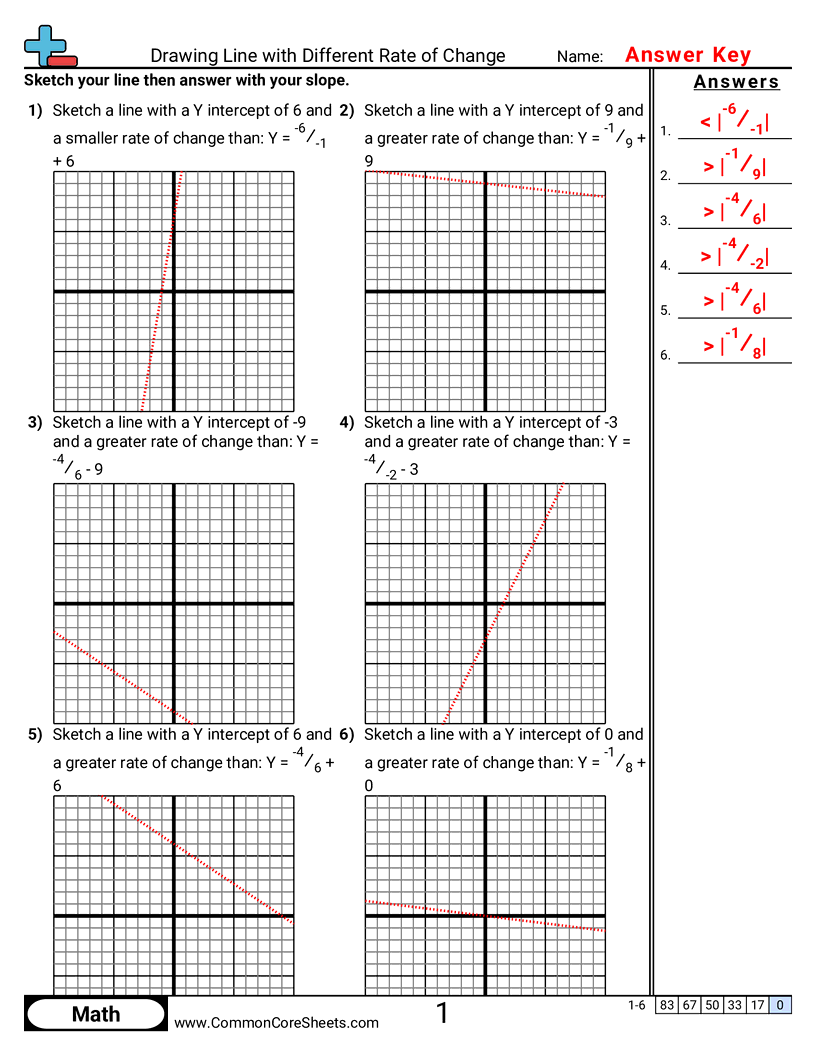
Draw a straight line on a graph when you are given its rate of change (slope). Use rise and run to plot points and keep the line going in the correct direction. Tell whether a line has a positive or negative slope by how it moves left to right.
Playwire Advertisement