CCSS 4.NBT.1 Worksheets
CCSS 4.NBT.1 (Common Core, 4th Grade): "Recognize that in a multi-digit whole number, a digit in one place represents ten times what it represents in the place to its right. For example, recognize that 700 ÷70 = 10 by applying concepts of place value and division." The worksheets below practice this standard. Each one is a free printable PDF with an answer key, comes in multiple versions, and can also be assigned digitally - no login or account needed.
More about these worksheets ▾ Show less ▴
Number and Operations in Base Ten
1 Recognize that in a multi-digit whole number, a digit in one place represents ten times what it represents in the place to its right. For example, recognize that 700 ÷70 = 10 by applying concepts of place value and division.
4nbt1
4nbt1
Multiply a two-digit number by 10, 20, 30, and other tens numbers. Use place value patterns to multiply by tens (shifting digits and adding zeros). Solve multi-digit multiplication problems accurately without a calculator.
4nbt1
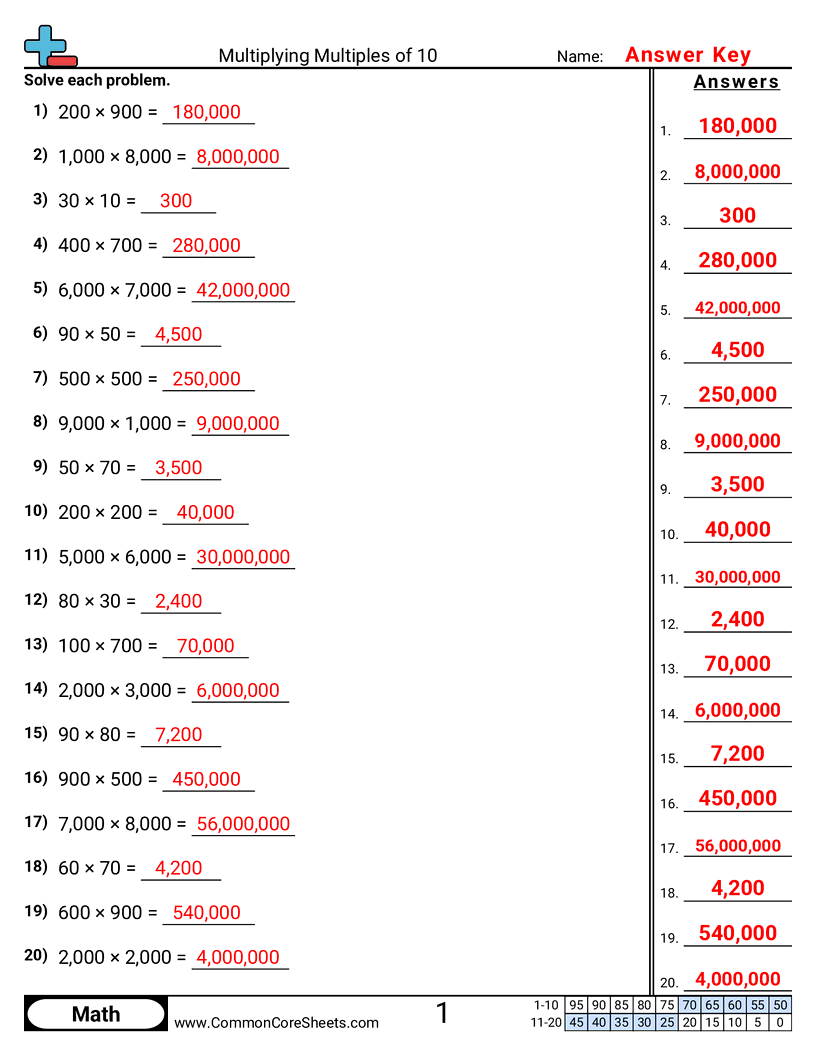
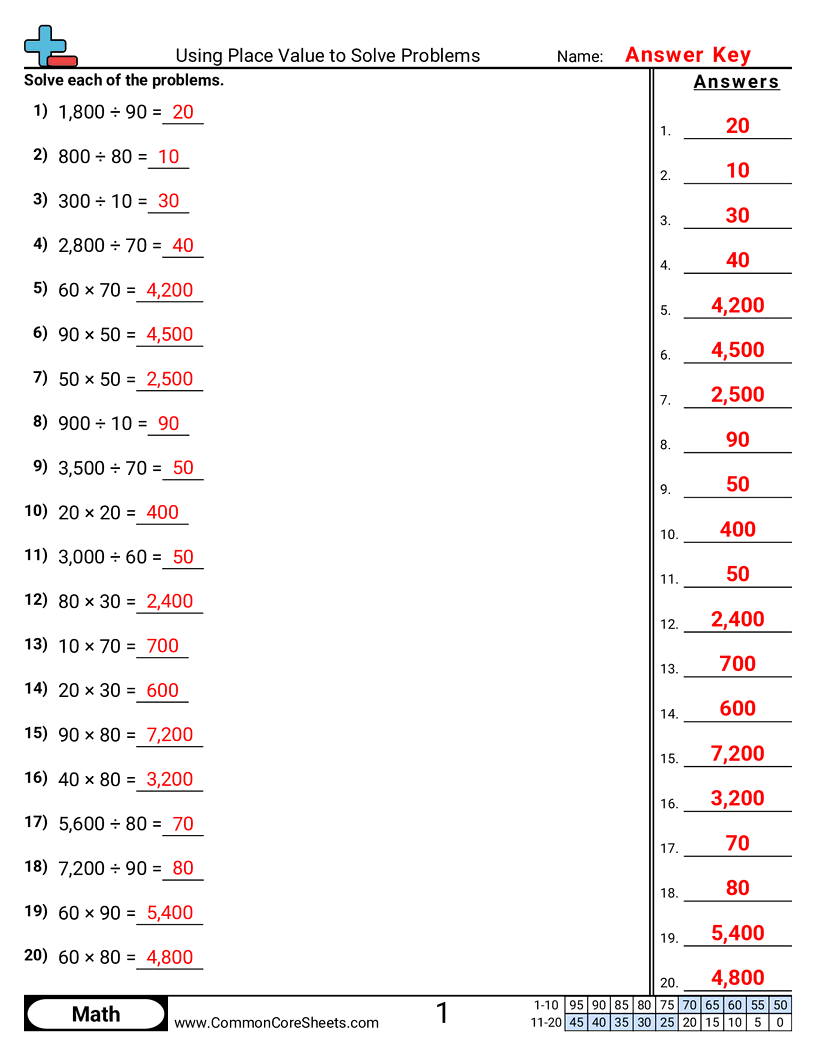
Multiply numbers when one or both factors end in zero. Use place value to add the right number of zeros to the product. Spot and use patterns when counting by tens, hundreds, or thousands to multiply faster. Multiply a basic fact first and then scale it up by 10, 100, or 1,000.
4nbt1
Practice breaking a number into its place value parts and writing it in expanded form. Practice turning expanded form back into a standard number. Practice renaming a number by trading between place values (like 1 ten = 10 ones) without changing the total. Practice using place value to make both sides of an equation equal.
4nbt1
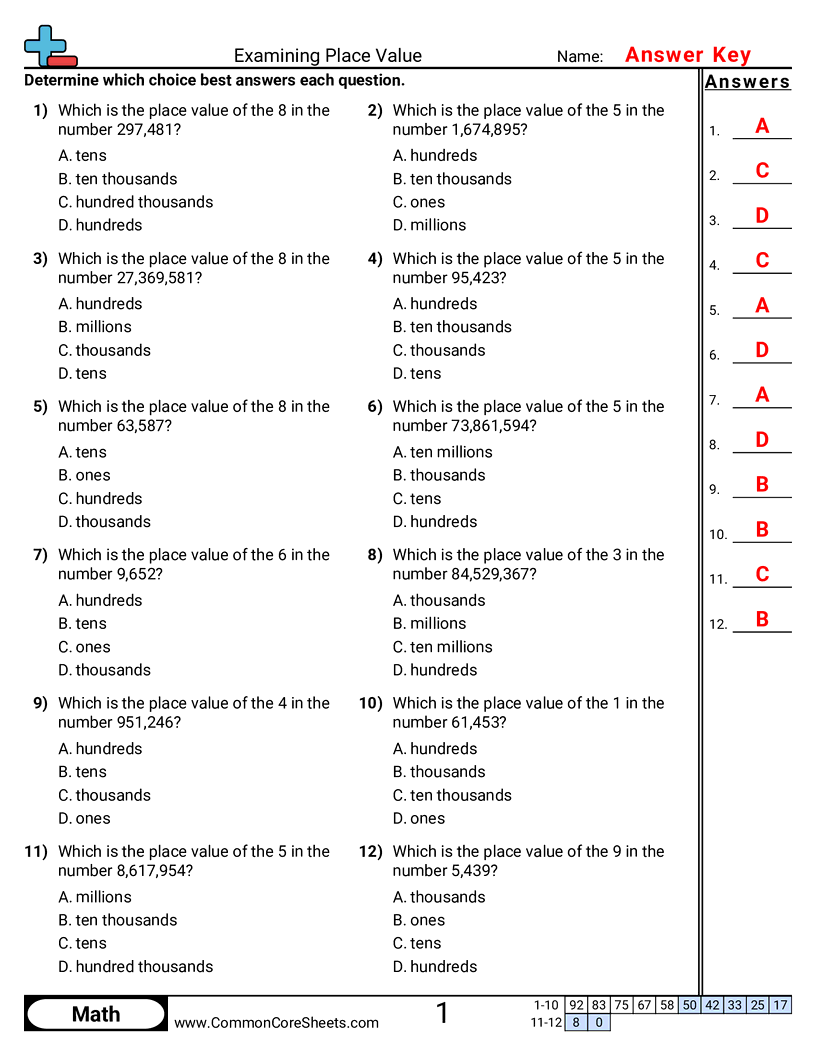
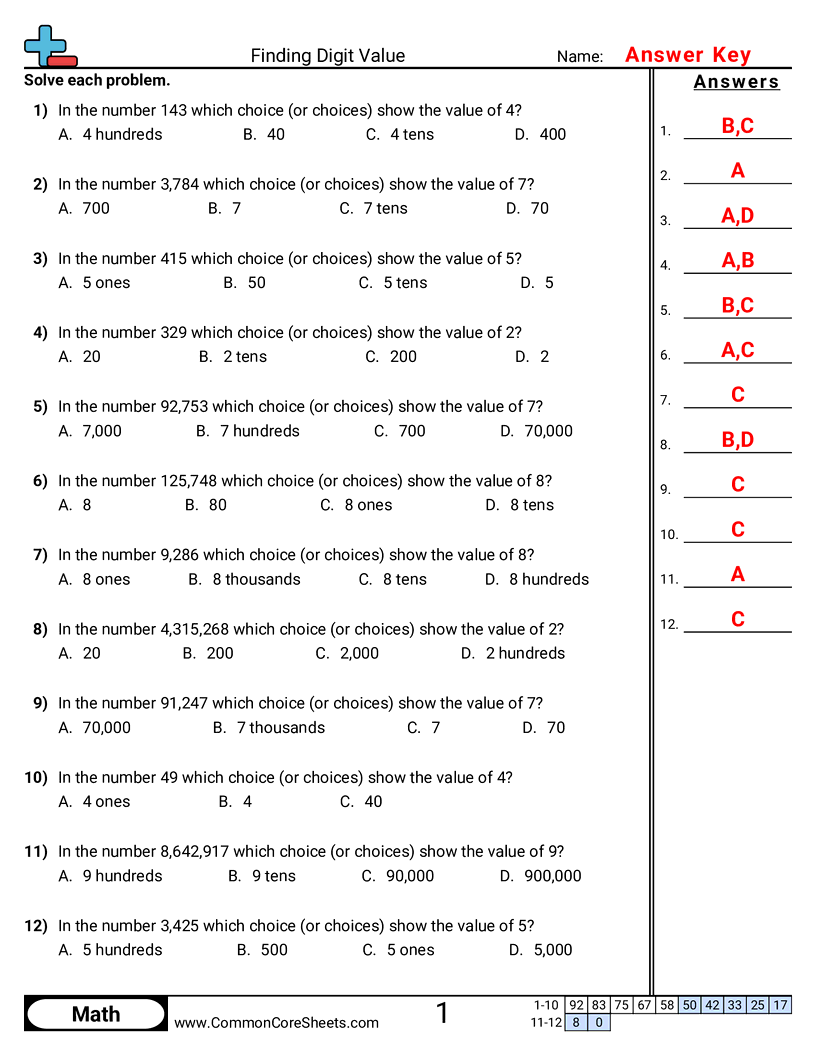
Find what a specific digit is worth based on where it sits in a number. Name the place of a digit (ones, tens, hundreds, thousands, and beyond). Use place value to tell which digits make the biggest and smallest parts of a number.
4nbt1
Find what a digit is really worth based on where it sits in a number. Match a digit to its place name (ones, tens, hundreds, thousands, millions). Read a multi-digit number and pick out the value of a specific digit. Tell the difference between a digit’s face value and its place value.
4nbt1
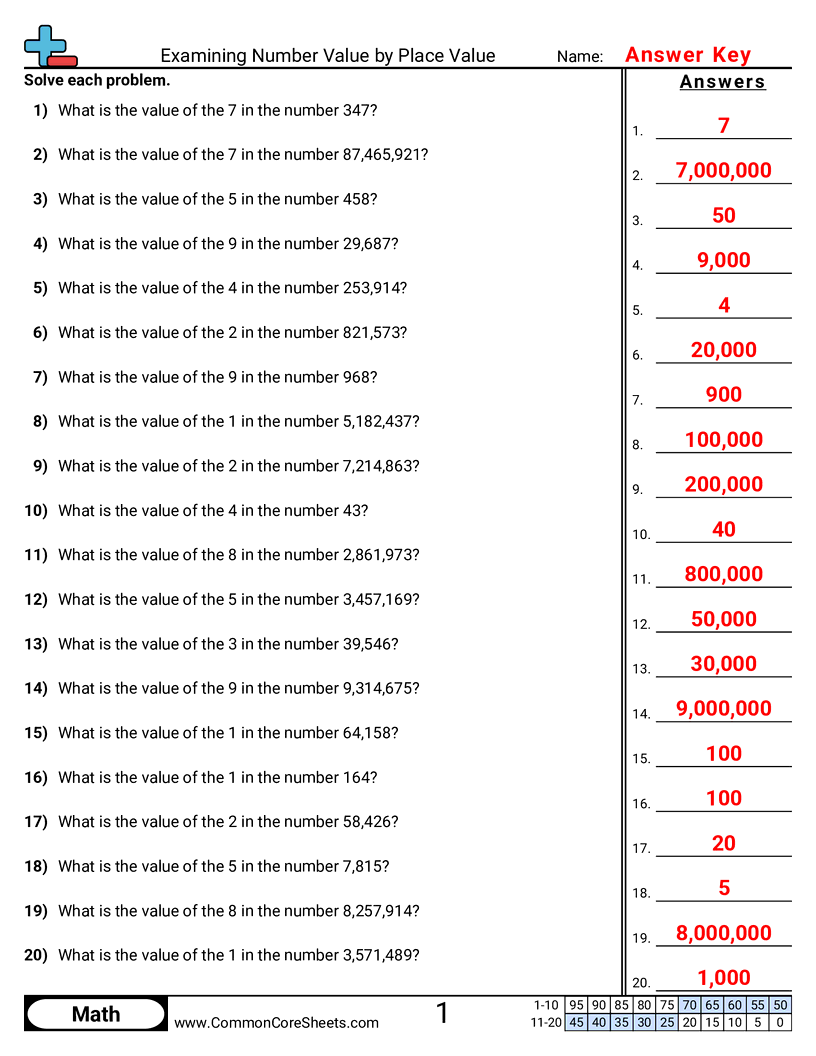
Find the value of a digit by looking at its place in the number. Tell the difference between a digit and the value it represents in a number. Write the value of a digit in standard form (like 300 or 40) based on its position.
4nbt1
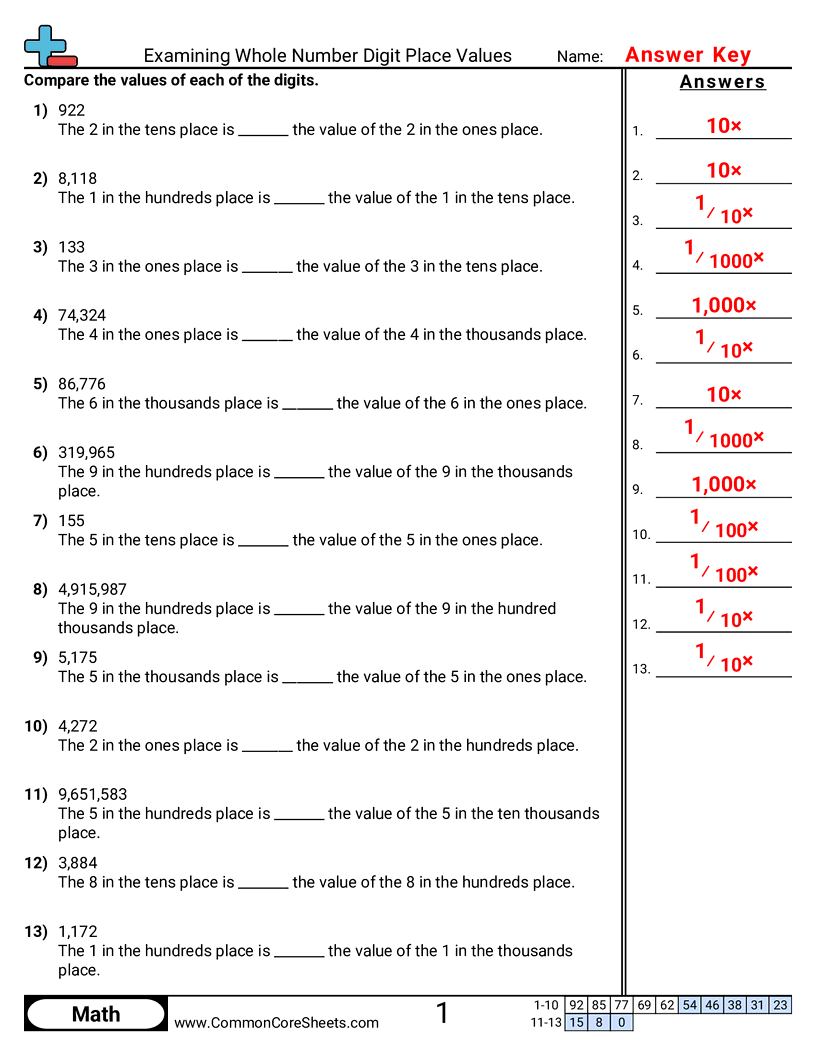
Identify the value of a digit based on its place in a whole number. Explain how multiplying or dividing by 10 changes a number’s digits and their values.
4nbt1
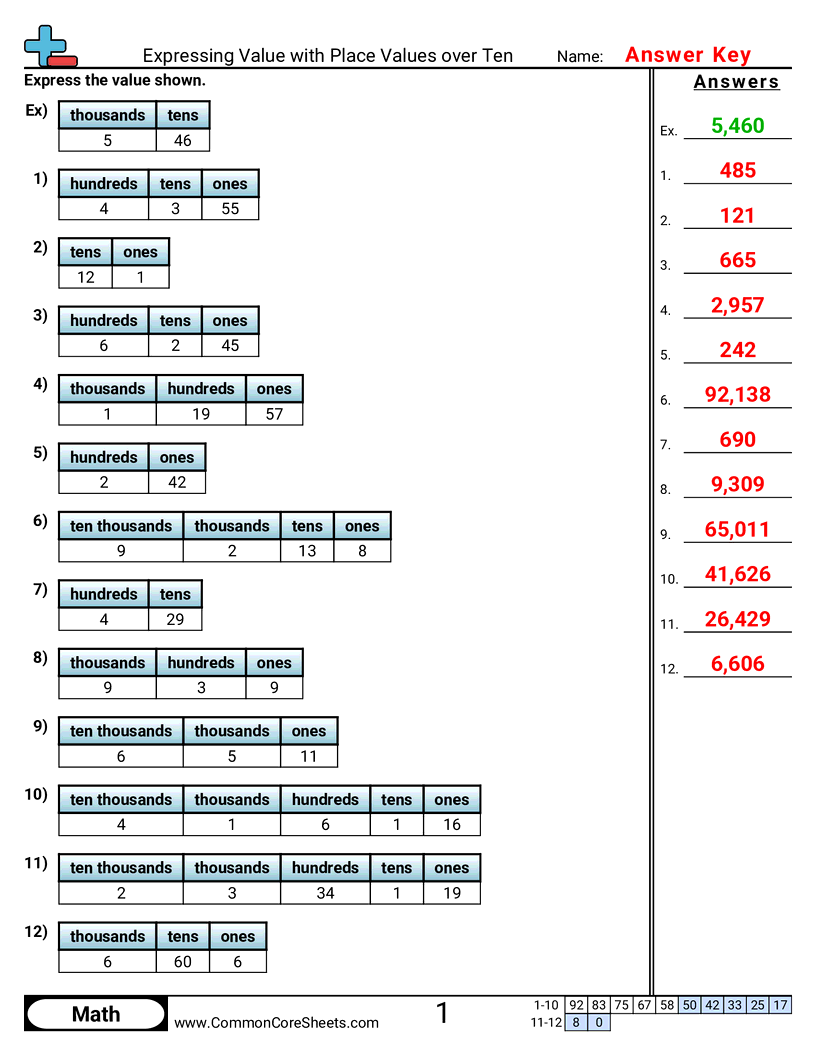
ractice finding the total value of a number when some place-value columns hold a number bigger than 9 Regroup values that spill over into the next place (like 46 tens becoming 4 hundreds and 6 tens) Work with numbers of different sizes, from hundreds up to ten thousands
4nbt1
Practice finding missing place-value entries when some columns can hold numbers greater than 9 Figure out what value is needed in a blank column so that all the parts add up to the given number Understand that a number can be broken down into non-standard place-value combinations (like 12 tens instead of 1 hundred and 2 tens)
4nbt1
Find the value of a specific digit in a number (like knowing the 7 in 3,742 means 700). Use place value names to explain what each digit stands for in a whole number. Compare digits in different places to see how the same digit can mean different amounts.
4nbt1
Multiply a whole number by 10, 100, or 1,000 by shifting digits to the left. Divide a whole number by 10, 100, or 1,000 by shifting digits to the right.
4nbt1
Practice multiplying numbers by 10 and 100 Understand how a number gets bigger when multiplied by 10 or 100 Compare equations to find the one that is correct Recognize the pattern of adding zeros when multiplying by 10 and 100
Advertisement