American Measurement Worksheets
This section provides comprehensive practice with American customary measurement units for grades 2-5. Students work with rulers, estimate lengths, convert between inches, feet, yards, and miles, and solve addition and subtraction problems with measurements. Activities include reading rulers to half and quarter inches, creating line plots with measurement data, and working with mixed unit conversions.
×
About these worksheets
Students practice measuring lengths using American customary units. Worksheets include reading rulers in inches, estimating distances, choosing appropriate units, converting between inches, feet, yards, and miles, adding and subtracting measurements in feet and inches, and working with mixed unit conversions. Resources span second through fifth grade standards.
2md1
Read a metric ruler to find how long a bar is in centimeters. Write the length using the correct decimal location.
3md4
Measure the length of an object using a ruler and standard units. Write down measurements clearly so they can be compared. Make a line plot to show a set of measurements.
4md1
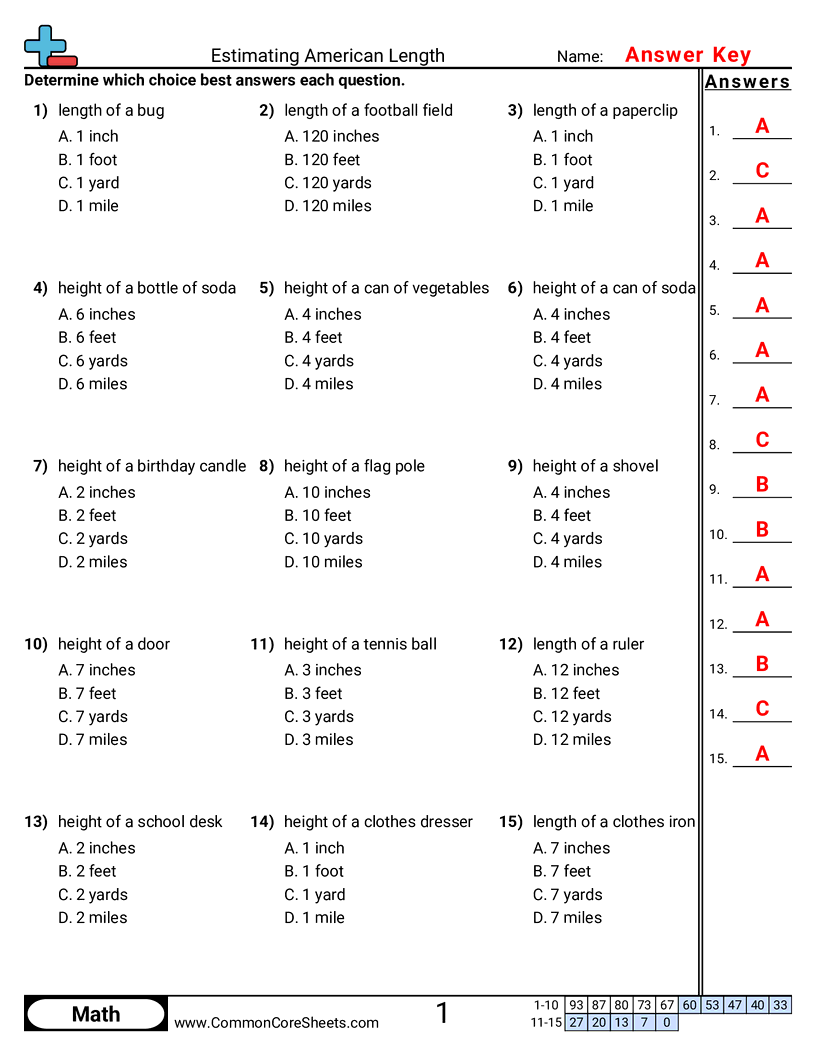
Get better at making a reasonable guess for how long an object is without measuring it. Choose the best length from a few options by comparing what you see to familiar sizes (like an inch, foot, or yard). Decide which unit makes sense for an object’s length (inches, feet, or yards). Use benchmark lengths to tell when an estimate is too short or too long.
4md1
Choose whether inches, feet, yards, or miles makes the most sense for a given distance. Use what you know about common objects and places to make a reasonable estimate of a length. Explain why one unit is more appropriate than another for measuring a specific distance.
5md1
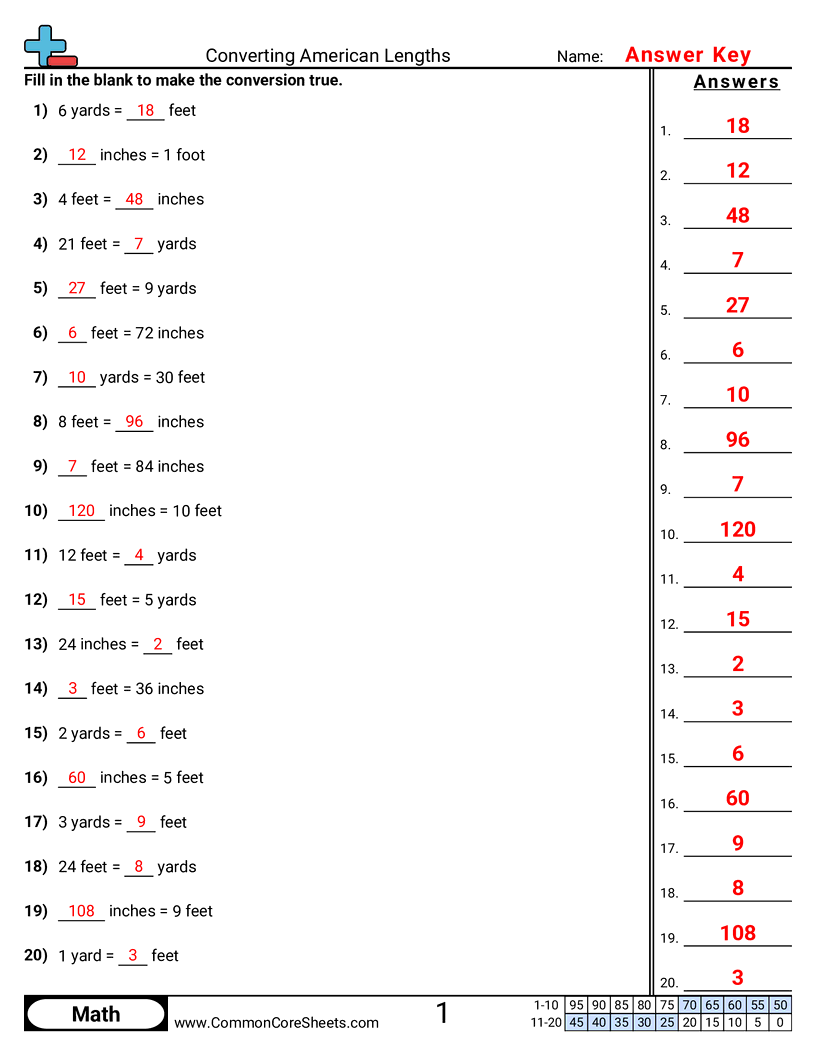
Convert between inches, feet, yards, and miles using the right conversion facts. Multiply or divide by conversion factors to change a measurement to a different unit.
4md2
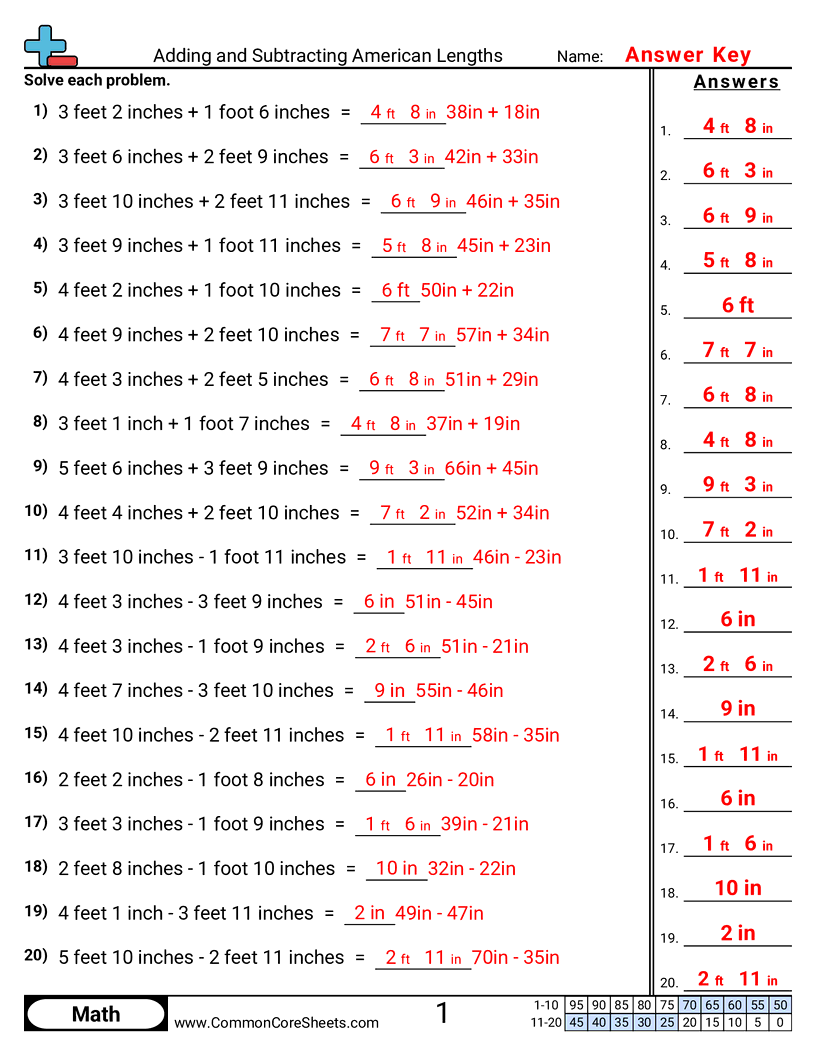
Add lengths written in feet and inches. Subtract one feet-and-inches measurement from another. Regroup between inches and feet when the inches add past 12 or when you need to borrow a foot.
4md1
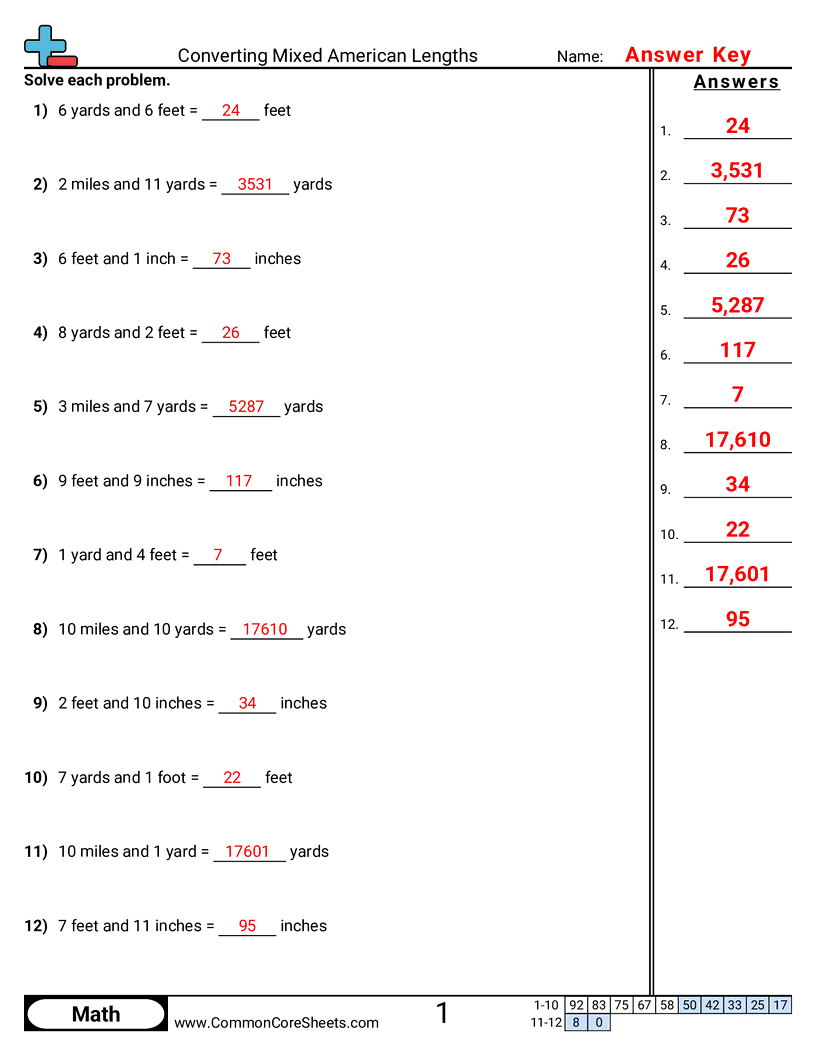
Convert a measurement written in mixed units (like feet and inches) into just the smaller unit. Use the correct conversion facts between inches, feet, yards, and miles.
3md4
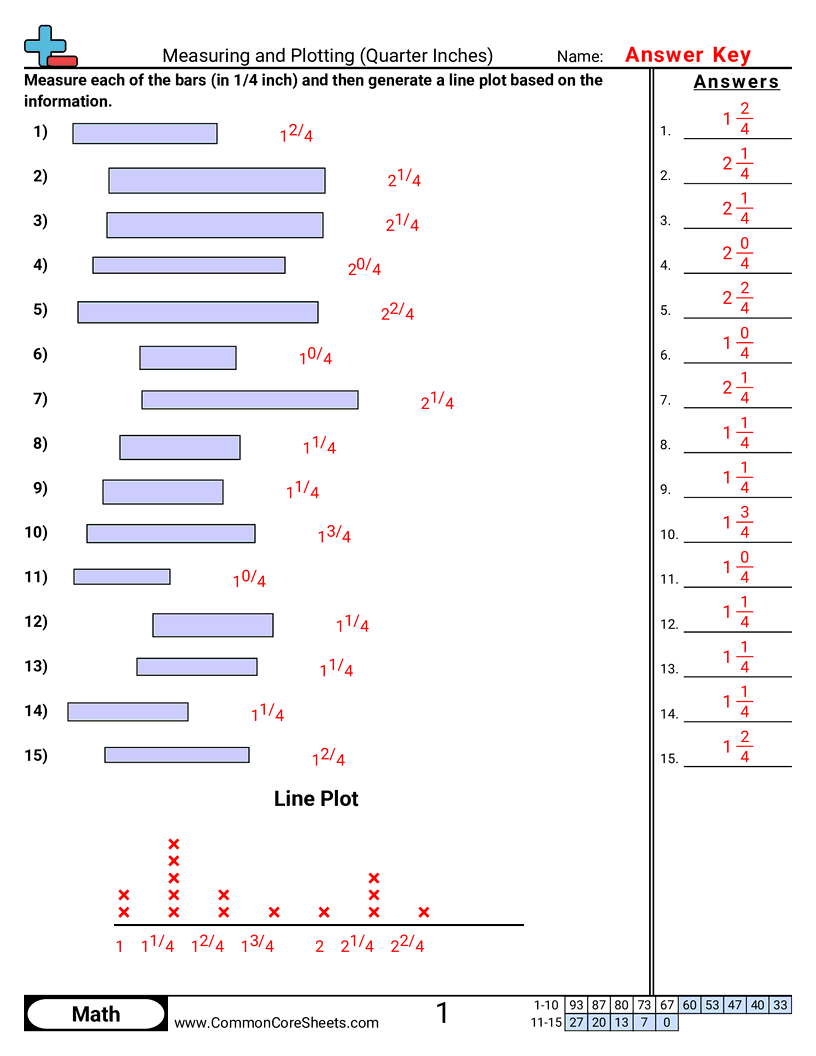
Measure the length of a bar using a ruler marked in quarter inches. Read and write measurements that include 1/4-inch parts (like 2 3/4 inches). Make a line plot and mark how many times each length shows up.
4md1
Choose the customary unit that best fits what is being measured. Tell length, weight and liquid volume apart from the situation alone. Use the largest unit that still gives a number of at least 1.
5md1
Convert between inches, feet and yards. Choose whether to multiply or divide. Use the right conversion factor.
5md1
Convert between millimeters, centimeters and meters. Decide how many places to move. Choose whether to multiply or divide.
5md1
Use a conversion fact given in the problem. Decide whether to multiply or divide by it. Keep the whole problem inside one measurement system.
2md3
Estimate a length using a benchmark. Judge the order of magnitude of a measurement. Estimate in both customary and metric units.
Playwire Advertisement