Identifying Value Worksheets
These identifying value worksheets help students in grades 1-4 develop essential number comparison and place value skills. Activities include comparing two-digit and three-digit numbers, identifying even and odd numbers, creating equations, and using inequality symbols to compare values within one million.
×
About these worksheets
These worksheets develop number comparison and identification skills across grade levels. Activities include finding more and less, comparing two- and three-digit numbers and numbers within one million using inequality symbols, identifying even and odd numbers visually, creating even equations, building numbers from place value descriptions, using place value for multiplication and division, identifying integers, comparing relative size with addition and subtraction, and evaluating number sentences. Resources span first through fourth grade and beyond.
1md4
Look at a few objects and decide which group has more or less.
1nbt3
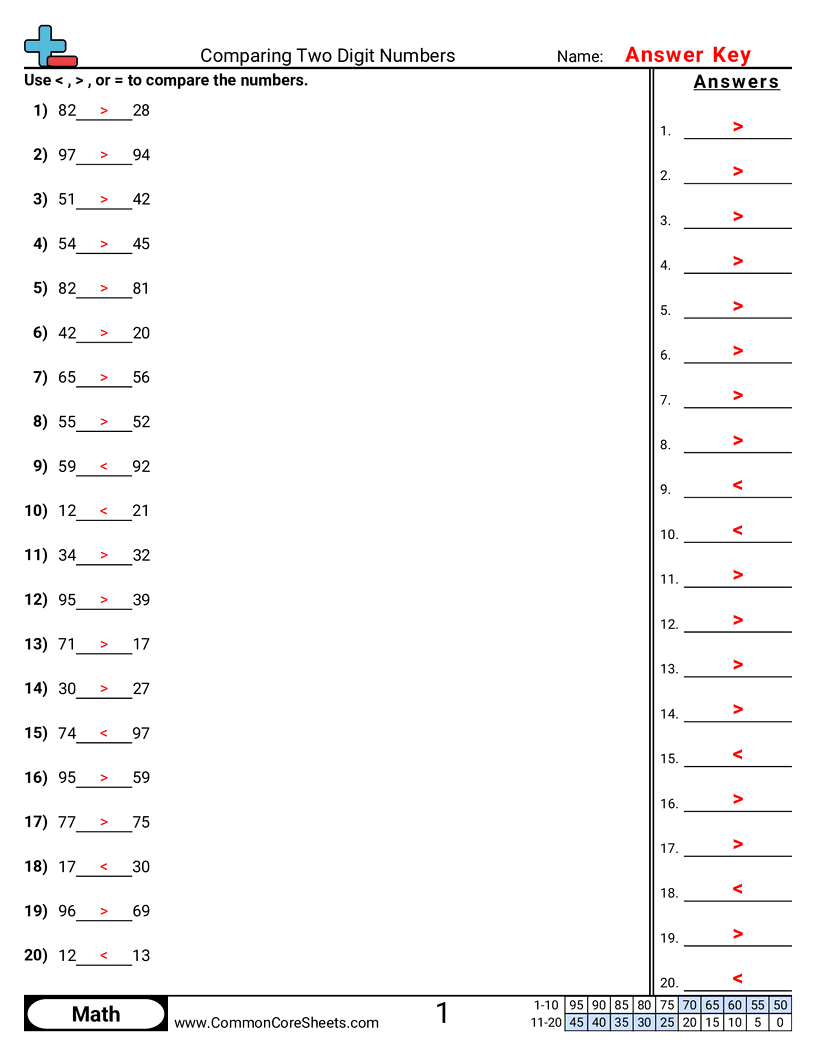
Compare two two-digit numbers and decide which one is greater, less, or equal. Use the symbols >, <, and = to show how two numbers relate. Look at the tens digit first (and then the ones digit if needed) to compare numbers quickly.
2oa3
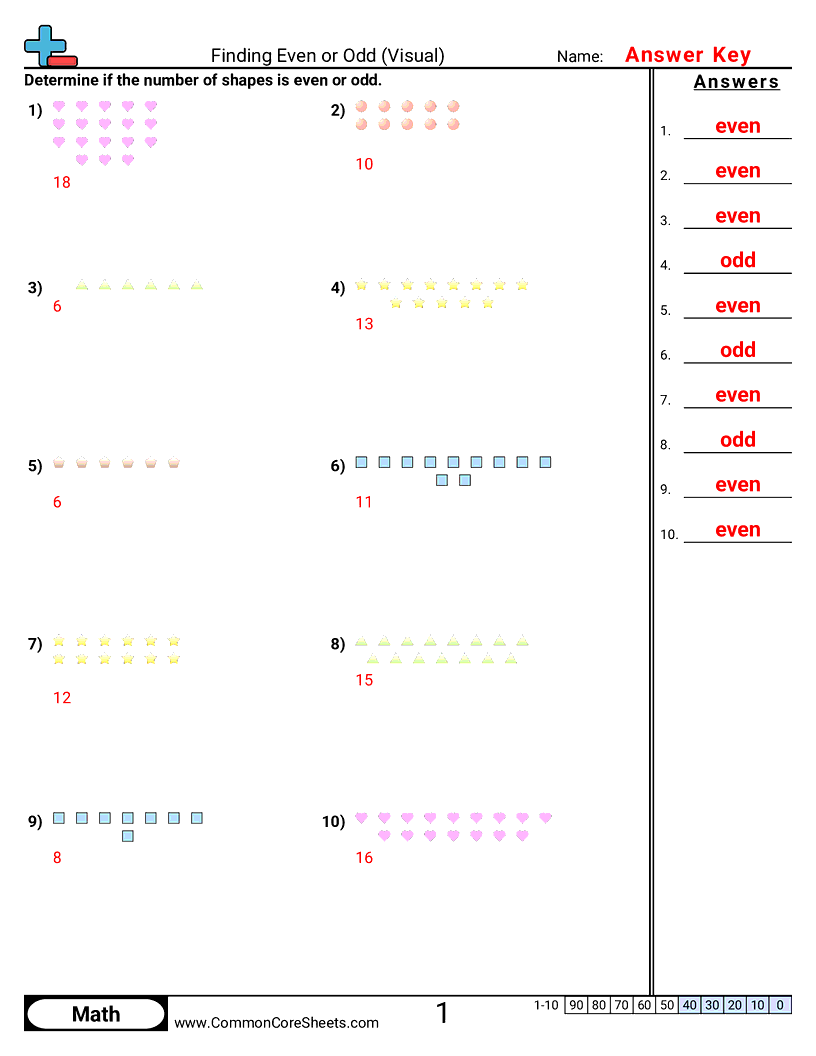
Count a group of shapes and decide if the total is even or odd. Use pairing to see if every shape can be matched with a partner with none left over. Explain even and odd using simple words like "pairs" and "one left." Recognize that even numbers can be split into two equal groups and odd numbers cannot.
2oa3
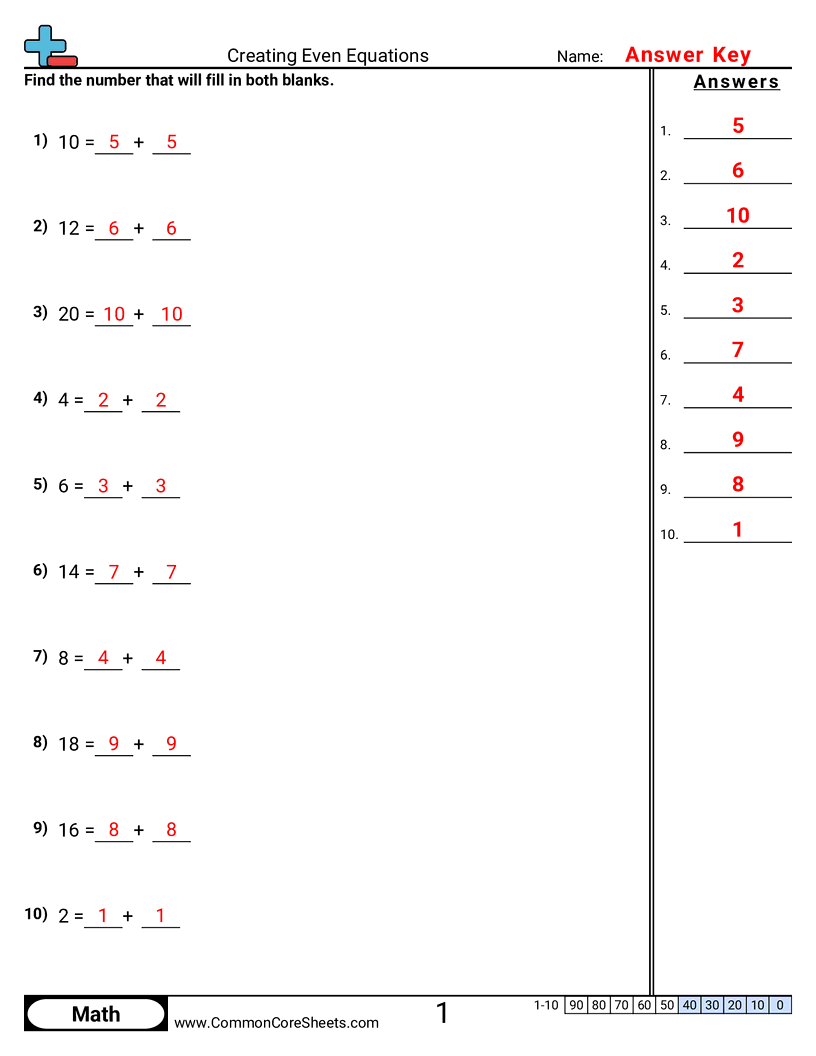
Practice making addition equations that add up to an even number.
2nbt4
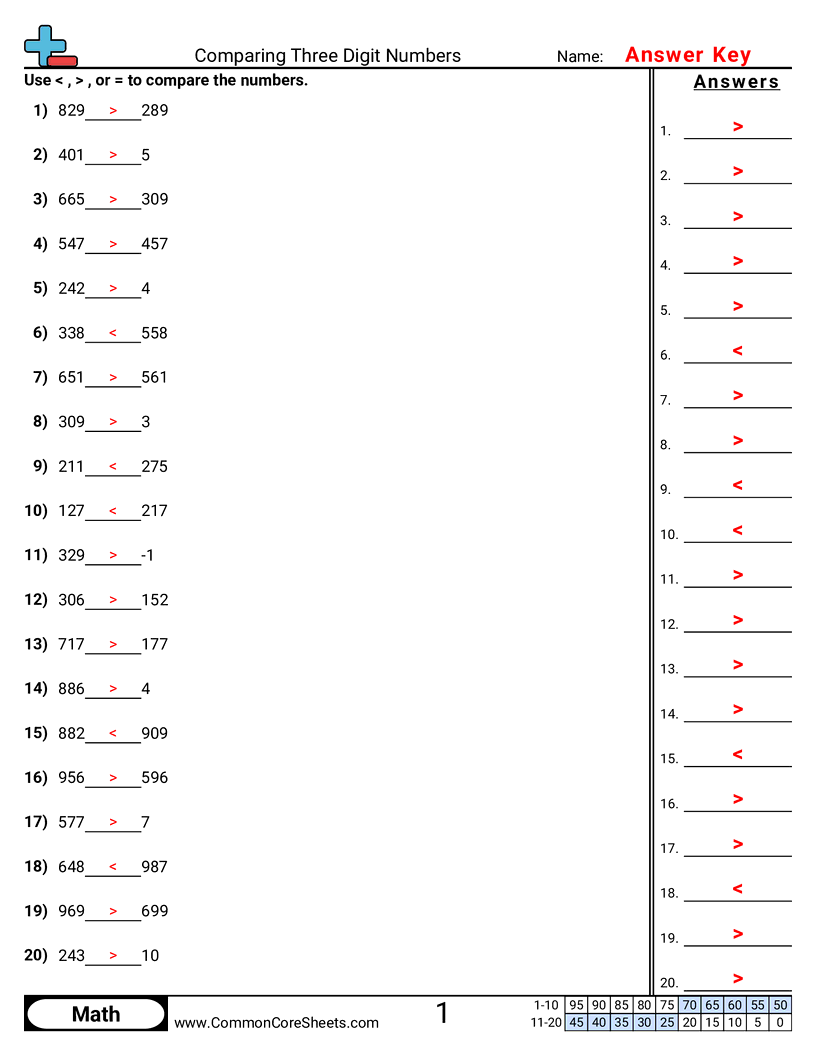
Compare two three-digit numbers and decide which one is greater, less, or equal. Use the hundreds, tens, and ones digits to explain why one number is bigger than another. Read and use the symbols >, <, and = correctly when comparing numbers.
2nbt1a
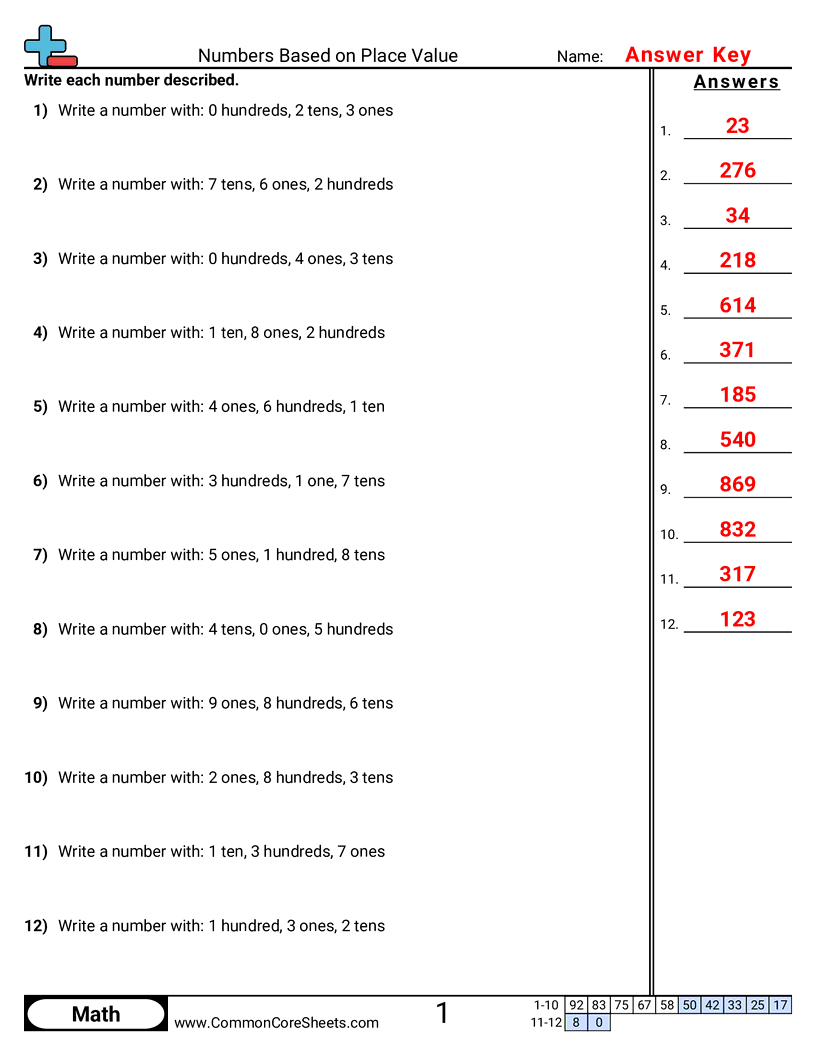
Use hundreds, tens, and ones to build a 3-digit number. Read a place-value description and write the number in standard form.
4nbt2
Compare two large numbers and decide which one is greater, less, or equal. Use place value (hundred-thousands, ten-thousands, thousands, etc.) to explain why one number is bigger than another. Use the symbols >, <, and = correctly when comparing numbers.
4nbt2
Work out the value of an expression before comparing it. Choose the sign that makes a statement true. Recognize when two different expressions have the same value.
4nbt2
Work out the value of a addition expression before comparing it. Choose the sign that makes a statement true. Recognize when two expressions have the same value.
4nbt2
Work out the value of a subtraction expression before comparing it. Choose the sign that makes a statement true. Recognize when two expressions have the same value.
4nbt2
Work out the value of a multiplication expression before comparing it. Choose the sign that makes a statement true. Recognize when two expressions have the same value.
4nbt2
Work out the value of a division expression before comparing it. Choose the sign that makes a statement true. Recognize when two expressions have the same value.
4nbt1
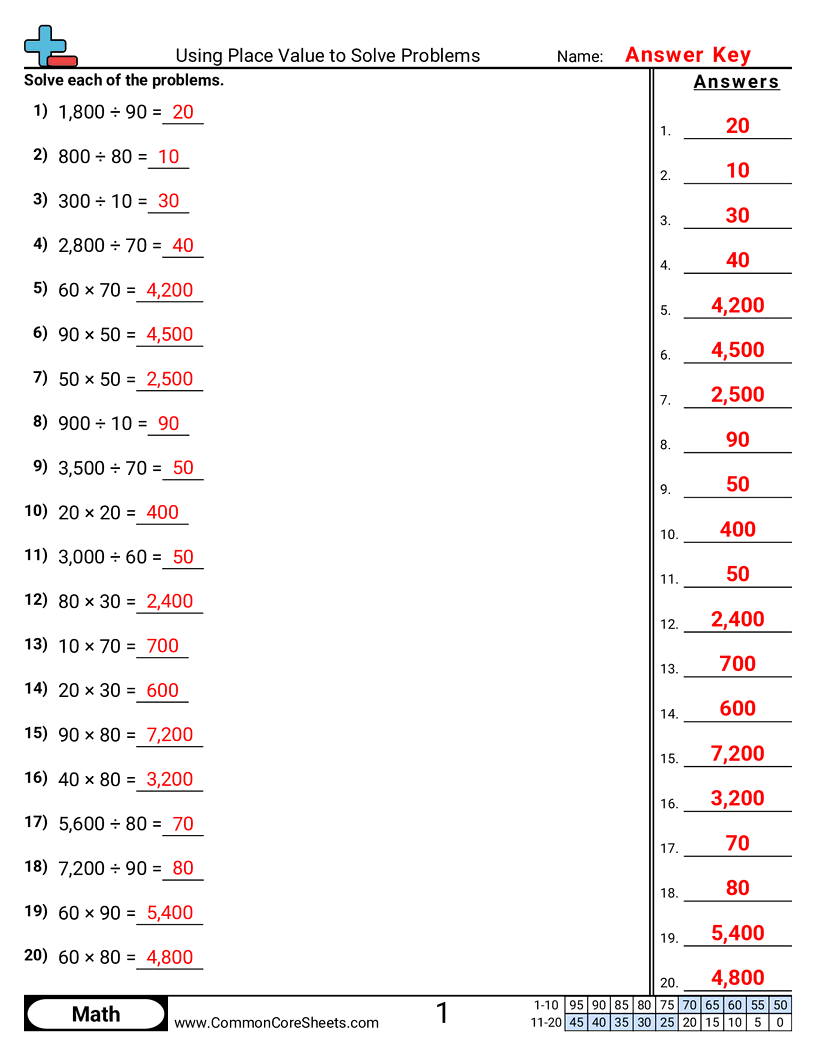
Multiply a whole number by 10, 100, or 1,000 by shifting digits to the left. Divide a whole number by 10, 100, or 1,000 by shifting digits to the right.
6ns6c
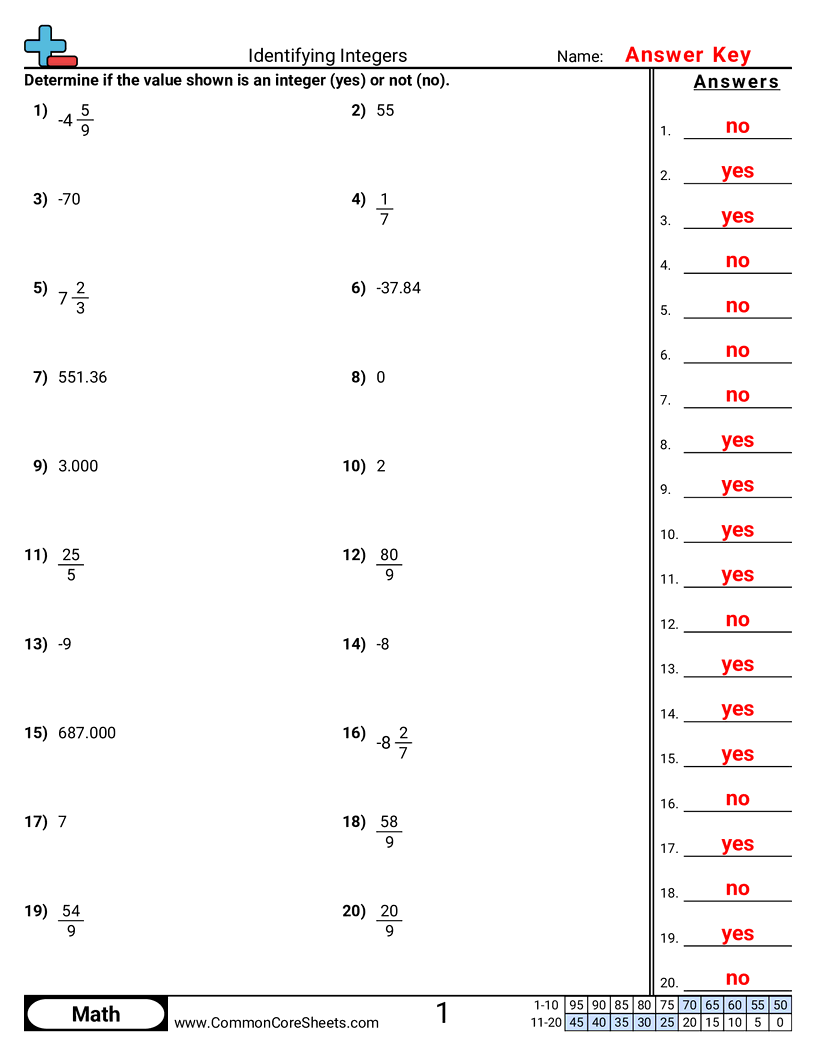
Decide whether a number is an integer or not. Recognize that integers include negative numbers, zero, and positive whole numbers. Tell the difference between integers and numbers with decimals or fractions.
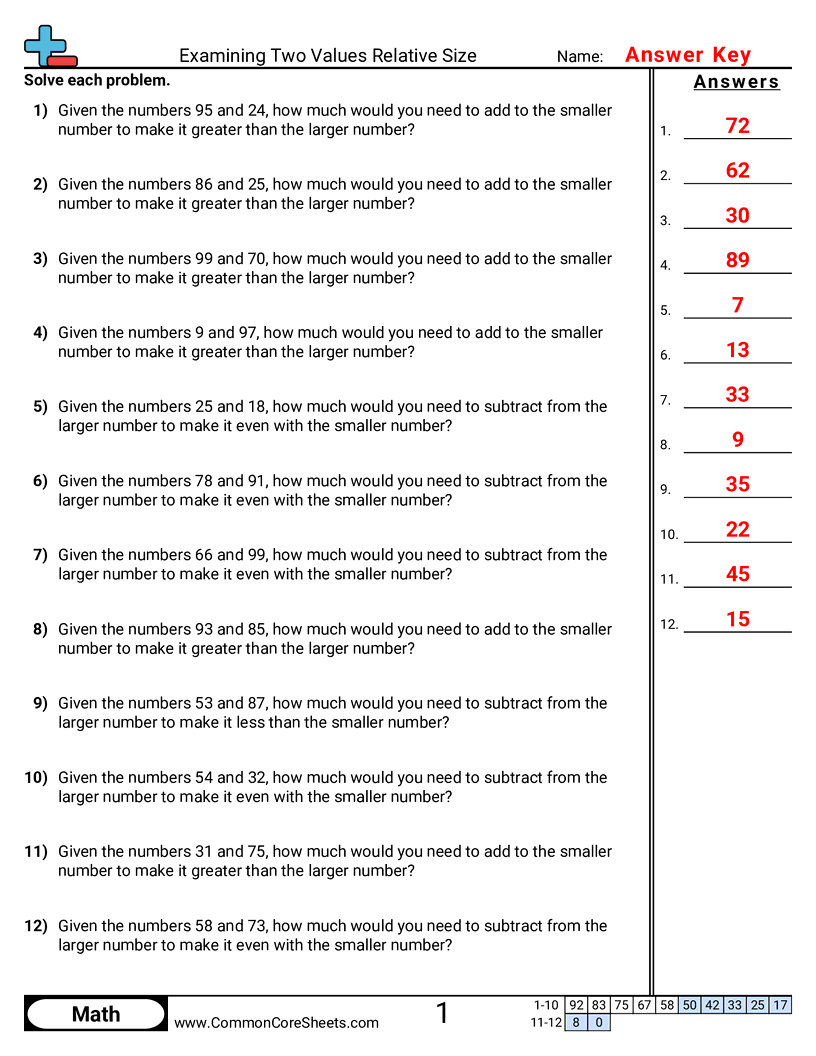
Practice finding the difference between two numbers by figuring out how much to add or subtract Read carefully to understand whether the problem is asking to add to the smaller number or subtract from the larger number Determine which of two numbers is larger and which is smaller before solving
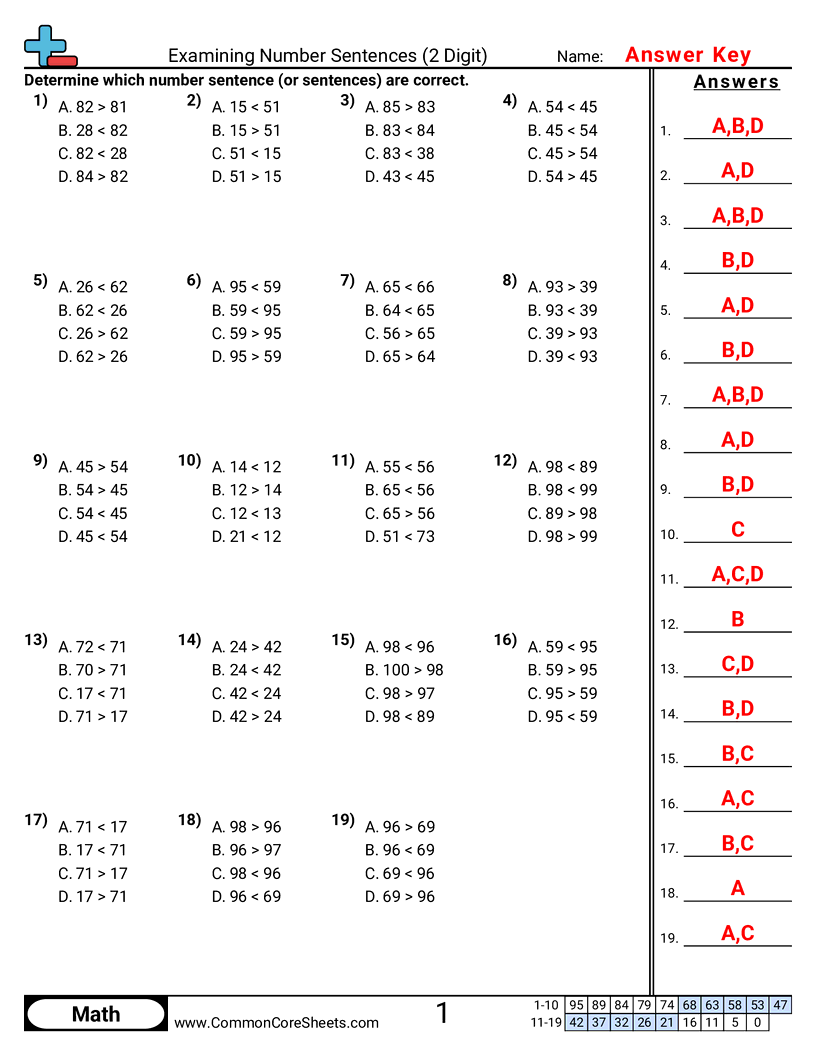
Practice deciding if a greater than (>) or less than (<) statement with two-digit numbers is true or false Compare two-digit numbers by looking at the tens digit first, then the ones digit Choose all the correct answers when more than one comparison statement is true
1nbt3
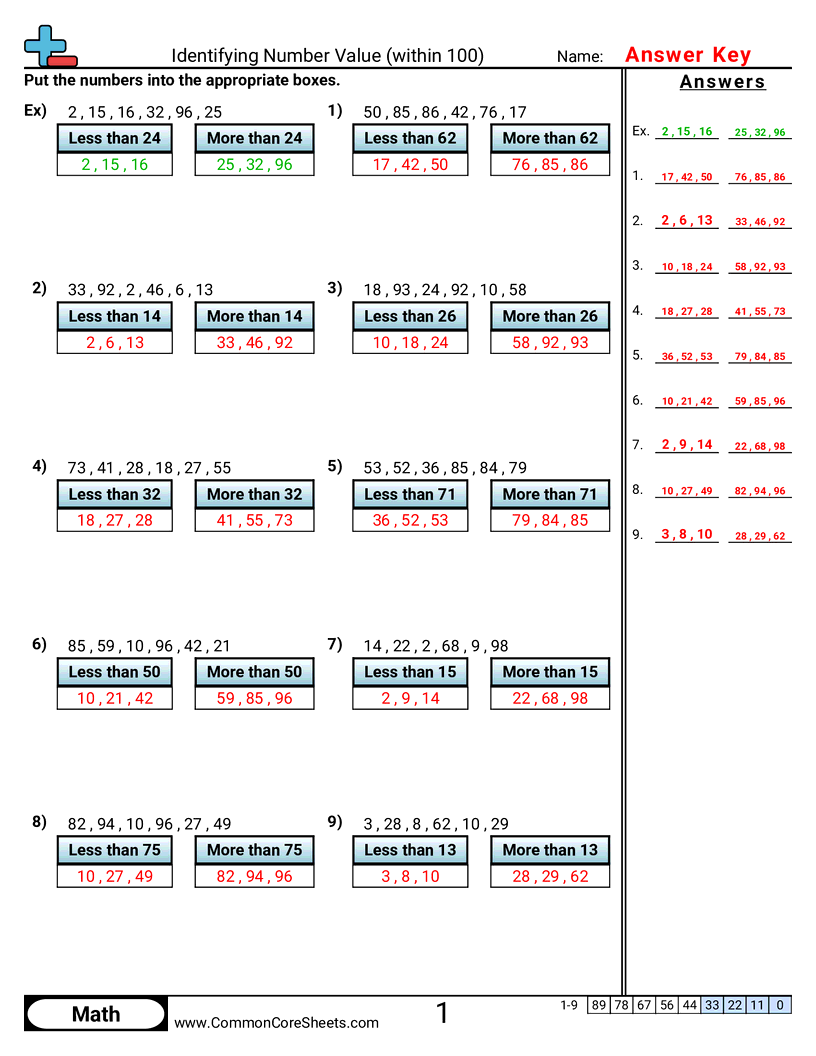
Read and interpret two-digit numbers so you can place them in the correct comparison group.
2nbt4
Use the hundreds, tens, and ones digits to explain why one number is bigger than another. Put several three-digit numbers in order from least to greatest or greatest to least.
Playwire Advertisement