Termites Worksheet Download
Free reading worksheets on Termites. Each worksheet has 20 problems with an answer key and are ideal for teachers and homeschooling. You can download the PDF, create a set of flash cards or set it up for online learning.
Select a Different Activity
>
Sheet Information >
Available at 2nd grade, 3rd grade, 4th grade, 5th grade and 6th grade reading levels.
Read the passage
Hey kids, let\'s talk about termites! These tiny insects love to munch on wood and plants, which they break down into nutrients to help them grow and stay healthy. They\'re pretty social too - they live in big groups called colonies, with each termite having a special job to do.
Now let\'s explore the amazing life cycle of termites. They start as little eggs, which eventually hatch into nymphs (baby termites). As they grow, they become either workers, soldiers, or future kings and queens of their own new colonies!
Finally, let\'s learn about their fascinating relationship with humans and other insects. While termites can be pesky for us (they can eat away at our homes!), they also help break down dead plants and trees in nature, which is really important for keeping our environment healthy. They even have some cool insect friends, like ants, who help protect them from predators.
In conclusion, termites may be small, but they play a big role in our world. So next time you see one, remember all the interesting facts you learned here today!
Termites are amazing little insects that you\'ll find in many parts of the world. These tiny creatures might be small, but they have a big appetite for wood, plants, and sometimes even books! Termites use their strong jaws to break down these materials into smaller pieces, which they then share with their family in their underground homes. You might be surprised to learn that termites are actually good for the environment, as they help recycle dead plants and trees back into the soil.
Now let\'s talk about the fascinating life cycle of termites. They begin their lives as eggs, which are laid by the queen termite in a special chamber deep inside the nest. Once the eggs hatch, the baby termites, called nymphs, go through several stages of growth before becoming fully grown adult termites. Depending on the type of termite, adults can be workers, soldiers, or even future kings and queens that start new colonies.
Finally, let\'s explore termites' relationships with humans and other insects. While termites are helpful for the environment, they can cause problems for people when they eat wooden structures in our homes. Some insects, like ants, are natural enemies of termites and will even attack their nests to steal their food. Remember, termites are just one of many amazing species of insects that share our planet, each with its own unique role in the ecosystem.
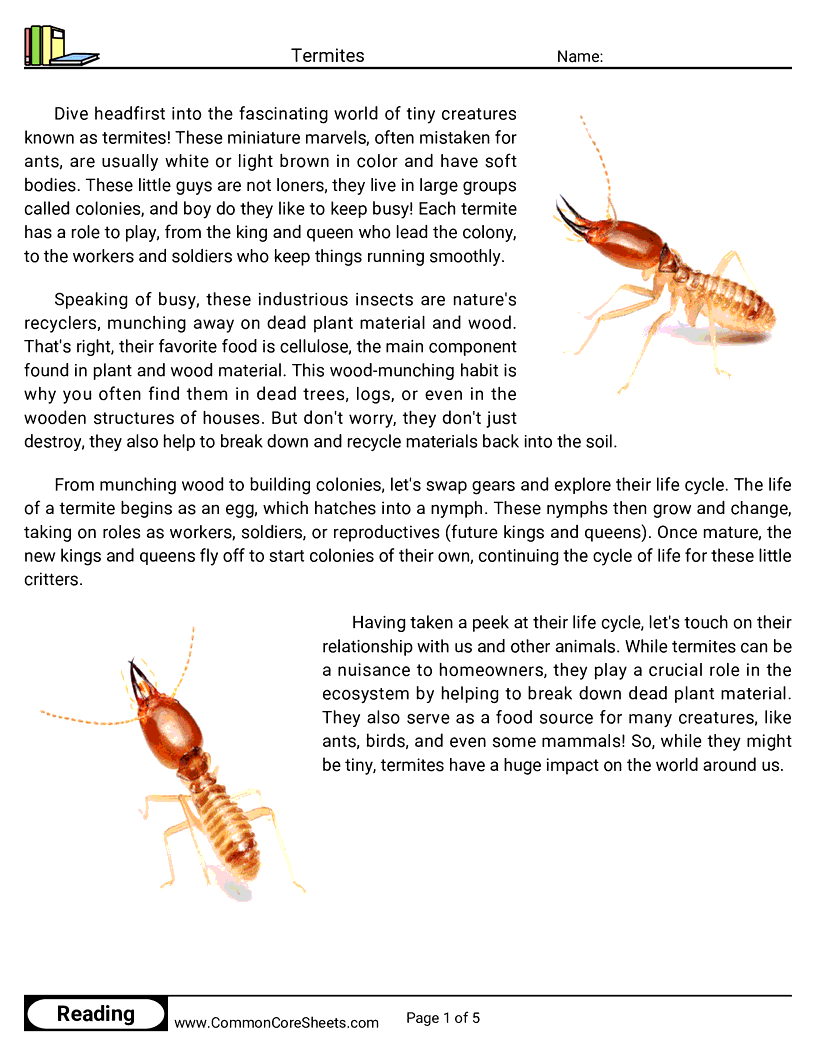
Dive headfirst into the fascinating world of tiny creatures known as termites! These miniature marvels, often mistaken for ants, are usually white or light brown in color and have soft bodies. These little guys are not loners, they live in large groups called colonies, and boy do they like to keep busy! Each termite has a role to play, from the king and queen who lead the colony, to the workers and soldiers who keep things running smoothly.
Speaking of busy, these industrious insects are nature's recyclers, munching away on dead plant material and wood. That's right, their favorite food is cellulose, the main component found in plant and wood material. This wood-munching habit is why you often find them in dead trees, logs, or even in the wooden structures of houses. But don't worry, they don't just destroy, they also help to break down and recycle materials back into the soil.
From munching wood to building colonies, let's swap gears and explore their life cycle. The life of a termite begins as an egg, which hatches into a nymph. These nymphs then grow and change, taking on roles as workers, soldiers, or reproductives (future kings and queens). Once mature, the new kings and queens fly off to start colonies of their own, continuing the cycle of life for these little critters.
Having taken a peek at their life cycle, let's touch on their relationship with us and other animals. While termites can be a nuisance to homeowners, they play a crucial role in the ecosystem by helping to break down dead plant material. They also serve as a food source for many creatures, like ants, birds, and even some mammals! So, while they might be tiny, termites have a huge impact on the world around us.
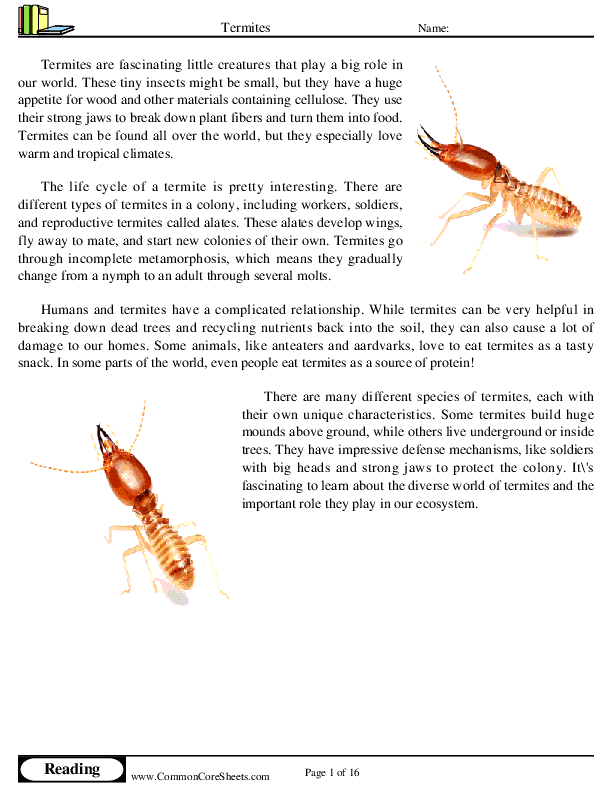
Termites are fascinating little insects that live in large colonies. They are sometimes called 'white ants' because of their light color, but they are not actually related to ants. Termites can be found in many parts of the world, including North and South America, Africa, Asia, and Australia. These insects are known for their ability to eat wood and break it down into nutrients they can use for energy.
When it comes to their homes, termites build impressive structures called mounds or nests. These mounds can be found both above and below ground, and they are made of soil, mud, and the termites' own saliva and feces. Inside these mounds, termites create a complex network of tunnels and chambers for different purposes, such as raising their young and storing food. Many termite species have a specific caste system, with different members of the colony performing specific roles, like workers, soldiers, and the reproductive king and queen.
The termite life cycle consists of three main stages: egg, nymph, and adult. The queen termite lays eggs that hatch into nymphs, which are immature termites. As the nymphs grow and molt, they will develop into different castes within the colony, eventually becoming workers, soldiers, or reproductive adults, depending on their role. This process can take several weeks to a few months, depending on the species and the environmental conditions.
Termites have both positive and negative relationships with humans. On the positive side, they help break down dead wood and other organic materials, recycling nutrients back into the ecosystem. However, termites can also be a big problem for homeowners, as they can cause significant damage to wooden structures. In some parts of the world, termites are even considered a delicacy and are eaten by people as a source of protein.
Finally, termites have interesting relationships with other animals. Some animals, like aardvarks and anteaters, eat termites as a major part of their diet. Termites also have a symbiotic relationship with certain types of microorganisms in their guts, which help them digest the tough cellulose found in wood. As you can see, termites are truly remarkable insects that play an important role in our world.
Termites are fascinating little creatures that have a big impact on our world. These social insects live in large colonies and can be found in various places around the globe. Termites come in different shapes, sizes, and colors, making them an interesting group to study. Although they might seem like pests to some people, termites actually play a crucial role in breaking down dead plant material in their natural environment. Let\'s dive into the world of termites and learn more about these incredible insects!
One of the most interesting aspects of termites is their diet. Termites primarily feed on cellulose, which is found in wood, leaves, and other plant materials. Their ability to break down cellulose comes from the tiny organisms living in their gut, which help them digest this tough material. This unique diet allows termites to play an essential role in recycling nutrients in the ecosystem. However, it can also cause problems when termites decide to munch on our homes and other wooden structures.
The life cycle of termites is another fascinating aspect of their biology. Termites start as eggs, which eventually hatch into nymphs, or baby termites. These nymphs grow and molt, eventually becoming workers, soldiers, or reproductive termites. The reproductive termites, known as alates, will grow wings and leave the colony to start new colonies of their own. The queen termite, who can lay thousands of eggs each day, is the center of the colony and ensures its continued growth.
Termites have a unique relationship with humans and other animals. As mentioned earlier, their wood-eating habits can cause damage to our homes and other structures. However, termites are also a food source for many animals, such as anteaters, birds, and other insects. In some cultures, termites are even considered a tasty snack for humans! Their relationship with other animals and humans is complex, as they can be both beneficial and harmful.
There are several fascinating facts about termites that make them stand out from other insects. Termites are one of the few insects that can live in large, organized colonies, similar to ants and bees. They communicate using pheromones, or chemical signals, to coordinate their activities and work together as a team. Termite soldiers have impressive defensive abilities, such as using their strong jaws or even exploding their bodies to protect their colony. As you can see, termites are remarkable creatures that deserve our appreciation and respect.
About this worksheet
Students read a nonfiction passage about termites and answer questions to show they understood the key facts and details.
This worksheet is designed to educate children about termites. It covers basic concepts like their color, habitats, diet, function in the ecosystem, and common misconceptions about them. The worksheet contains 20 reading-based problems, ideal for distance learning. It offers flexibility and can be easily customized or converted into flashcards to facilitate the learning process.
Student objectives
- Read a nonfiction passage and understand the main ideas about termites
- Find specific facts and details in the text to answer questions
- Learn new vocabulary related to termites and insects
- Explain what the passage teaches about how termites live and behave
Everyday practice
- Understand a fact you read about bugs in a nature book or magazine
- Explain to someone what termites do after reading about them
- Answer questions about an article you just read
- Look back at a text to find the answer instead of guessing