4nf2 Worksheets
Number and Operations—Fractions
2 Compare two fractions with different numerators and different denominators, e.g., by creating common denominators or numerators, or by comparing to a benchmark fraction such as 1/2. Recognize that comparisons are valid only when the two fractions refer to the same whole. Record the results of comparisons with symbols >, =, or <, and justify the conclusions, e.g., by using a visual fraction model.
4nf2
4nf2
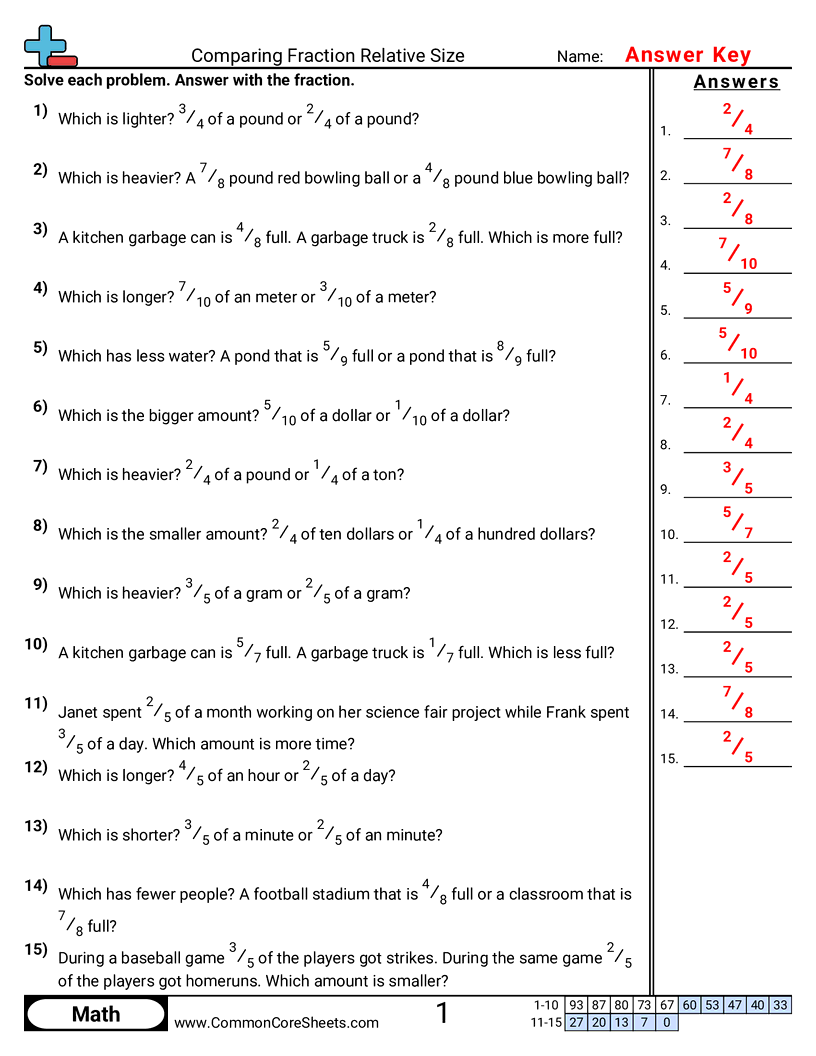
Understand that the size a fraction represents, depends on the items it is comparing.
4nf2
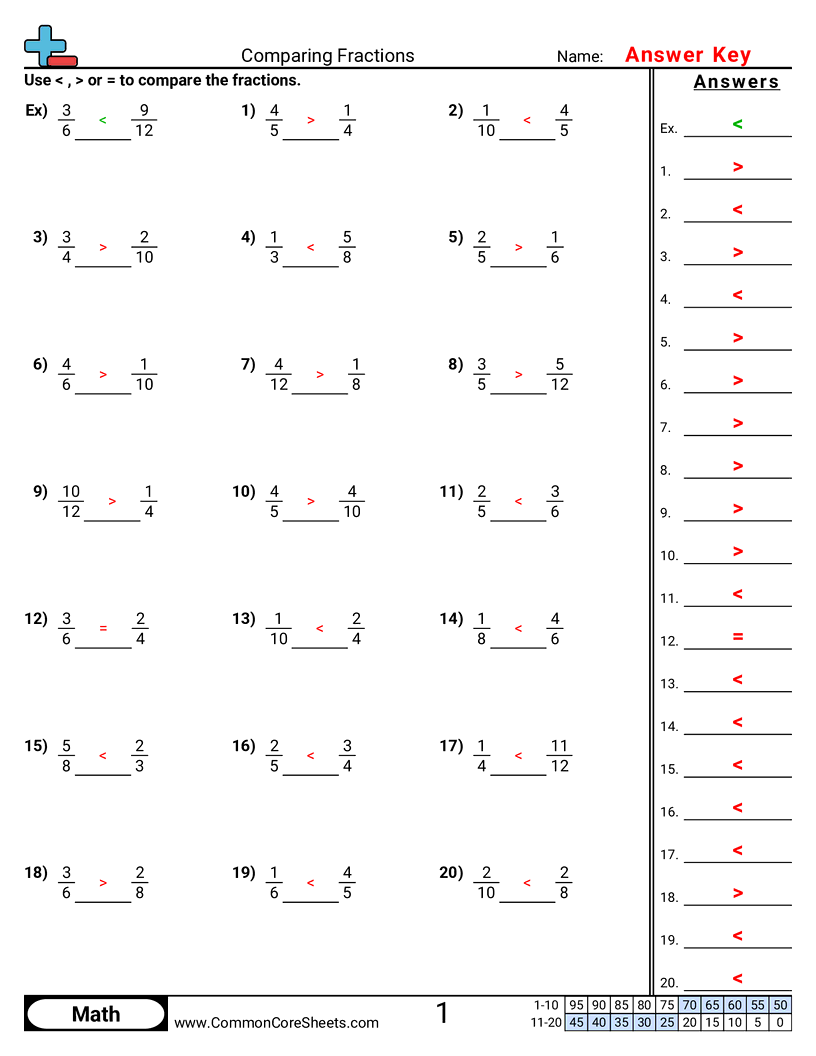
Compare two fractions that have different denominators and decide which one is greater or less. Use equivalent fractions (common denominators) to make unlike fractions easier to compare.
4nf2
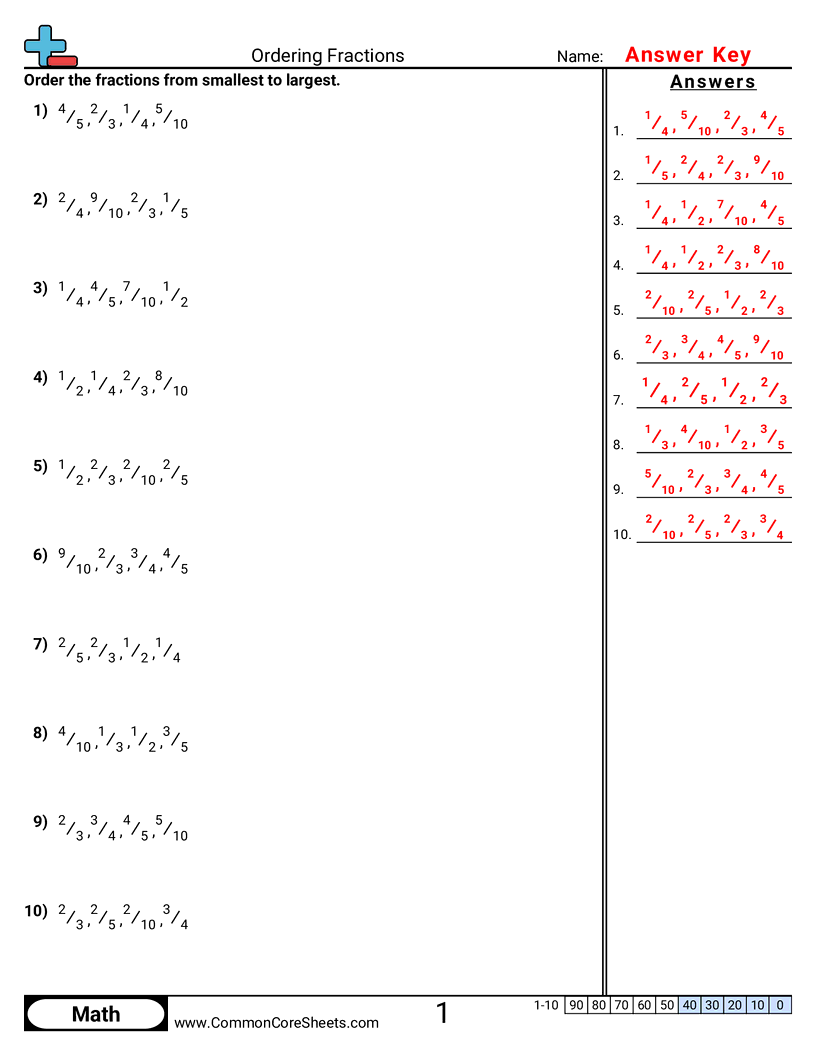
Put fractions in order from least to greatest. Compare fractions that have different denominators like 2, 3, 4, 5, and 10. Use equivalent fractions to make fair comparisons (like changing 1/2 into 5/10). Decide which fraction is bigger or smaller by thinking about the size of the pieces.
4nf2
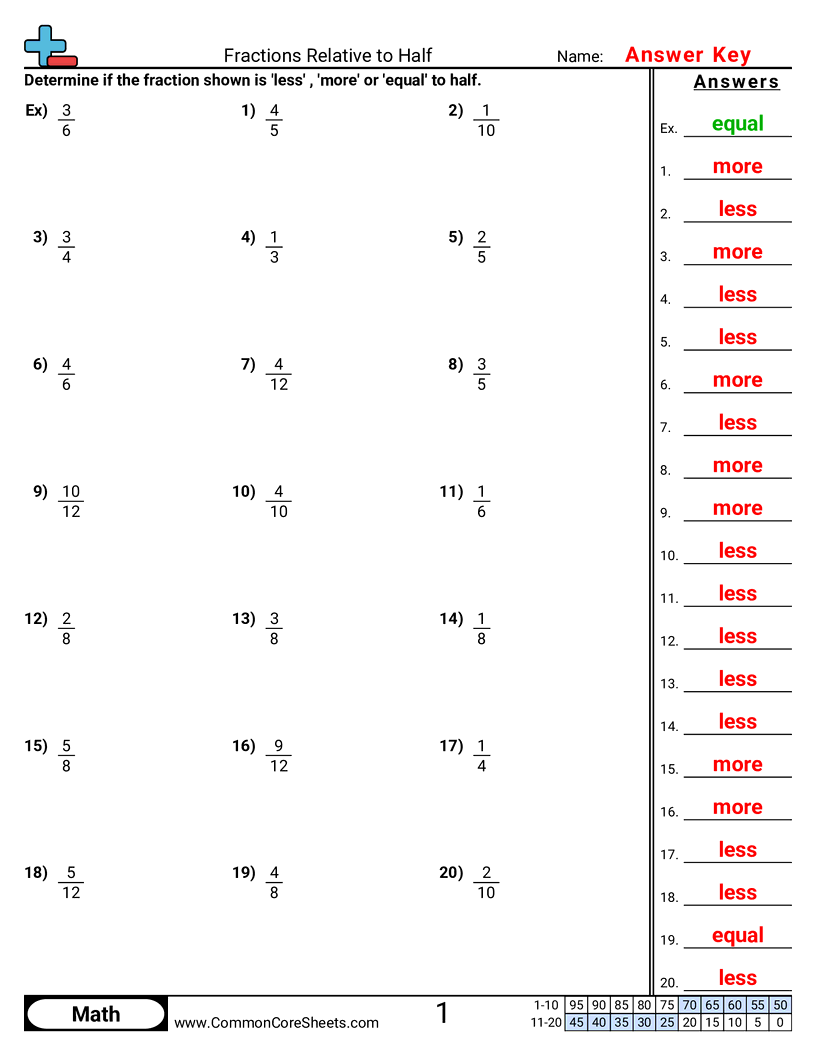
Decide whether a shaded fraction is less than, equal to, or greater than one-half. Compare a fraction to 1/2 by thinking about how many equal parts make a whole. Use pictures like fraction models or number lines to judge a fraction’s size compared to 1/2.
4nf2
Decide whether a fraction is less than, equal to, or greater than one half. Use the numerator and denominator to tell if a fraction is exactly one half (evenly divisible). Compare fractions to the benchmark fraction 1/2 without converting to decimals. Recognize equivalent fractions that are equal to 1/2 (like 2/4 or 5/10).
3nf3d 4nf2
Use a fraction model to decide which of two fractions is greater or less. Read the question carefully, since some ask for greater and some for less. Compare fractions with different denominators using a picture rather than a rule.
4nf2 5nf2
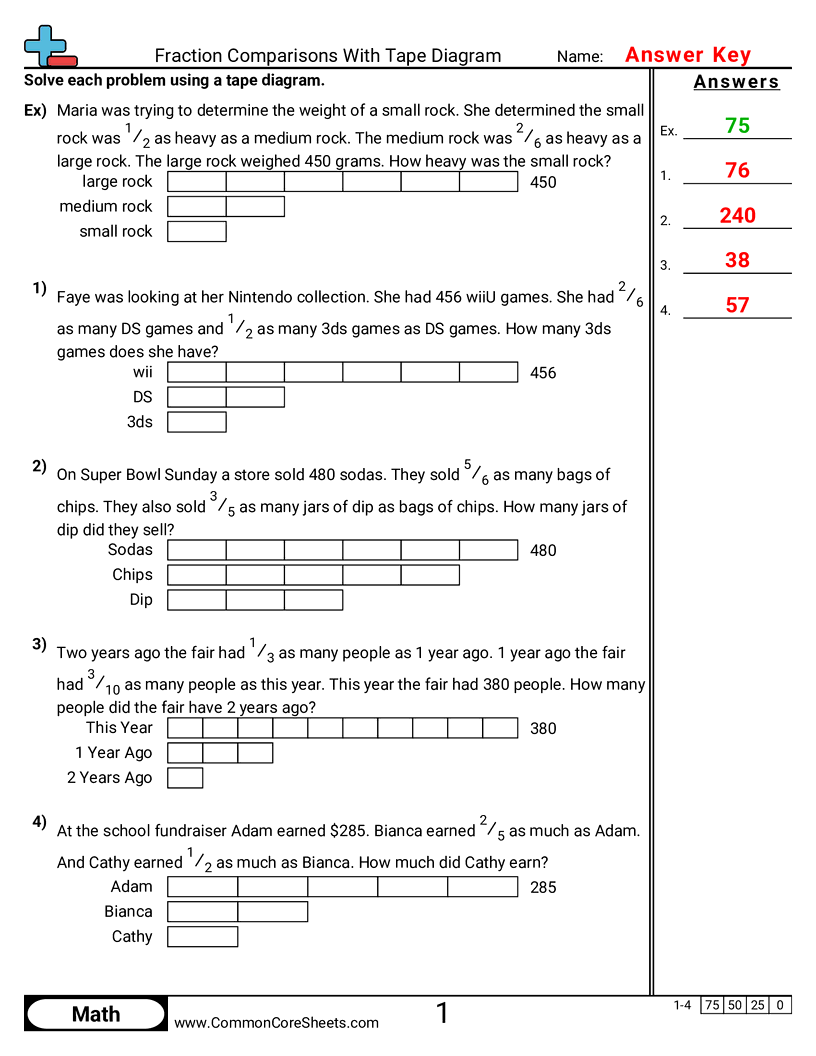
Use a tape diagram (bar model) to show what a fraction means as equal parts of a whole. Compare two fractions by looking at the size of the shaded parts in the tape diagrams.
Playwire Advertisement