Ladybugs Worksheet Download
Free reading worksheets on Ladybugs. Each worksheet has 20 problems with an answer key and are ideal for teachers and homeschooling. You can download the PDF, create a set of flash cards or set it up for online learning.
Select a Different Activity
>


Sheet Information >
Available at 2nd grade, 3rd grade, 4th grade, 5th grade and 6th grade reading levels.
Read the passage
Ladybugs are small, colorful insects that can be found all around the world. They come in many different colors, like red, orange, or yellow, with black spots on their backs. These tiny creatures usually live in gardens, forests, and other places where there are lots of plants.
These little insects are very helpful to humans because they eat other insects called aphids, which can be harmful to plants. Ladybugs are also good friends to other insects, like bees and butterflies, because they all help plants grow by pollinating them. When ladybugs feel threatened, they can release a stinky liquid from their legs to scare away predators like ants and spiders.
The life cycle of a ladybug is very interesting and has four stages: egg, larva, pupa, and adult. There are many different types of ladybugs, and some can even change their color depending on the season or their environment. So, the next time you see a ladybug, remember that they are not only beautiful but also hardworking insects that help our plants grow.
Ladybugs are fascinating and colorful little insects that you might find in your backyard. They are usually red or orange with small black spots on their wings, but there are many different species, and they can have different colors and patterns. These tiny creatures live in gardens, fields, and forests all around the world. Some of them even live high up in the mountains!
Let\'s take a closer look at what ladybugs eat and their life cycle. They love to munch on small insects called aphids, which are harmful to plants, making ladybugs very helpful to gardeners and farmers. A ladybug\'s life starts as an egg, then hatches into a larva, turns into a pupa, and finally becomes an adult ladybug. This whole process takes about a month to complete.
Did you know that ladybugs have some interesting ways of protecting themselves and interacting with other insects? When they feel threatened, they can release a smelly liquid from their legs to scare off predators. In addition, ladybugs are friends to humans because they help control harmful insect populations, but they can also be food for other insects like ants and spiders. Now that you know more about these amazing creatures, maybe you\'ll enjoy spotting them in your garden even more!
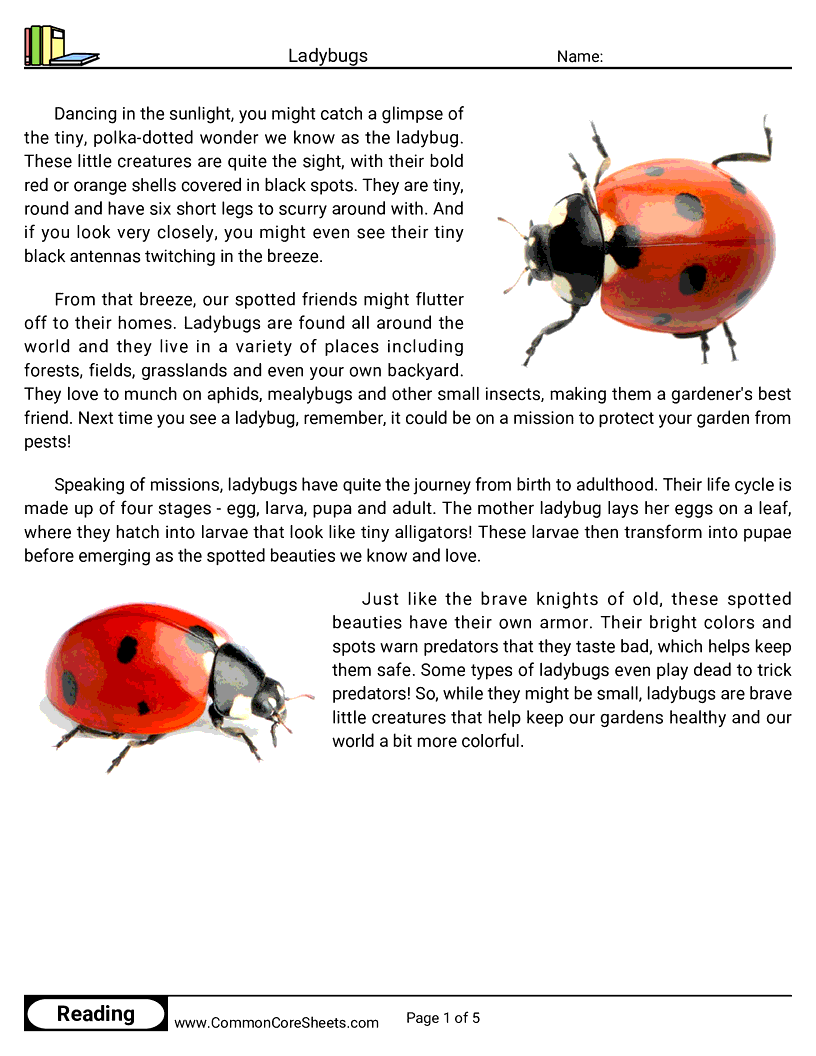
Dancing in the sunlight, you might catch a glimpse of the tiny, polka-dotted wonder we know as the ladybug. These little creatures are quite the sight, with their bold red or orange shells covered in black spots. They are tiny, round and have six short legs to scurry around with. And if you look very closely, you might even see their tiny black antennas twitching in the breeze.
From that breeze, our spotted friends might flutter off to their homes. Ladybugs are found all around the world and they live in a variety of places including forests, fields, grasslands and even your own backyard. They love to munch on aphids, mealybugs and other small insects, making them a gardener's best friend. Next time you see a ladybug, remember, it could be on a mission to protect your garden from pests!
Speaking of missions, ladybugs have quite the journey from birth to adulthood. Their life cycle is made up of four stages - egg, larva, pupa and adult. The mother ladybug lays her eggs on a leaf, where they hatch into larvae that look like tiny alligators! These larvae then transform into pupae before emerging as the spotted beauties we know and love.
Just like the brave knights of old, these spotted beauties have their own armor. Their bright colors and spots warn predators that they taste bad, which helps keep them safe. Some types of ladybugs even play dead to trick predators! So, while they might be small, ladybugs are brave little creatures that help keep our gardens healthy and our world a bit more colorful.
Ladybugs are fascinating little creatures that many of us have seen in our gardens. These brightly colored insects are not only cute, but they are also very helpful to humans as they eat pests that can harm plants. In this article, we will explore the world of ladybugs, learning about their diet, habitat, and unique characteristics. So, let\'s dive into the amazing world of these tiny, but mighty insects.
First, let\'s talk about what ladybugs eat. They are known as natural pest controllers because their primary diet consists of aphids, which are small insects that can damage plants. Ladybugs also eat other soft-bodied insects like mites and scale insects. So, by having ladybugs around, you are actually protecting your plants from being damaged by these pests.
Now, let\'s discuss where ladybugs live and their life cycle. You can find ladybugs in various habitats such as gardens, meadows, and forests. Their life cycle consists of four stages: egg, larva, pupa, and adult. It takes about 4 to 8 weeks for a ladybug to develop from an egg into an adult, and they can live up to one year.
Ladybugs have unique features that set them apart from other insects. Their bright red, orange, or yellow color with black spots serves as a warning to predators that they are not a tasty snack. When threatened, ladybugs can release a foul-smelling substance from their legs to deter predators. They can also protect themselves by playing dead and folding their legs under their body.
Finally, here are some interesting facts about ladybugs. There are over 5,000 different species of ladybugs worldwide, with over 450 species found in North America alone. Ladybugs are also known as ladybirds or lady beetles, as they belong to the beetle family Coccinellidae. In many cultures, ladybugs are considered to be a sign of good luck and a symbol of love and friendship.
Ladybugs, also known as ladybirds, are fascinating little creatures that come in a variety of colors and patterns. Most commonly, they are red or orange with black spots, but they can also be yellow, black, or even pink. These small insects, usually around 1/4 inch in length, have a dome-shaped body and short, black legs. Their wings are hidden beneath their hard shell, which they can open when they need to fly. There are about 5,000 different species of ladybugs in the world, making them a diverse group of insects.
The life cycle of a ladybug is similar to that of many other insects. It all starts with the female laying her eggs on the underside of leaves, usually near a colony of aphids, which are a favorite food for ladybugs. After a few days, the eggs hatch into larvae, which are tiny, long, and black with orange markings. The larvae eat many aphids as they grow and eventually turn into pupae, which is a resting stage before becoming adults. The entire life cycle takes about a month, and adult ladybugs can live up to a year.
Ladybugs play an essential role in gardens and farms, as they are natural predators of many harmful insects. Their main food source is aphids, which are small insects that can cause significant damage to plants by sucking their sap. A single ladybug can eat up to 5,000 aphids in its lifetime, making them a popular choice for natural pest control. Many farmers and gardeners even purchase ladybugs to release into their gardens to help protect their plants. In addition to aphids, ladybugs also eat other small insects such as mites and scale insects.
Ladybugs have unique ways of protecting themselves from predators. Their bright colors are a warning sign to potential predators that they are not a tasty snack. When threatened, ladybugs can release a foul-smelling and bitter-tasting fluid from their joints, which deters predators from eating them. Another defense mechanism they have is called 'reflex bleeding,' where they can release a small amount of their own blood, which contains toxic chemicals. This combination of bright colors and chemical defenses makes ladybugs unappealing to many predators.
There are some surprising facts about ladybugs that make them even more interesting. For example, did you know that the spots on a ladybug\'s back have nothing to do with its age? The spots are actually a sign of their species and can help scientists identify different types of ladybugs. Another interesting fact is that male and female ladybugs can be distinguished by the shape of the last segment of their abdomen. Ladybugs also have a unique way of cleaning themselves – they use their feet to groom their antennae and wings. Now that you know more about these fascinating little insects, you can appreciate the important role they play in our environment and the unique features that make them stand out in the insect world.
About this worksheet
Students read a short passage about ladybugs and answer questions about the main ideas and details.
This worksheet is designed to enrich children's reading skills through engaging and informative content about ladybugs. It surpasses traditional teaching methods, offering 20 customizable problems related to fascinating facts about ladybugs' color, larva, habitat, defense mechanisms, and lifecycle. This versatile resource can be transformed into flash cards for quick learning, or used seamlessly in a distance education setting, ensuring inclusive and flexible learning for all students.
Student objectives
- Read a nonfiction passage about ladybugs
- Find answers to questions using details from the text
- Understand new facts and vocabulary about insects
- Practice picking out the main idea of a passage
Everyday practice
- Read a fact card at a zoo or nature center and tell someone what you learned
- Answer questions about a book someone reads to you
- Look up information about a bug you found outside
- Share interesting facts from a nature show with your family