Camel Crickets Worksheet Download
Free reading worksheets on Camel Crickets. Each worksheet has 20 problems with an answer key and are ideal for teachers and homeschooling. You can download the PDF, create a set of flash cards or set it up for online learning.


Sheet Information >
Available at 2nd grade, 3rd grade, 4th grade, 5th grade and 6th grade reading levels.
Read the passage
Camel crickets are fascinating little creatures that look like a mix of a cricket and a spider. These insects are usually brown or tan and have a humpbacked appearance, which is why they are called camel crickets. Unlike other crickets, they don't chirp, but they are great jumpers and can leap several times their body length!
These crickets can be found in dark and damp places, like basements, caves, and under logs or rocks. They are omnivores, which means they eat both plants and other insects, such as fungus, decaying plants, and even other dead insects. Camel crickets go through three life stages: egg, nymph, and adult, and their life cycle usually lasts about one year.
Although they might look scary, camel crickets are actually harmless to humans and are not pests. They can help keep other insects in check by eating them, but sometimes they can be a nuisance if they find their way into your home. Camel crickets rely on their strong legs and excellent jumping ability to escape predators and protect themselves.
In this article, we learned about the interesting camel cricket, where they live, what they eat, and their life cycle. These insects may look a bit scary, but they are harmless and can even help keep other insects in check. So, the next time you see a camel cricket, just remember that they are fascinating creatures with unique abilities and an interesting role in our world.
Hey kids, have you ever heard of camel crickets? They are fascinating little creatures! These crickets are also known as 'humpback crickets' because of their unique hump on their back. Camel crickets have long, spider-like legs that help them jump and climb easily. They are nocturnal, which means they prefer to be active at night.
Now let's learn about where camel crickets live and what they eat. You can find camel crickets in damp and dark places such as basements, caves, and under logs or rocks. These crickets are omnivores, so they eat both plants and other insects. Sometimes, they even eat other camel crickets when food is scarce!
Finally, let's explore the life cycle of camel crickets and their relationship with humans and other insects. Camel crickets go through incomplete metamorphosis, which means they grow in three stages: egg, nymph, and adult. Although they might look a bit scary, camel crickets are harmless to humans and can even help keep your home free of other pests. Their main defense is their ability to jump far distances to escape predators, making them an interesting addition to the insect world.
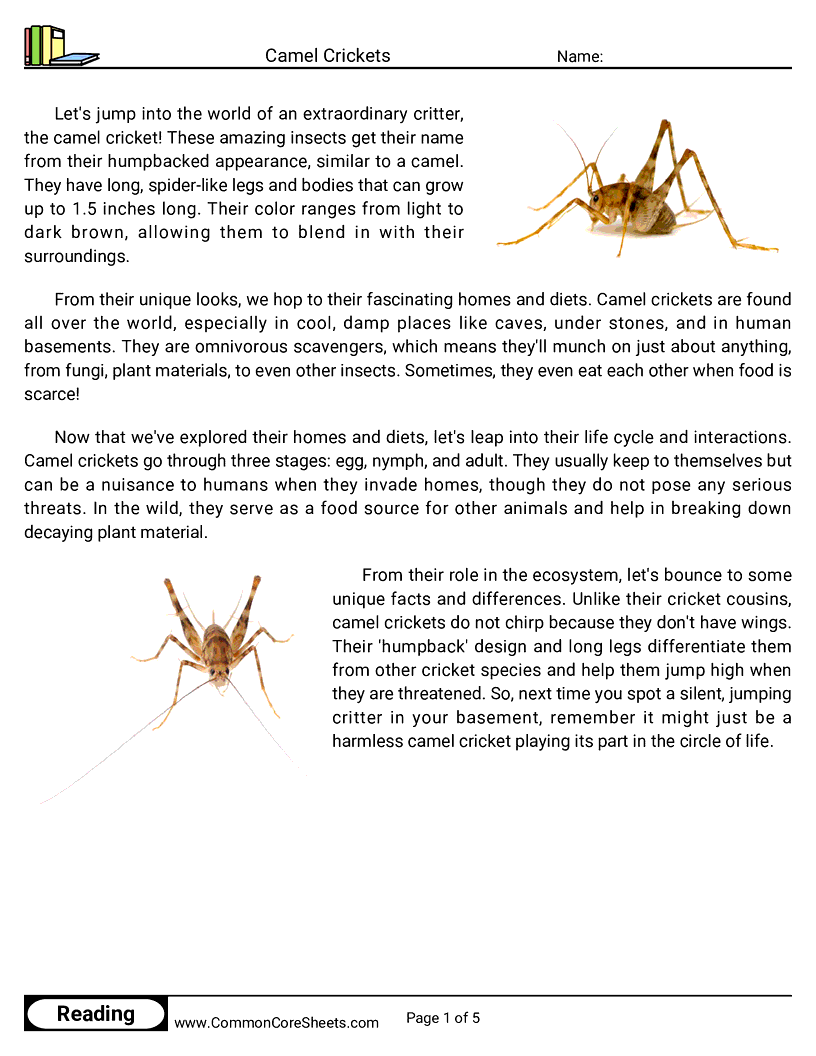
Let's jump into the world of an extraordinary critter, the camel cricket! These amazing insects get their name from their humpbacked appearance, similar to a camel. They have long, spider-like legs and bodies that can grow up to 1.5 inches long. Their color ranges from light to dark brown, allowing them to blend in with their surroundings.
From their unique looks, we hop to their fascinating homes and diets. Camel crickets are found all over the world, especially in cool, damp places like caves, under stones, and in human basements. They are omnivorous scavengers, which means they'll munch on just about anything, from fungi, plant materials, to even other insects. Sometimes, they even eat each other when food is scarce!
Now that we've explored their homes and diets, let's leap into their life cycle and interactions. Camel crickets go through three stages: egg, nymph, and adult. They usually keep to themselves but can be a nuisance to humans when they invade homes, though they do not pose any serious threats. In the wild, they serve as a food source for other animals and help in breaking down decaying plant material.
From their role in the ecosystem, let's bounce to some unique facts and differences. Unlike their cricket cousins, camel crickets do not chirp because they don't have wings. Their 'humpback' design and long legs differentiate them from other cricket species and help them jump high when they are threatened. So, next time you spot a silent, jumping critter in your basement, remember it might just be a harmless camel cricket playing its part in the circle of life.
Camel crickets are fascinating little creatures that might seem a bit creepy at first glance. These insects, also known as spider crickets, are named for their humpbacked appearance. Their long legs give them an excellent ability to jump, making them even more intriguing. Let's dive into the world of camel crickets and explore their unique characteristics.
First, let's look at the diet of these interesting insects. Camel crickets are omnivores, meaning they eat both plants and other insects. Their diet consists of decaying plant matter, fungi, and even other dead insects. Their role in the ecosystem is to help break down and recycle organic materials.
The habitat of camel crickets is quite diverse, as they can be found both indoors and outdoors. Outdoors, they prefer damp, dark places like under logs, rocks, and leaf litter. Indoors, they are often found in basements, garages, and crawlspaces, seeking out moisture. Camel crickets are most active at night, making them nocturnal insects.
Camel crickets have a fascinating life cycle that is quite different from other insects. They undergo incomplete metamorphosis, meaning they do not have a pupal stage like butterflies. Instead, they hatch from eggs as nymphs, which look like smaller versions of adult crickets. As they grow, they molt several times before becoming fully grown adults.
Lastly, let's explore the relationship between camel crickets, humans, and other insects. Although they might startle people with their appearance and jumping abilities, they are not harmful to humans. In fact, they can even help control other insect populations by eating them. However, it's important to remember that their presence indoors may indicate moisture issues that need to be addressed.
Now you know a bit more about the interesting world of camel crickets! These unique insects play an important role in our ecosystem, and we can appreciate them for their fascinating characteristics.
Let's dive into the fascinating world of camel crickets, a unique type of insect that might surprise you! These insects get their name because of their humpbacked appearance, which resembles a camel. Camel crickets are nocturnal, meaning they are most active during the night. They have long, spider-like legs and can jump really high when they need to escape from danger. You'll often find them in dark, damp places like basements or crawlspaces.
Now, let's talk about what camel crickets like to eat. These insects are omnivores and will eat just about anything they can find. Their diet consists of things like plants, other insects, and even decaying organic matter. They have been known to nibble on fabrics and clothing, which can be a nuisance for humans. But don't worry, they're not harmful to humans and are mostly just looking for a meal.
The life cycle of a camel cricket is quite interesting. They start as eggs, which are laid in damp soil or other hidden areas. These eggs will hatch into nymphs, which look like smaller versions of adult camel crickets. Nymphs will molt several times, growing larger each time until they become adults. The entire life cycle of a camel cricket can last anywhere from a few months to over a year, depending on the species and environment.
Camel crickets have some interesting relationships with other insects and humans. While they don't pose a threat to humans, their presence in homes can be unsettling to some people. As for other insects, camel crickets can be both predators and prey. They will eat other insects, but they are also hunted by larger predators like spiders and centipedes. Their ability to jump high helps them to escape from potential threats.
Finally, let's explore some differences between camel crickets and other species. Camel crickets belong to the Rhaphidophoridae family, which sets them apart from other types of crickets. Unlike other crickets, camel crickets do not have wings and cannot produce the familiar chirping sound. Their long, spider-like legs are another feature that distinguishes them from other crickets. These unique traits make camel crickets an intriguing species to learn about and observe.
About this worksheet
Students read an informational passage about camel crickets and answer comprehension questions about the details they learned.
This worksheet is designed to enhance children's reading skills by exploring the world of Camel Crickets. With 20 problems, it covers various aspects, from appearance to behavioral traits of camel crickets. Content-rich and interactive, the worksheet can be customized to suit individual learning needs, converted into flashcards, or utilized in distance learning settings. A comprehensive tool for fun, engaging, and efficient learning.
Student objectives
- Read an informational passage about camel crickets
- Find key facts and details in the text
- Answer questions using information from the reading
- Understand new vocabulary about insects
Everyday practice
- Read a fact sheet about an animal you spot in your basement or garage
- Look up information about a bug you found outside
- Explain to a family member what you learned about an insect
- Sort out true facts from guesses when talking about creepy-crawlies