Barn Owl Worksheet Download
Free reading worksheets on Barn Owl. Each worksheet has 20 problems with an answer key and are ideal for teachers and homeschooling. You can download the PDF, create a set of flash cards or set it up for online learning.
Select a Different Activity
>


Sheet Information >
Available at 2nd grade, 3rd grade, 4th grade, 5th grade and 6th grade reading levels.
Read the passage
Have you ever seen a barn owl? These fascinating creatures have a heart-shaped face, a light-colored body, and long wings that help them fly silently in the night. Barn owls are different from other owls because they have a screeching call instead of a typical hoot, which can be both surprising and interesting.
Did you know that barn owls are great hunters? Their favorite food is small mammals like mice, voles, and shrews, but they also eat birds and insects. Barn owls live in many different places, such as barns, tree hollows, and even human-made nest boxes. People often like having barn owls around because they help control pest populations, making them great helpers to humans and farmers.
Barn owls have a fascinating life cycle and relationships with other animals. A mother barn owl lays eggs in her nest and takes care of her babies until they grow up and learn to fly. While they don\'t have many predators, they do need to watch out for larger owls and birds of prey that might try to catch them. Their ability to fly silently and see well in the dark helps them stay safe and find food without being detected.
Barn owls are fascinating creatures that you\'ll love learning about! These beautiful birds have a distinctive heart-shaped face, and they can be found all around the world in places like farmlands, woods, and grasslands. Barn owls are nocturnal, which means they hunt and stay active during the nighttime. Their life cycle begins as an egg, then they hatch as an owlet, grow into a fledgling, and finally become a mature adult.
You might be curious about what barn owls eat and how they interact with other animals. Their main diet consists of small mammals like mice, rats, and shrews, but they also eat birds and insects. They have a unique way of swallowing their prey whole, and later regurgitating the indigestible parts like bones and fur. Barn owls have a symbiotic relationship with humans, as they help control rodent populations near farms and residential areas.
Let\'s explore some interesting facts and differences between barn owls and other owl species. Unlike other owls, barn owls have excellent hearing and can locate their prey just by listening. Their defense mechanisms include hissing and puffing up their feathers to appear larger when they feel threatened. An interesting fact is that not all barn owls have the same color – they can be white, brown, or even gray depending on their habitat.
In this fun article, you learned about the amazing barn owl and its unique features, diet, and interactions with other animals. Keep exploring the world of these fascinating birds and maybe you\'ll even spot one in your own backyard!
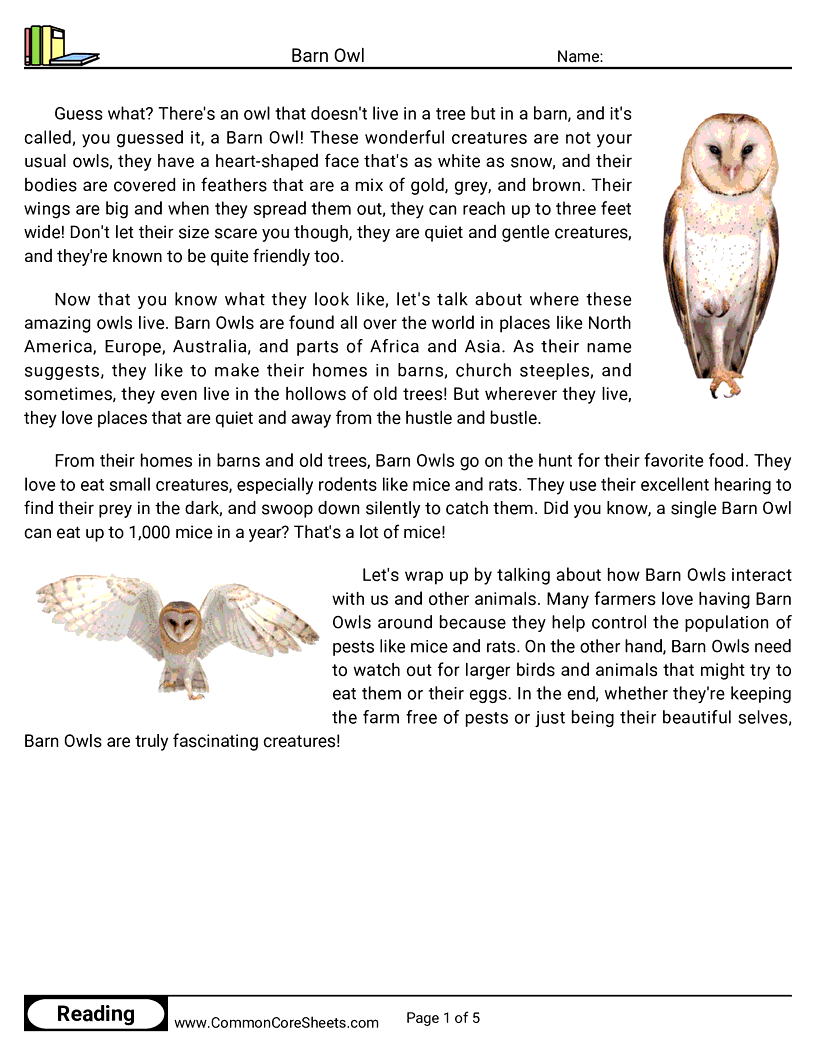
Guess what? There's an owl that doesn't live in a tree but in a barn, and it's called, you guessed it, a Barn Owl! These wonderful creatures are not your usual owls, they have a heart-shaped face that's as white as snow, and their bodies are covered in feathers that are a mix of gold, grey, and brown. Their wings are big and when they spread them out, they can reach up to three feet wide! Don't let their size scare you though, they are quiet and gentle creatures, and they're known to be quite friendly too.
Now that you know what they look like, let's talk about where these amazing owls live. Barn Owls are found all over the world in places like North America, Europe, Australia, and parts of Africa and Asia. As their name suggests, they like to make their homes in barns, church steeples, and sometimes, they even live in the hollows of old trees! But wherever they live, they love places that are quiet and away from the hustle and bustle.
From their homes in barns and old trees, Barn Owls go on the hunt for their favorite food. They love to eat small creatures, especially rodents like mice and rats. They use their excellent hearing to find their prey in the dark, and swoop down silently to catch them. Did you know, a single Barn Owl can eat up to 1,000 mice in a year? That's a lot of mice!
Let's wrap up by talking about how Barn Owls interact with us and other animals. Many farmers love having Barn Owls around because they help control the population of pests like mice and rats. On the other hand, Barn Owls need to watch out for larger birds and animals that might try to eat them or their eggs. In the end, whether they're keeping the farm free of pests or just being their beautiful selves, Barn Owls are truly fascinating creatures!
Barn owls are fascinating creatures that have many interesting features. These nocturnal birds have a heart-shaped face, golden-brown feathers, and dark eyes. They can be found on every continent except Antarctica, and they prefer to live in open areas. Barn owls are known for their excellent hearing and ability to fly silently, which makes them great hunters.
When it comes to their diet, barn owls are big fans of small mammals. Their favorite meal is rodents like mice, rats, and voles, but they also snack on insects and small birds. Barn owls swallow their prey whole and then regurgitate the indigestible parts, like bones and fur, in the form of a pellet. These pellets provide scientists with valuable information about the owl\'s diet and the local ecosystem.
The life cycle of a barn owl is quite fascinating. These birds usually mate for life and lay their eggs in tree cavities, barns, or other structures. After about a month of incubation, the fluffy, white chicks hatch and are cared for by their parents for several weeks. Once they\'re ready, young barn owls leave the nest and learn to hunt on their own.
Barn owls have a unique relationship with humans and other animals. Farmers often appreciate these owls because they help control rodent populations. In fact, some people even install barn owl boxes to attract these helpful predators to their property. However, barn owls must also be cautious of larger birds of prey, like hawks and eagles, which may see them as a meal.
There are some key differences between barn owls and other owl species. Barn owls belong to the Tytonidae family, while other owls are part of the Strigidae family. One major difference is their appearance, as barn owls have a distinct heart-shaped face, and other owls typically have round faces. Additionally, barn owls have dark, black eyes, while other owls usually have yellow or orange eyes.
Barn owls are truly incredible creatures with unique features, diets, and life cycles. They play a crucial role in controlling rodent populations and maintaining a healthy ecosystem. Whether you\'re a farmer or simply an owl enthusiast, there\'s no denying the amazing qualities of these captivating birds.
Barn owls are fascinating creatures with unique features, and today we\'re going to learn all about them. These beautiful birds have a heart-shaped face and are usually white or light brown in color. Their wingspan ranges from 27 to 33 inches, and they weigh between 0.9 and 1.6 pounds. You can find barn owls on every continent except Antarctica, making them one of the most widespread owl species. They prefer open landscapes like grasslands, marshes, and farmlands, where they can easily spot their prey.
Barn owls have a varied diet consisting mostly of small mammals. Their favorite meal is the small, furry rodent known as the vole, but they also enjoy mice, rats, and even small birds. Barn owls are excellent hunters, using their incredible hearing and silent flight to catch their prey in the dark. They swallow their food whole and later regurgitate the indigestible parts, like bones and fur, in the form of a pellet. These pellets can be found on the ground beneath their nesting sites and provide valuable information about their diet.
The life cycle of a barn owl begins when they find a mate and establish a nesting site. Barn owls are monogamous, which means they usually have one mate for life. The female lays 3 to 6 eggs in a clutch, and she incubates them for about 30 days while the male brings her food. Once the chicks hatch, both parents work together to feed and protect them until they are fledged and ready to leave the nest at around 12 weeks old. Barn owls have a relatively short lifespan in the wild, typically living 1 to 4 years, but some can live up to 10 years.
Barn owls have an interesting relationship with humans and other animals. Farmers often welcome barn owls onto their land because they help control rodent populations, which can damage crops. However, barn owls also face threats from human activities, like habitat loss and the use of pesticides, which can harm their prey. In the wild, barn owls are also preyed upon by larger predators, like eagles and hawks. Despite these challenges, barn owls are known for their adaptability and continue to thrive in a variety of environments.
There are some fascinating differences between barn owls and other owl species. Unlike many owls, barn owls do not hoot; instead, they produce a variety of sounds, including screeches, hisses, and snoring noises. Their unique heart-shaped face helps them channel sound to their ears, which are located asymmetrically on their head to help them pinpoint the location of their prey. Barn owls also have incredibly sensitive eyes that can see in very low light, making them expert nocturnal hunters. With their amazing adaptations and intriguing behaviors, barn owls are truly one of the most captivating members of the owl family.
About this worksheet
Students read a passage about the barn owl and answer comprehension questions about its habits, appearance, and habitat.
This worksheet is designed to engage children in reading through a multi-choice quiz about barn owls. Topics cover the bird's physical attributes, habitat, diet, and the benefits it brings to farmers. It offers 20 customizable questions that can be transformed into flashcards, making learning versatile for both in-class and distance education. Perfect for bird enthusiasts and inquisitive learners!
Student objectives
- Read a nonfiction passage about barn owls and understand the main ideas
- Answer questions using details found in the text
- Learn facts about how barn owls hunt, look, and live
- Build vocabulary related to birds and animals
Everyday practice
- Understand a nature article you read about owls or other birds
- Talk about what you learned after watching an animal documentary
- Answer questions from a parent about a book you just read
- Identify a barn owl if you spot one outdoors or in a photo