2oa1×Description:
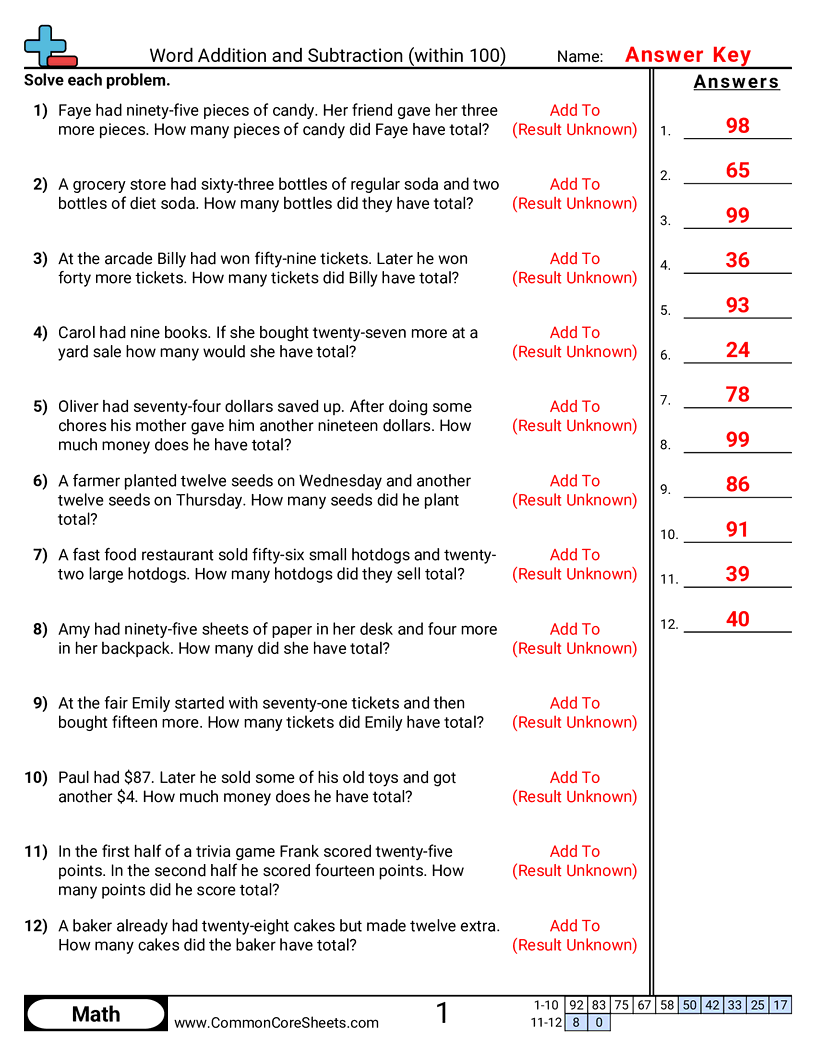
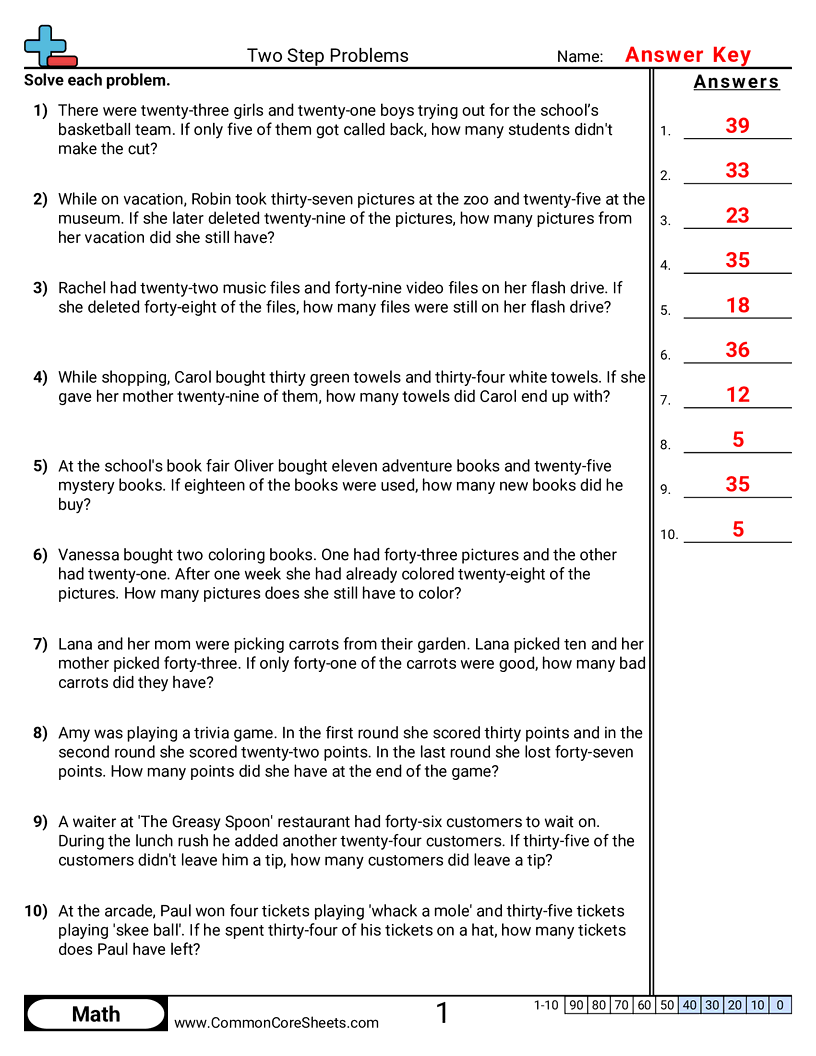
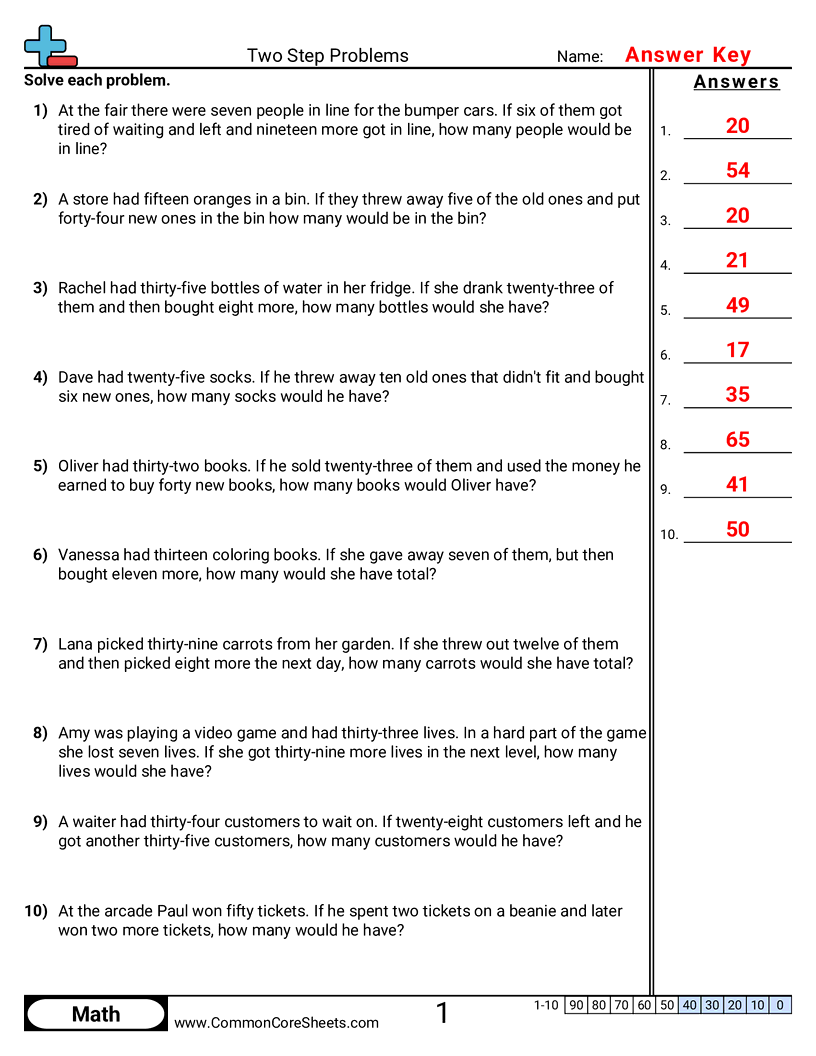
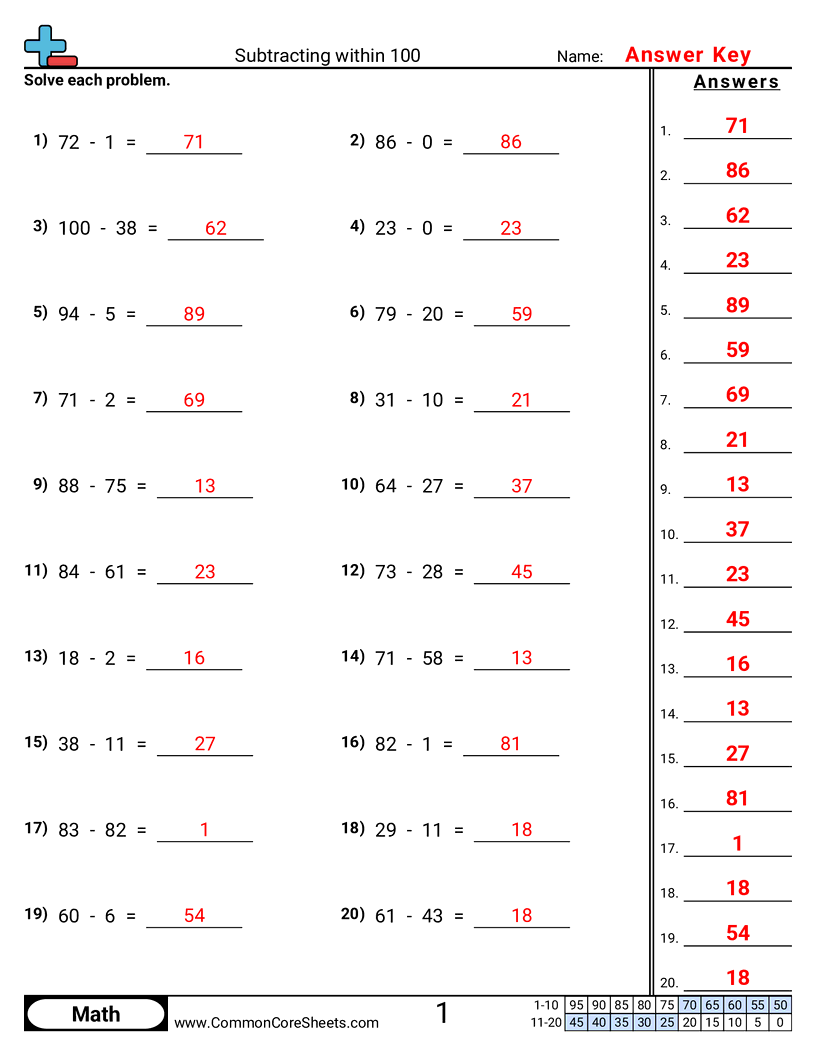
This worksheet is designed to help children master the concept of subtraction within 100 through twelve engaging math problems. The problems vary from simple subtraction to 'start unknown' and 'change unknown' scenarios, enhancing children's problem-solving skills. The worksheet is versatile and customizable; it can be converted into flashcards or incorporated in distance learning as a teaching resource, making learning subtraction within 100 a fun and interactive experience.
×Student Goals: Enhance Numeracy SkillsUpon completing the worksheet, students should have significantly improved their basic numeracy skills. They should be able to comfortably and accurately perform subtraction operations within the range of 100, enhancing their mental arithmetic abilities and providing a solid foundation for more complex math problems.Problem-Solving AbilitiesStudents should exhibit a strong grasp on problem-solving strategies by successfully completing the problems provided on the worksheet. They should be adept at implementing crucial steps such as interpreting the problem, planning a solution, carrying out that plan, and checking their work to ensure accuracy.Comprehension and ApplicationThe real-world scenarios given in the worksheet demonstrate how mathematical principles can be applied to daily life. After working through these scenarios, students should have a better understanding of how subtraction functions in practical contexts, thereby enhancing their ability to apply mathematical knowledge outside of academic settings.Fluency in Mathematical LanguageWith subtraction terms like 'Take From (Result Unknown)', 'Add To (Result Unknown)', and 'Take From (Change Unknown)', students should develop fluency in the specialized language of mathematics. They should be comfortable using these terms and understanding their relevance to different problem contexts.Progress TrackingFinally, the completion of the worksheet serves as an effective means of tracking students' progress. By evaluating the number of correct responses, students and educators can gauge the improvement in skills over time, identify areas of strength and weakness, and adjust learning strategies accordingly.